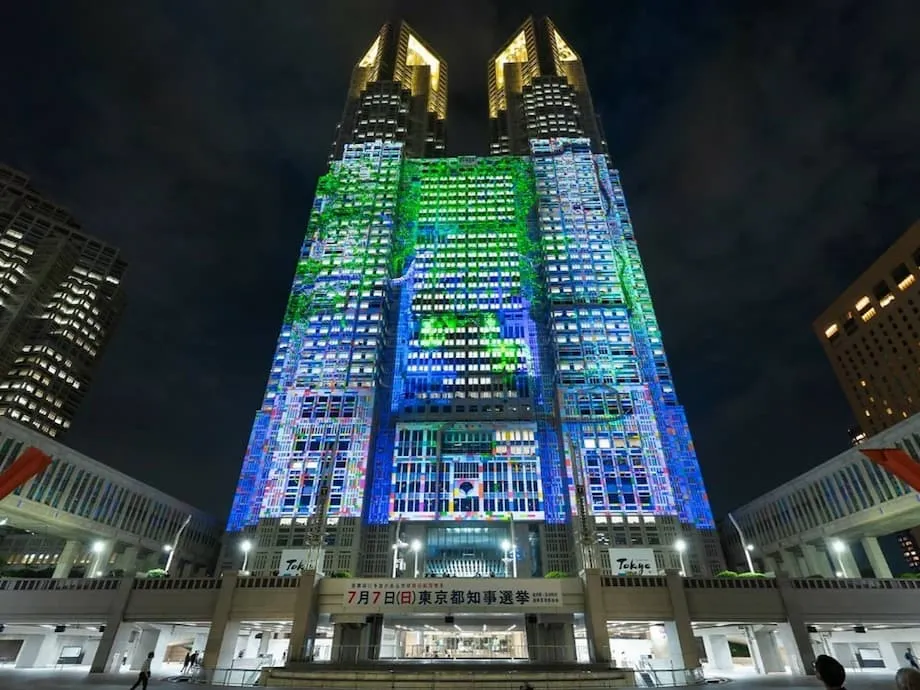
Millions of journeys, tiny bars and moments of sporting history
Shinjuku Station is the world's busiest train station, a place where millions of passengers pass through winding corridors every day. Elsewhere in Tokyo, roughly 280 tiny bars fill Golden Gai's narrow alleys, while a crab course at Kitafuku Ginza costs ¥330,000. Those figures capture different sides of Japan's capital: the enormous scale of daily life and the highly specialized experiences found within it.
Contents
- Millions of journeys, tiny bars and moments of sporting history
- How Tokyo's railway network became a record setting attraction
- Digital art and nightlife draw crowds in different ways
- From a restaurant founded in 1801 to a ¥330,000 crab course
- A metropolis stretching below sea level and out to distant islands
- Godzilla and Ohtani leave their marks on the capital
- The University of Tokyo's unexpected sporting connections
- Two Olympics, separated by more than half a century
- The performances that made Tokyo 2020 memorable
- Marathon milestones and the next international gathering
- Key Points
Tokyo's records extend from transport and dining to digital art and Olympic competition. At the Tokyo 2020 Olympics, held in 2021 because of the pandemic, Karsten Warholm ran the men's 400m hurdles in 45.94 seconds and Japan's judo team won nine gold medals. In 2024, rail enthusiast Shona Noguchi completed a very different challenge, visiting all 285 Tokyo subway stations in 13 hours and 53 minutes.
As of August 22, 2025, the city is also preparing to host the World Athletics Championships later in the year. That event will add another chapter to a sporting history that includes the 1964 Olympics, the delayed 2020 Games and a marathon where nearly 3,000 runners received a special medal in 2023.
The less familiar details are just as striking. About 20% of the area of Tokyo's 23 wards lies below sea level. The Ogasawara Islands, around 1,000 kilometers south of central Tokyo, are also part of the metropolis. Tokyo's identity reaches from crowded urban neighborhoods to distant islands, bringing together historic temples, neon streets, traditional businesses and newer cultural attractions.
How Tokyo's railway network became a record setting attraction
Tokyo has 497 train stations, according to Time Out Tokyo. Shinagawa, dating to 1872, is the oldest, while Toranomon Hills is identified as the newest. Together, the stations connect the metropolis and its suburbs, making rail travel a central part of everyday movement.
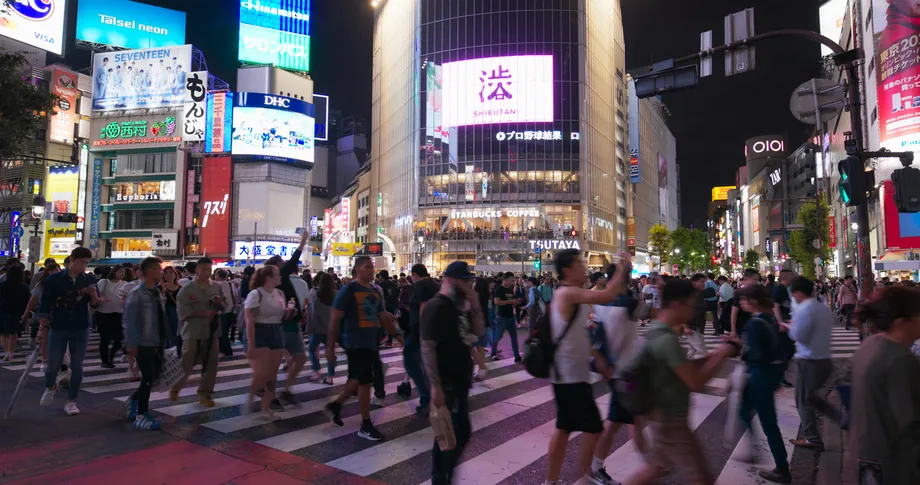
Shinjuku stands out even within that large network. Its status as the world's busiest train station reflects the millions of passengers moving through its maze of corridors each day. For travelers, the station is both a transport interchange and an encounter with the sheer size of Tokyo's daily traffic.
The Ginza Line opened in 1927 and is the oldest subway line in East Asia. Roppongi Station offers another measure of the network's scale: it reaches 42 meters below sea level, making it Tokyo's deepest station. The system's history and depth are part of the same story as its passenger numbers.
Shona Noguchi turned that network into a timed challenge in 2024. The rail enthusiast set a Guinness World Record by visiting all 285 Tokyo subway stations in 13 hours and 53 minutes. Completing the route drew attention to the operational precision of a complex system linking many parts of the capital.
A much smaller transport curiosity sits in a mall near Kawasaki Station. An escalator just three steps long is described as likely the world's shortest. The contrast with Shinjuku is striking: one attracts attention through the number of people passing through it, the other through how little distance it covers.
Digital art and nightlife draw crowds in different ways
teamLab Planets holds the title of the world's most visited museum dedicated to a single art group. Its immersive digital installations make the artworks an environment visitors enter, helping explain why the museum has become a major attraction within Tokyo's cultural scene.
Shinjuku Nichome is known for a different concentration of activity. It boasts the world's highest concentration of LGBTQ+ venues, reflecting the diversity of the capital's nightlife. Its place among Tokyo's superlatives comes from the number of venues gathered in one district.
Golden Gai, also in Shinjuku, packs approximately 280 tiny bars into a few narrow alleys. Each has its own theme and clientele. The district's appeal lies in that variety: a compact area contains many individual spaces with distinct identities, rather than a single uniform nightlife experience.
teamLab Planets, Nichome and Golden Gai show how Tokyo accommodates different kinds of cultural gathering. A museum draws crowds to digital installations, while nightlife districts bring people into collections of specialized venues. All three make the city's cultural variety visible in concrete places.
From a restaurant founded in 1801 to a ¥330,000 crab course
Tokyo has more than 100,000 restaurants and more Michelin stars than any other city in the world. Its dining scene stretches across an enormous range, from long established businesses to expensive specialist meals and thousands of places serving ramen.
Komagata Dozeu, operating since 1801, is described as likely Tokyo's oldest restaurant. Its long history adds another dimension to a city often associated with technological change: some of Tokyo's food businesses connect today's diners with traditions extending back more than two centuries.
Kitafuku Ginza occupies the other end of the article's culinary extremes. Described as the world's most expensive restaurant with Michelin stars, it offers a crab course for ¥330,000. That price illustrates the highly specialized luxury dining available alongside the capital's much broader restaurant scene.
Ramen lovers have more than 2,100 shops to choose from. Convenience stores are even more numerous, with nearly 6,000 locations across the city. Using those figures, convenience stores number roughly three times as many as ramen shops, showing how widely these everyday businesses are distributed.
The restaurant total, the Michelin distinction and the individual examples describe different aspects of the same city. Tokyo offers both exceptional meals that command global attention and a vast network of everyday places to eat and shop.
A metropolis stretching below sea level and out to distant islands
About 20% of the area of Tokyo's 23 wards is below sea level, equivalent to roughly one fifth. An intricate system of levees and floodgates protects these areas. Levees form barriers against water, while floodgates control its passage, making this infrastructure part of the practical foundation of life in the capital.
Tokyo's geography also extends far beyond the familiar urban skyline. The Ogasawara Islands, also called the Bonin Islands, lie around 1,000 kilometers south of central Tokyo but are part of the metropolis. Reaching this tropical destination takes a ferry journey of about 24 hours.
Sangenjaya presents another kind of change within Tokyo. Once a quiet residential area, it has become one of the city's hippest neighborhoods, known for retro charm, trendy cafes and lively nightlife. Its appeal comes from the meeting of an older neighborhood atmosphere with newer places to gather.
The Bulgari Hotel Tokyo offers a very different urban experience. Its most expensive suite, described as the city's costliest, commands $30,000 a night and provides panoramic skyline views. From protected low lying neighborhoods to distant islands and luxury accommodation, Tokyo covers an unusually broad range of settings.
Godzilla and Ohtani leave their marks on the capital
Godzilla has attacked Tokyo in films at least 30 times. Nagatacho, Ginza and Shinagawa are among the neighborhoods caught in the movie monster's cinematic destruction. These repeated appearances have made the capital a familiar setting in the history of the iconic kaiju, or giant monster.
Tokyo has embraced that connection. A Godzilla head towers over the Toho Cinema in Shinjuku, bringing a recognizable piece of the films into the real city. The attraction connects a busy entertainment district with a character whose fictional attacks have repeatedly reshaped Tokyo on screen.
Tokyo Tower became the setting for a different celebration in 2021, when it was illuminated in the Los Angeles Angels' colors to honor Shohei Ohtani's Most Valuable Player season. The event was streamed live, and special merchandise was released to mark the occasion.
Ohtani set two Guinness World Records. He became the first Major League Baseball player to achieve at least 100 innings and 100 strikeouts as a pitcher, alongside at least 100 runs batted in, hits and runs as a batter, in a single season. He was also the first player to start the MLB All-Star Game as both a pitcher and designated hitter.
Those achievements brought together two roles, pitching and batting, at an exceptional level. Tokyo Tower's illumination turned that sporting success into a public celebration, linking one of the capital's landmarks with Ohtani's accomplishments in American baseball.
The University of Tokyo's unexpected sporting connections
The University of Tokyo, Japan's premier academic institution, also has a place in the country's sporting history. Its football team won the Emperor's Cup multiple times, and the university played an important role in the early development of Japanese football.
The university is also recognized as the birthplace of Japanese baseball. Alongside those historical connections, it has produced a Guinness World Record holder, Hiroyuki Takada, who ran a marathon carrying a backpack weighing 20 pounds.
Its sports clubs are known for welcoming newcomers and are often composed entirely of students with no previous experience. That approach has brought unexpected success, including overtaking Kyoto University at the 51st Seven Universities Athletic Meet in 2012.
These achievements broaden Tokyo's sporting story beyond large stadiums and international competitions. University teams and individual challenges have contributed their own milestones, with participation open to students starting a sport for the first time.
Two Olympics, separated by more than half a century
Tokyo hosted the Olympics in 1964 and again for the 2020 Games, which took place in 2021 because of the pandemic. The first Games marked Japan's reemergence on the world stage, while the second brought athletes back to the capital under the challenges created by COVID-19.
The 1964 Olympics introduced advanced timing and scoring technologies, as well as judo and volleyball to the Olympic program. New Olympic records were set in 27 of 36 track and field events. That is three quarters of those events, illustrating the scale of the sporting performances recorded in Tokyo.
The delayed 2020 Games became another major stage for record setting performances. Their organization under pandemic conditions demonstrated the city's resilience and ability to manage a global competition, while athletes delivered achievements that reached audiences around the world.
A short timeline shows how these Olympic moments fit into Tokyo's longer sporting history:
- 1964: Tokyo hosted its first Olympics, with new Olympic records in 27 of 36 track and field events.
- 2012: The University of Tokyo overtook Kyoto University at the 51st Seven Universities Athletic Meet.
- 2021: The delayed Tokyo 2020 Olympics took place because the pandemic had prevented the Games from proceeding in their scheduled year.
- 2023: Nearly 3,000 Tokyo Marathon runners received the Six Star Medal, setting a Guinness World Record.
- 2024: Shona Noguchi visited all 285 Tokyo subway stations in 13 hours and 53 minutes.
- 2025: Tokyo is preparing to host the World Athletics Championships.
The performances that made Tokyo 2020 memorable
Karsten Warholm set a world record of 45.94 seconds in the men's 400m hurdles at the Tokyo Games. Sydney McLaughlin-Levrone set the women's 400m hurdles world record at 51.46 seconds. Both performances combined a full lap of the track with the repeated need to clear barriers.
Yulimar Rojas reached 15.67 meters in the women's triple jump, setting another world record. In the pool, Tatjana Schoenmaker completed the women's 200m breaststroke in 2 minutes 18.95 seconds, also a world record.
Japan's judo team won a record nine gold medals at a single Olympics. That achievement gave the host country a major success in a sport introduced to the Olympic program when Tokyo first hosted the Games in 1964.
Ariarne Titmus won gold in both the women's 200m and 400m freestyle. Caeleb Dressel won five gold medals and set two records, including a world record in the men's 100m butterfly. Their performances added to an Olympics remembered for outstanding results across the track, field and pool.
Marathon milestones and the next international gathering
The Tokyo Marathon draws tens of thousands of runners and has produced a record of its own. In 2023, nearly 3,000 athletes received the prestigious Six Star Medal, setting a Guinness World Record for the most such medals awarded at one marathon.
The medal recognizes runners who complete all six World Marathon Majors. Its meaning reaches beyond a single race: each recipient's Tokyo finish completed a wider series of marathon achievements. Awarding nearly 3,000 together made the 2023 event a particularly large shared milestone.
Tokyo's next major international sporting event is the World Athletics Championships in 2025. TDK Corporation, a longtime supporter of athletics, is running campaigns and events to engage fans and celebrate the countdown. The championships continue the city's role as a venue for sporting history.
Tokyo's sporting activity also includes support for parasports. Matt Stutzman, who set a world record for the longest accurate archery shot, competed in Tokyo and inspired audiences through his achievements. His example adds another form of sporting excellence to the city's record of international competition.
Across these events, Tokyo's appeal comes from the connection between extraordinary accomplishments and everyday city life. Its efficient transport, culinary variety and cultural activity attract visitors and give residents reasons for pride. The same metropolis contains Olympic venues, university clubs, neighborhood bars, historic restaurants and unusual attractions, each contributing a different part of its identity.
Key Points
- Shinjuku is the world's busiest train station, and Tokyo has 497 train stations.
- Shona Noguchi visited all 285 Tokyo subway stations in 13 hours and 53 minutes in 2024.
- teamLab Planets holds the record for the most visited museum dedicated to a single art group.
- Tokyo has more than 100,000 restaurants, more Michelin stars than any other city and over 2,100 ramen shops.
- Golden Gai contains approximately 280 tiny bars, while Shinjuku Nichome has the world's highest concentration of LGBTQ+ venues.
- About 20% of Tokyo's 23 wards lies below sea level; the Ogasawara Islands are around 1,000 kilometers south of central Tokyo.
- Tokyo hosted the Olympics in 1964 and the delayed 2020 Games in 2021, with major records set at both.
- Nearly 3,000 runners received Six Star Medals at the 2023 Tokyo Marathon, a Guinness World Record.
- As of August 22, 2025, Tokyo is preparing to host the World Athletics Championships that year.