A New Home for Street Food on Ratchadamri Road
Bangkok plans to open a new Hawker Centre beside Lumphini Park in early 2026, providing space for 88 vendors at a time and serving customers from 5am to midnight. Construction began on June 27, 2025, on Ratchadamri Road in Pathum Wan district. Vendors affected by recent sidewalk clearance operations, including those along nearby Sarasin Road, will receive priority when booking stalls.
Contents
- A New Home for Street Food on Ratchadamri Road
- Why Bangkok Is Bringing Vendors Together
- What Bangkok Is Learning From Singapore
- How the Building Will Fit Beside the Park
- How the Stalls and Shifts Will Work
- Who Will Get Priority for a Stall?
- What Diners Can Expect to Find
- Affordability Is Already Part of the Area's Appeal
- What the Centre Could Change for Residents and Visitors
- A Food Project Connected to Better Walking Routes
- The Essentials
The Bangkok Metropolitan Administration (BMA) is leading the project as part of an effort to improve street food hygiene, organise public space and protect small traders' livelihoods. The centre will bring vendors into a shared setting while seeking to retain the recipes, affordable meals and communal atmosphere that make Bangkok's street food popular with residents and visitors.
As of August 19, 2025, construction is continuing. The planned opening remains early 2026, with no exact opening date given. Details of vendor selection, the food available and operating rules are expected as the project progresses.
The location brings together several groups of potential customers: people exercising in Lumphini Park early in the morning, workers from nearby offices, tourists visiting the area and diners looking for food late at night. Public transport access and walking connections to business districts and major attractions are part of the site's appeal.
For vendors, the change will be practical as well as cultural. A stall in a designated centre offers shelter, improved facilities and a more stable place to trade. Moving away from a sidewalk also means adapting to assigned spaces, operating shifts and shared rules. Whether the centre can preserve affordable food while making that transition work for small businesses is central to the project.
Why Bangkok Is Bringing Vendors Together
Bangkok's street food trade stretches from dawn until midnight, with vendors selling spicy noodles, grilled meats, tropical fruit and sweet treats across the city's sidewalks. Those businesses are a familiar part of daily life, but crowded pavements, uneven hygiene standards and pressure from urban development have made their place in the city increasingly difficult to manage.
The BMA sees the new centre as a way to address those problems together. Moving food stalls into a purposefully arranged space can leave pavements clearer for pedestrians while giving traders a place to continue working. Food preparation, cleaning and waste disposal can also be managed within a shared setting.
BMA spokesman Aekvarunyoo Amrapala described the administration's ambition for the centre:
elevate the quality of Bangkok's street food and make the city more organised.
The project also seeks to create opportunities for vendors who have lost sidewalk trading spaces during recent clearance operations. Its goals extend beyond the appearance of the streets: the BMA wants to support people whose income depends on preparing and selling food.
What Bangkok Is Learning From Singapore
Singapore's hawker centres provide the model for the Bangkok project. They bring food sellers together in regulated environments known for clean surroundings, affordable meals and a broad choice of dishes. The Bangkok centre will apply that approach near one of the capital's best known parks.
A hawker centre is a shared place where individual vendors sell food from separate stalls. Customers can choose between sellers while eating within the same communal setting. For Bangkok, the intention is to retain the variety and social atmosphere of street dining while improving the organisation of the space around it.
The Lumphini Park project is intended to be a highly visible experiment that could set a precedent for future centres. Its appeal rests on combining Bangkok's culinary traditions with more consistent public health and urban management arrangements, rather than treating food vending and pedestrian access as entirely separate concerns.
How the Building Will Fit Beside the Park
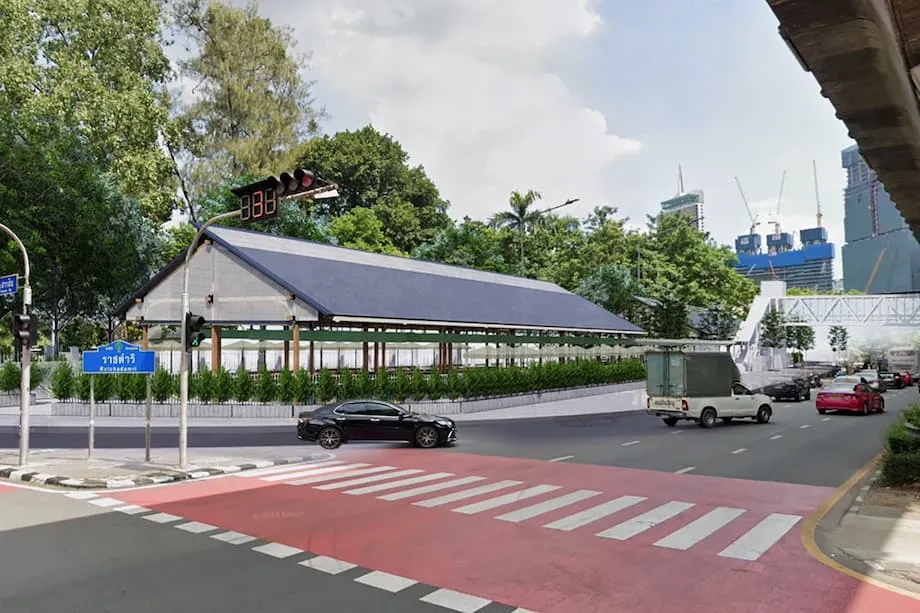
The Ratchadamri Road site places the centre next to Lumphini Park in central Bangkok. Its design prioritises comfort and environmental considerations, with natural ventilation intended to reduce the need for air conditioning.
The main building will have a muted roof colour to reduce reflected light that could disturb nearby King Chulalongkorn Memorial Hospital. That detail reflects the need to fit a busy food centre into an area shared by park users, hospital patients, workers and residents.
Large trees from the construction site have been moved temporarily to other locations within Lumphini Park. They are to be replanted at the centre when construction is complete. The BMA presents this arrangement as part of its commitment to environmental preservation.
The open air design is also intended to maintain the lively, communal feel associated with street food. Better hygiene and waste management are planned alongside that atmosphere, so the setting can accommodate both eating and the everyday work of preparing food and cleaning up.
The project's timetable and planned operating pattern are:
- June 27, 2025: Construction began beside Lumphini Park on Ratchadamri Road.
- August 19, 2025: Construction is continuing, with further operating details expected as work progresses.
- Early 2026: The centre is expected to be completed and open.
- After opening: The morning group will operate from 5am to 4pm, followed by the night group from 4pm to midnight.
How the Stalls and Shifts Will Work
The centre will accommodate 88 vendors in each of its two daily trading periods. Each stall will measure 2 metres by 2 metres, giving an individual vendor 4 square metres for food preparation and interaction with customers.
The morning period will last 11 hours, from 5am to 4pm. The night period will last eight hours, from 4pm to midnight. Together, the two periods provide a planned daily service window of 19 hours, covering breakfast, lunch, dinner and later meals.
The figure of 88 applies to each shift, so the plan provides 176 vendor places across the two trading periods, with 88 operating at any one time. That arrangement allows the centre to serve different parts of the day within the same physical space.
For customers, the long opening window is intended to make the centre useful for more than a single mealtime. People finishing an early run, office workers taking a lunch break and visitors returning late can all fit within the proposed schedule. For vendors, the shift structure will shape when they prepare food, serve customers and finish trading.
Who Will Get Priority for a Stall?
Vendors displaced by recent footpath clearance operations along Sarasin Road and other nearby areas will receive priority when booking stalls. Giving those traders access to the new centre is one of the BMA's main ways of connecting street organisation with support for livelihoods.
Aekvarunyoo Amrapala, the BMA spokesman, also described the project's purpose in terms of local employment and business opportunities:
The project also aims to create opportunities for local people.
For a vendor accustomed to a sidewalk setup, a regulated stall offers protection from the weather and improved facilities. The central location and variety of food are expected to attract a steady flow of customers, although vendors will have to adjust to a different trading environment.
Some may miss the freedom and spontaneity of informal street vending. The transition therefore involves more than moving cooking equipment: it changes how traders occupy space and organise their working day. By formalising operations, the BMA hopes to ease the burden on vendors with low incomes and help them continue doing business as the city changes.
The administration plans to provide further information about vendor selection and operational guidelines as construction advances. Community engagement will be important in making the centre useful to both the people selling food and those buying it.
What Diners Can Expect to Find
The centre is expected to sell affordable food, drinks and fresh produce, retaining the variety associated with Bangkok's street stalls. Vendors will be encouraged to keep prices accessible to local customers and tourists.
The anticipated selection includes familiar Thai meals as well as snacks, desserts and drinks. Early expectations for the food available include:
- Pad thai, som tam, or papaya salad, and khao man gai, or chicken rice.
- Grilled meats, seafood and vegetarian options.
- Fresh fruit, desserts and traditional snacks.
- Thai iced tea, fresh coconut water and other drinks.
The proposed vendor selection is intended to bring together sellers with their own specialties and family recipes. Supporting those small businesses is part of the effort to keep culinary knowledge in use while changing the place where food is prepared and served.
The BMA says food safety and environmental management practices will guide the centre's design and operation. Higher standards are planned for cleanliness, food safety and waste disposal, addressing longstanding concerns associated with informal food stalls.
Vendors are also to receive training and support to help them adapt to the requirements. That assistance matters because keeping a shared centre clean depends on daily routines at individual stalls as well as the facilities provided by the building.
Affordability Is Already Part of the Area's Appeal
Existing food stalls near Lumphini Park are known for inexpensive meals and familiar Thai flavours. Meals for two often cost less than 100 baht, making these sellers useful to people who want a simple meal without a large bill.
Reviews from residents and tourists describe friendly vendors and a variety of dishes. Some also describe basic surroundings and a limited number of stalls at certain times. Those observations help explain the appeal of combining low prices with a more comfortable and organised dining space.
A tourist review on TripAdvisor described the prices and food at existing stalls near the park:
The food is known for being tasty and extremely affordable, with meals for two people costing around 60 baht. The buffet is especially popular for its low price, offering many spicy dishes for as little as 40 baht.
Those prices describe the current nearby food scene. At the planned centre, the aim is to maintain accessible meals while introducing better facilities and operating standards.
Online discussions express excitement about the project, including hopes that ordering will become easier for people who do not speak Thai. Some people who regularly visit the area are also looking for a comfortable place to eat that retains affordability, familiar flavours and the character of local vendors.
What the Centre Could Change for Residents and Visitors
Lumphini Park already attracts people for jogging, picnics and cultural events. A nearby food centre would give those visitors a central place to eat before or after spending time in the park, while also serving residents and workers in surrounding districts.
For tourists, the centre is intended to offer a convenient way to sample Thai food without navigating busy sidewalk trading areas. Bangkok's street food is already a draw for international visitors, and the park location connects that interest with a well known green space.
Residents are expected to benefit from a cleaner, safer and more organised place to buy their usual meals. Traders could gain a regular base close to several customer groups. Those expected benefits depend on preserving the features people value in the existing food scene, including price, choice and personal relationships with vendors.
Some people worry that greater regulation and standardisation could reduce the spontaneity and diversity of Bangkok's street food. Others see Singapore's experience as an example of culinary traditions continuing within organised centres that improve public health and order.
The BMA has expressed a commitment to maintaining Bangkok's distinct street food character while introducing new facilities and standards. Continued support from the administration, vendors and the community will matter as the project moves from construction to daily operation.
A Food Project Connected to Better Walking Routes
The Hawker Centre forms part of a broader BMA effort to improve infrastructure and public spaces. Bangkok is upgrading sidewalks along main roads and access routes to BTS Skytrain stations, with the aim of creating a walkable radius of one kilometre around each station.
By 2026, the city plans to have upgraded 1,000 kilometres of sidewalks. The goal connects food, transport and recreation: people should be able to move more easily between stations, places to eat, workplaces and public spaces.
For the Lumphini Park area, pedestrian access is closely connected to the vendor relocation plan. Clearer sidewalks can help people move through the neighbourhood, while a designated food centre gives displaced traders somewhere nearby to continue serving customers.
The wider effort seeks to balance economic development, cultural preservation and environmental sustainability. As construction continues, the immediate priorities are completing the centre and setting out how vendors will be selected, what food will be available and how the shared space will operate.
The Essentials
- Bangkok plans to open the Hawker Centre beside Lumphini Park on Ratchadamri Road in early 2026.
- Construction began on June 27, 2025. An exact opening date has not been announced.
- The centre will have 88 vendors per shift, operating from 5am to 4pm and from 4pm to midnight.
- Each stall will measure 2 metres by 2 metres.
- Vendors displaced from Sarasin Road and other nearby sidewalks will receive priority when booking stalls.
- The design includes natural ventilation, a muted roof colour and the replanting of temporarily relocated trees.
- Affordable food, vendor support, better hygiene and waste management are central goals.
- The project accompanies Bangkok's plan to upgrade 1,000 kilometres of sidewalks by 2026.