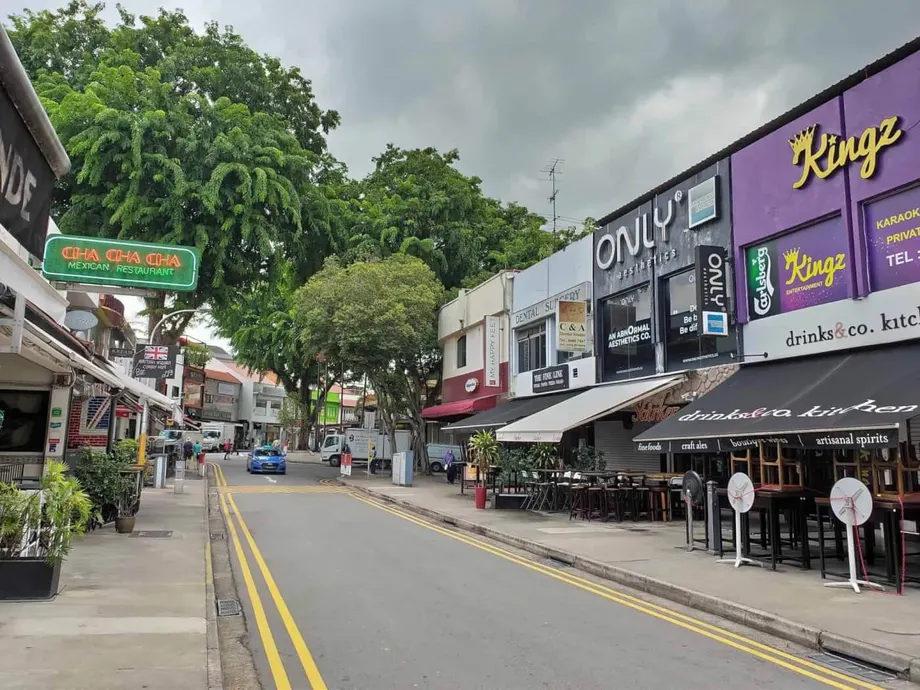
Familiar Shops Leave as New Businesses Arrive
At Bynd Artisan's flagship store in Chip Bee Gardens, fewer than ten people would pass by on weekdays, with only a slight increase at weekends. At Phillip Antique Investment, owner Phillip Ang recorded a 30% increase in business during the first week after One Holland Village opened, particularly from foreign visitors. Those contrasting experiences capture the uncertainty facing one of Singapore's most distinctive neighbourhoods.
Contents
- Familiar Shops Leave as New Businesses Arrive
- Why Bynd Artisan and Lim's Decided to Leave
- Rent, Spending and the Struggle for Customers
- Access Changes Add to Nightlife Pressures
- What Gentrification Means for the Village
- One Holland Village Brings Investment and Mixed Results
- Shared Spaces and Joint Events Could Draw Visitors
- Businesses Look Beyond Their Old Formula
- What the Community Wants to Keep
- Key Points
As of June 26, 2025, Holland Village is dealing with the departure of familiar businesses while trying to turn new shops, restaurants and homes into a wider revival. Thambi Magazine Store, Sunday Folks ice cream parlour, party shop Khiam Teck and Bynd Artisan closed their doors in 2024. Lim's Holland Village, a family furniture business with deep community roots, announced that it would close by early 2025.
Holland Village was long known as a bohemian enclave, an informal gathering place where heritage businesses, fashionable cafes and lively nightlife existed together. Its appeal came from that eclectic mixture, rather than from any single shop or attraction. Business departures over the past decade have gradually weakened the character that made it different from other commercial districts.
Rising rents, fewer visitors, changing spending habits and new competition are putting pressure on independent operators. New developments offer more reasons to visit, yet some established businesses say the surrounding streets remain quiet. The challenge is to bring enough customers into the wider neighbourhood to sustain both its new arrivals and its older shops.
Why Bynd Artisan and Lim's Decided to Leave
Winnie Chan, co-founder of Bynd Artisan, described leaving the Chip Bee Gardens flagship as bittersweet. The shop paid tribute to her grandfather's legacy as a pioneering hand bookbinder. Its closure therefore involved both a business decision and the loss of a place connected to family history.
Bynd Artisan's combination of dwindling foot traffic and rising rent had become unsustainable. A shop needs people to enter, browse and buy often enough to cover its running costs. The very small number of people passing on weekdays, followed by only a modest weekend improvement, left little room to make that calculation work.
Lim's Holland Village faced a related but different decision. After the death of their father and co-founder, the Lim sisters considered taking the furniture business online or moving it to a warehouse. They ultimately decided that neither option fitted their family's vision for the business.
Customers were changing too. Some had less space for furniture, while others had different tastes. For a business known for distinctive pieces and a personal touch, those changes affected what customers wanted and how the shop could continue serving them.
The departures have unfolded alongside new investment in the district:
- During 2024, Thambi Magazine Store, Sunday Folks, Khiam Teck and Bynd Artisan closed.
- Lim's Holland Village announced its closure by early 2025.
- As of June 26, 2025, businesses and community leaders were discussing revival measures, including a campaign linked to Singapore's 60th anniversary.
Rent, Spending and the Struggle for Customers
Some Holland Village units carry monthly rents above S$20,000, while others reach S$62,000. Such costs put particular pressure on independent businesses because rent must be paid even when few customers come through the door.
Singapore's Department of Statistics recorded a 3.7% fall in restaurant sales in April 2024 compared with the previous month. Cafes and food courts recorded only a marginal increase. Those figures describe a wider spending environment in which restaurant operators were already facing pressure.
Holland Village businesses also face changes in how people use their leisure time after the pandemic. Generation X is going out less, Generation Z prefers digital spaces, and millennials are concentrating more on essentials than nightlife. Together, those shifts make it harder for a district associated with browsing, socialising and evenings out to rely on its former customer patterns.
One Holland Village and Holland Piazza have added retail and dining choices. More choice can draw people to an area, but it also gives existing customers more places to divide their spending. Established operators are trying to maintain sales while competing with new businesses nearby.
Rent and customer demand are therefore connected problems. A business with a steady stream of buyers may be better placed to meet a high rent. A quieter shop has less income available for the same bill, making a decline in visitors harder to absorb.
Access Changes Add to Nightlife Pressures
Holland Village's central open air car park has closed, and roads are subject to closures at specified times. Business owners say these changes have made access less convenient and discouraged some visitors.
Stanley Yeo, owner of Wala Wala Café Bar, linked smaller crowds to the loss of the car park and restrictions on live music. He described the slower trade and the difficulty of persuading drivers to walk from other parking facilities:
"After Covid, the entire Holland Village has been slow compared to before. Perhaps drivers are too lazy to walk as the current car park is 'far away'. It's worse when it rains," he remarked.
For a nightlife business, transport, weather and entertainment all affect whether someone makes a visit. Yeo's experience brings those practical concerns into the discussion about Holland Village's changing identity. A familiar bar still depends on customers finding it convenient and worthwhile to return.
One Holland Village includes up to 500 parking lots. The district now has new parking capacity alongside complaints about the loss of the former central car park, leaving businesses concerned about how visitors move between the new development and the established streets.
What Gentrification Means for the Village
Holland Village's transformation is often described as gentrification: a process in which redevelopment and rising rents push out established businesses and residents, changing a neighbourhood's character. Here, the concern is that familiar independent shops may disappear faster than the community can adjust.
Dr. Yeo Kang Shua, an associate professor of architectural history, explains gentrification as change driven by economic, social and cultural factors. In his view, the difficulty comes when that change happens so quickly that people cannot adapt and are forced out. Change itself can bring renewal, while its speed affects who can remain.
Dr. Tan Shin Bin of the Lee Kuan Yew School of Public Policy points to targeted subsidies and thoughtful urban planning as ways to reduce harmful effects. Such measures could help retain some of the area's original charm while allowing new activity to develop.
Dr. Tan also identifies a limit to rent controls. Capping rents offers no lasting answer when the central problem is weak demand caused by changing lifestyles and the growth of e-commerce. Shops need customers as well as manageable costs.
Explaining how consumer habits affect the survival of heritage businesses, Dr. Tan said:
If we change our social patterns and the way we shop, they will die a natural death.
That puts part of Holland Village's future in the hands of its visitors. Planning and financial support can help businesses remain open, while regular purchases provide the income they need to continue.
One Holland Village Brings Investment and Mixed Results
One Holland Village is among the area's biggest changes. Developed by Far East Organization and its partners, the project combines homes and retail shops, alongside its parking facilities. It aims to bring new residents and visitors into the district.
Deborah Tan, Far East Organization's director for operations and marketing, explained the thinking behind the development:
We believe that the location was ready for revitalisation as it offered a chance to bring new energy to an already established and authentic community.
The mall incorporates design elements inspired by Holland Village's history. Art installations and open spaces are intended to encourage people to meet and interact, connecting the new development with the community around it.
Phillip Ang's 30% increase in business during the first week of the mall's opening shows that some nearby traders experienced an early benefit. Foreign visitors were a particular part of that increase. The team at Caffeine Xpress also welcomed improved visibility and the environment that accommodates pets.
Nasen Thiagarajan, president of the Singapore Nightlife Business Association, described a less encouraging picture across the district. He said food options had increased by 30% since the mall opened, while footfall had not risen proportionally. In simple terms, there were more places to eat without a matching increase in people visiting.
Thiagarajan explained why activity inside the mall needs to extend to the surrounding streets:
"If businesses in the mall are doing okay, while the streets remain quiet, it means we're not seeing fresh footfall. We need people," he said.
The two 30% figures describe different things: Ang's increase in business at one shop during the opening week, and Thiagarajan's estimate of the growth in food options. Together, they show why an early gain for an individual operator can coexist with concern about demand across the neighbourhood.
Shared Spaces and Joint Events Could Draw Visitors
Business owners and community leaders have proposed more outdoor seating, especially in Holland Village Park, to encourage people to stay and socialise. The aim is to give visitors comfortable places to spend time between meals, shopping and other activities.
A formal merchant association is another proposal. It could coordinate marketing, promotions across businesses and events, giving individual operators a way to act together rather than depending entirely on their own advertising and customer base.
Plans are underway for a campaign lasting three months to coincide with Singapore's 60th anniversary. Proposed attractions include discounts, product deals and a lucky draw for diners who visit multiple outlets. The approach would encourage customers to move between businesses instead of stopping at just one.
Business and community discussions also include four marquee events each year, linked to major holidays. Regular events could give people repeated reasons to return, while shared promotions could spread spending across more of the district.
Businesses Look Beyond Their Old Formula
Some operators are exploring workshops, renting out space for events and broadening what they sell to reach different groups of customers. These approaches would create income beyond the purchases on which a shop or dining venue has traditionally relied.
Social media is another part of the response. Businesses are increasingly working with influencers and creating experiences that visitors may want to photograph or share online, hoping to attract younger audiences who spend more time in digital spaces.
Wala Wala owner Stanley Yeo said the district's revival would require businesses to respond to present habits rather than simply restore an earlier version of Holland Village:
Revitalising Holland Village requires acknowledging that the old formula simply will not work in today's landscape. The goal now is not to recreate the past, but to interpret the village for today's audience.
The proposals address several needs at once: attracting visitors, encouraging longer stays and finding additional income. Their shared purpose is to make Holland Village useful and appealing to today's customers while retaining reasons to choose it over another shopping or dining district.
What the Community Wants to Keep
Longstanding residents and regular visitors remember Holland Village through childhood experiences, familiar landmarks and repeated visits. The loss of Thambi Magazine Store and Khiam Teck therefore reaches beyond the goods those businesses sold. Their presence formed part of the neighbourhood's shared history.
Dr. Yeo Kang Shua, the architectural historian, connects the area's character to the people who use it. His observation that "people make a place" puts community participation alongside buildings and business investment in the effort to preserve its identity.
One resident reflected on why even an ordinary shop or car park can carry emotional weight:
The thing we're desperate to hold on to might not even be the shop or person or car park per se, but what their existence meant to us.
Singapore's continuing urban change brings progress and preservation into the same neighbourhood. Holland Village reflects pressures also felt in urban neighbourhoods elsewhere: economic costs, redevelopment and shifting lifestyles continually change which businesses survive and how people use familiar places.
For Holland Village, revival depends on turning affection into regular visits and purchases, alongside business adaptation and thoughtful planning. New investment has already brought opportunities for some operators. The task facing the wider community is to make those opportunities reach the streets and businesses that give the village its character.
Key Points
- Thambi Magazine Store, Sunday Folks, Khiam Teck and Bynd Artisan closed in 2024; Lim's Holland Village announced closure by early 2025.
- Businesses face high rents, fewer visitors, changing spending habits and competition from new retail and dining venues.
- Some monthly rents exceed S$20,000, with others reaching S$62,000.
- One Holland Village brings homes, shops and up to 500 parking lots, with mixed experiences for nearby businesses.
- Revival proposals include outdoor seating, a merchant association, joint promotions and major events.
- Community support, regular spending and business adaptation will shape how much of Holland Village's distinctive identity survives.