Real Tremors Meet a Viral Warning
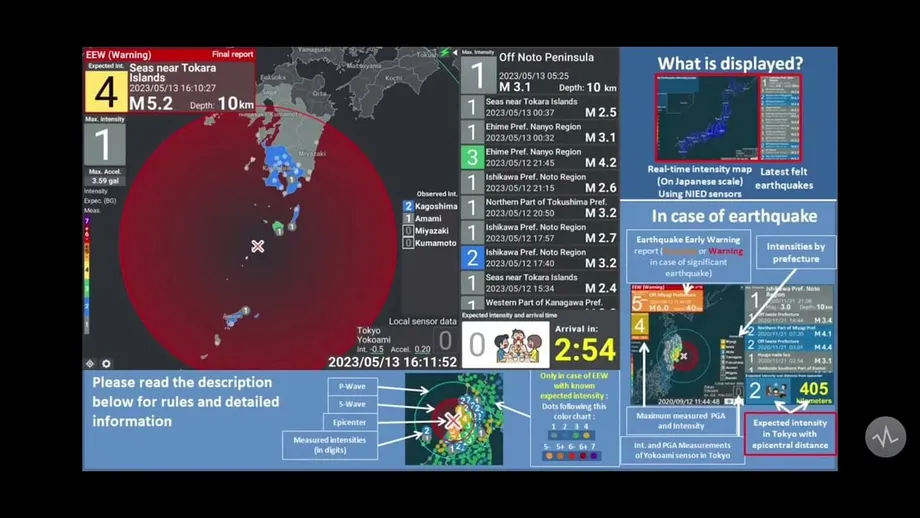
More than 330 tremors around Japan's Tokara Islands in the past week, including a magnitude-5 earthquake, have coincided with an eruption at Mount Shinmoe in Kyushu and renewed concern about a manga predicting disaster in early July 2025. As of June 26, the seismic activity is real, while Japanese officials say there is no scientific basis for predicting an earthquake's exact date, location and size.
Contents
- Real Tremors Meet a Viral Warning
- What Is Happening Around Tokara and Mount Shinmoe?
- How a Dream Diary Became a Disaster Prediction
- Why the Warning Spread Across Asia
- Travel Bookings Fall Despite Strong Visitor Numbers
- What Scientists Can Say About Earthquake Risk
- Why Reassurance Has Not Ended the Anxiety
- Preparedness Without Panic
- A Story Moving Faster Than Official Reassurance
- Key Points
The Japan Meteorological Agency (JMA) has raised Mount Shinmoe's alert to level three on its scale of five after the volcano erupted for the first time in seven years. A plume of ash rose 500 meters, ash fell in surrounding areas, and officials warned that flying rocks and pyroclastic flows could reach 2 kilometers from the crater. Pyroclastic flows are dangerous, fast moving mixtures of hot gas, ash and volcanic material.
Ryo Tatsuki, a retired manga artist, has become an unexpected focus of the anxiety. Her book, Watashi ga Mita Mirai, or The Future I Saw, gained a following after readers connected a reference to March 2011 with the earthquake and tsunami that devastated northeastern Japan that month.
A new edition published in 2021 contains a warning of a major disaster on July 5, 2025. The prediction has spread across Asian social media, influencing travel decisions and contributing to falling bookings from Hong Kong. Airlines have reduced services even as Japan continues to attract large numbers of international visitors.
Two developments are therefore unfolding together: authorities are monitoring earthquakes and volcanic activity, while tourism businesses and public officials are responding to fear surrounding a specific date. Scientists say the Tokara swarm resembles activity previously recorded in the region.
What Is Happening Around Tokara and Mount Shinmoe?
The Tokara Islands form a remote chain between the southern tip of Kyushu and the Okinawa islands. The recent swarm there has occurred alongside a series of smaller earthquakes felt in southern Kyushu. A swarm means many earthquakes occurring in the same area over a relatively short period.
Fumiaki Tomita, an assistant professor at Tohoku University's Research Centre for the Prediction of Earthquakes and Volcanic Eruptions, said similar episodes had occurred in 2021 and 2023. He described the current activity as part of a pattern seen before:
The sort of earthquake swarms that we see happening off southern Kyushu happen occasionally and we have seen similar seismic events in 2021 and again in 2023. This is not uncommon.
Tomita said the relationship between the Tokara earthquakes and Mount Shinmoe's eruption remains unclear. Their timing has unsettled residents and people considering travel, but the JMA continues to assess the physical activity through monitoring rather than a predicted calendar date.
Mount Shinmoe, in central Kyushu, presents a concrete local hazard. Its level-three alert, ashfall and warning about material reaching 2 kilometers from the crater concern conditions around the volcano. The JMA has stressed that there is no scientific basis for connecting the eruption or earthquake swarm to a prophecy.
How a Dream Diary Became a Disaster Prediction
Tatsuki says she has recorded dreams she regards as prophetic for decades. First published in 1999, The Future I Saw acquired cult status because its cover included the words "March 2011, Great Disaster." Readers later connected that phrase with the Tohoku earthquake and tsunami in March 2011.
The disaster killed more than 18,000 people and triggered the Fukushima nuclear disaster. Its place in Japan's collective memory helps explain why an apparent reference to it attracted such attention. Believers treated the cover note as a prediction that had come true, giving Tatsuki's later warning credibility among her followers.
The 2021 edition added material describing a major disaster on July 5, 2025. Tatsuki's dream involved "boiling seas," "giant bubbles" and a tsunami three times the height of the waves in 2011, possibly caused by an underwater volcanic eruption south of Japan. Her vision's affected area included Japan, Taiwan, Indonesia and the Northern Mariana Islands.
Tatsuki presents the book as a dream diary rather than a psychic prediction. It has nevertheless sold more than a million copies, and its influence extends beyond Japan, particularly to Hong Kong, Taiwan and other parts of Asia.
The dates connecting the book, past disasters and current anxiety span more than two decades:
- 1999: The Future I Saw was first published, with a cover reference to a great disaster in March 2011.
- March 2011: The Tohoku earthquake and tsunami killed more than 18,000 people and triggered the Fukushima nuclear disaster.
- 2021: A new edition of the manga included the warning about July 5, 2025. A similar earthquake swarm also occurred off southern Kyushu that year.
- 2023: Another comparable episode of seismic activity occurred in the region, according to Tomita.
- June 2025: The Tokara swarm and Mount Shinmoe eruption have heightened attention ahead of the date named in the manga.
- July 5, 2025: The date specified in the new edition remains ahead as of June 26.
Why the Warning Spread Across Asia
YouTube, TikTok and Weibo have carried dramatic countdown videos, explanations of supposed hidden warnings and commentary from influencers. The hashtag "Manga-Japan-Earthquake" has attracted tens of millions of views. In Hong Kong, the manga became a bestseller.
Other predictions have added to the anxiety. Hong Kong feng shui practitioner Master Seven warned of more natural disasters in the "Year of the Wood Snake" and advised against visiting Japan and South Korea. Celebrities and business leaders have helped spread such warnings.
Spiritual beliefs and disaster preparedness coexist in parts of East Asia, giving these messages an audience already conscious of natural hazards. The memory of a major disaster, fresh earthquake activity and repeated online warnings can combine to make an approaching date feel especially threatening.
Psychological explanations include confirmation bias, the tendency to notice information that supports an existing belief. Someone expecting a disaster may pay close attention to each new tremor because it seems to fit the prediction.
The Forer effect, also called the Barnum effect, offers another explanation: a vague statement can feel personally meaningful or unusually accurate. Such reactions help explain why predictions can influence behavior even when scientific authorities reject the possibility of forecasting an earthquake by a precise date.
Travel Bookings Fall Despite Strong Visitor Numbers
Hong Kong travel agencies reported an 83% drop in bookings to Japan for late June and early July. Bloomberg Intelligence and ForwardKeys data put the decline in bookings from Hong Kong at 50% compared with a year earlier, with falls reaching 83% for some periods. The figures describe different booking measures and periods, while pointing to pronounced weakness around the predicted date.
Greater Bay Airlines and Hong Kong Airlines have reduced or suspended flights, citing weak demand driven by fear of the predicted disaster. Some travel agencies have turned their attention to alternative destinations as customers reconsider Japan trips.
Agencies in Taiwan and South Korea have also reported substantial declines in demand, especially for early July. The disruption matters in places with close cultural ties to Japan and frequent travel for holidays, business and family visits. A decision to postpone a trip can affect airlines, travel agents and the businesses expecting those visitors.
Japan's wider tourism picture remains strong. The country recorded a record 3.9 million foreign visitors in April 2025, supported by a weak yen and demand accumulated during the COVID-19 pandemic. A weak yen can make spending in Japan cheaper for visitors exchanging foreign currencies.
The current booking losses have therefore arrived during a broader tourism boom following the pandemic. The sharp, potentially temporary downturn in some markets sits alongside strong international arrivals, rather than a uniform collapse in demand for Japan.
Japanese tourism boards and officials have tried to reassure travelers. Yoshihiro Murai, governor of Miyagi Prefecture, one of the areas hardest hit in 2011, urged people not to take the rumors seriously. He warned that the unfounded story was beginning to affect tourism.
What Scientists Can Say About Earthquake Risk
Japan lies on the Pacific Ring of Fire, a zone of intense tectonic activity. The country experiences hundreds of tremors each year, and major earthquakes recur throughout its history. The 2011 Tohoku earthquake and tsunami remain central to public awareness of that danger.
Government task forces regularly revise assessments of possible future megaquakes. In February 2025, a Japanese government task force warned of an 80% chance of a magnitude-9 earthquake in the Nankai Trough, off Japan's Pacific coast, within the next 30 years. Such an earthquake could generate tsunamis reaching 30 meters and cause catastrophic damage.
A probability covering 30 years describes the likelihood of an event across a long period. It helps authorities plan for a serious hazard. Predicting a particular day would require identifying when an earthquake will happen, where it will begin and how large it will be, something scientists say current technology cannot do.
Ryoichi Nomura, director general of the JMA, addressed that limit in a statement on social media:
Current levels of scientific expertise do not allow precise earthquake prediction in terms of timing, location and scale. Accordingly, any such predictions should be considered unreliable.
Nomura later expressed concern at a press briefing about the effect of the rumors on people's decisions:
It is regrettable that people are being affected by baseless information in this age of modern science.
The JMA has repeatedly stated that earthquakes cannot be predicted by date, time or place. Its message leaves room for serious preparation for known hazards while explaining why a dream cannot supply a reliable schedule for them.
Why Reassurance Has Not Ended the Anxiety
Public responses online range from skepticism to belief. Some people argue that science should not dismiss prophecies outright, pointing to the manga's apparent reference to the 2011 disaster. Others acknowledge that dreams about future events lack scientific proof while maintaining that the possibility cannot be completely denied.
Tatsuki's book gives the fear a memorable story and a specific date. The earthquake swarm and eruption give anxious readers fresh events to connect to that story. Social media then carries those connections quickly across borders through repeated videos, commentary and personal warnings.
The consequences extend beyond belief itself. Canceled bookings, reduced flights and switches to other destinations show how a story can influence economic activity. The episode brings together traditional publishing, online platforms, disaster memories and spiritual practices in ways that affect everyday choices.
Preparedness Without Panic
Japan has invested heavily in reducing disaster damage. After the 2011 catastrophe, it undertook major coastal defense projects, including a tsunami wall stretching 400 kilometers, designed to weaken waves and delay flooding inland.
The Shinkansen bullet train network uses earthquake detection and response technology capable of slowing or stopping trains before tremors are felt. Regular drills, public education campaigns and extensive emergency response systems also form part of daily life.
Authorities routinely circulate preparedness information as part of this established approach, rather than in response to a particular prophecy. The purpose is to help people respond to hazards whenever they occur.
Tatsuki herself has encouraged people to use the attention to review evacuation routes and stockpile supplies, while warning against panic or overreaction. Those preparations address practical needs: knowing where to go and having essential items ready.
A travel industry expert also pointed to responsible reporting and critical thinking as lessons from the episode. Sensational predictions can produce social and economic costs, while clear information can help people distinguish routine readiness from fear focused on one date.
A Story Moving Faster Than Official Reassurance
The Future I Saw demonstrates the reach of both traditional and social media. A manga presented as a record of dreams has become part of an international discussion about disaster risk, influencing travel patterns and collective anxiety.
Japan's real seismic and volcanic hazards explain why the subject commands attention. The Tokara tremors require monitoring, Mount Shinmoe's eruption carries local dangers, and the Nankai Trough assessment describes a serious risk over decades. Each calls for attention to the conditions and time periods authorities identify.
The immediate challenge for officials and tourism businesses is communicating those facts while a vivid prediction circulates widely. As of June 26, July 5 is still ahead, the JMA is monitoring the ongoing activity, and its scientific position remains that precise earthquake prediction is beyond current capabilities.
Key Points
- More than 330 tremors, including a magnitude-5 earthquake, have occurred around the Tokara Islands in the past week.
- Mount Shinmoe erupted for the first time in seven years, prompting a level-three alert and warnings about hazards within 2 kilometers of the crater.
- Ryo Tatsuki's manga names July 5, 2025, as the date of a major disaster, fueling anxiety across parts of Asia.
- Hong Kong bookings to Japan have fallen sharply, and Greater Bay Airlines and Hong Kong Airlines have reduced or suspended services.
- Scientists say similar regional earthquake swarms occurred in 2021 and 2023, and precise earthquake prediction is not possible with current technology.
- Japan continues routine disaster monitoring and preparedness efforts while officials urge people to rely on verified information.