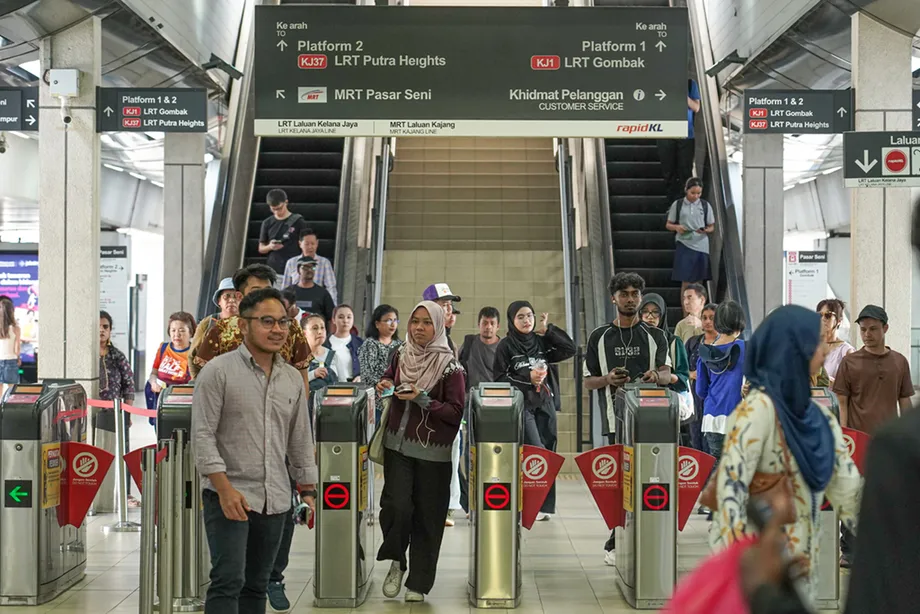
A degree still leaves many young Malaysians struggling to get by
More than 65% of Malaysia's fresh graduates earn less than RM3,000 a month, about US$700, while many begin working life on salaries of RM1,000 to RM2,000. Starting pay has remained stubbornly stagnant for more than a decade, leaving young workers struggling to cover living expenses, repay student loans and build careers after years of study.
Contents
- A degree still leaves many young Malaysians struggling to get by
- Low starting pay reaches across disciplines
- What two graduates experienced
- Having a job can still mean being underemployed
- Graduate numbers have grown faster than suitable jobs
- Why economic growth has not resolved the wage problem
- The cost extends to migration and inequality
- Connecting courses with careers and creating better jobs
- Raising pay and easing immediate living costs
- The Essentials
The Ministry of Higher Education's Graduate Tracer Study and Future Studies Berhad's Gaji Cukup Makan Economy report describe a problem reaching beyond holders of bachelor's degrees. Nearly two thirds of fresh graduates, including those with master's degrees and PhDs, begin their careers below RM3,000 a month.
The Ministry of Finance's Economic Outlook Report 2025 gives another measure of the pressure: more than half of fresh graduates have drawn starting salaries below RM2,000 for the past decade. These figures describe different salary thresholds, but both point to a large share of new graduates entering work with limited spending power.
Kuala Lumpur and Penang are among the urban centres where rising living costs make those salaries particularly difficult to stretch. Rent, food, transport and other necessities compete for money before a graduate can put anything aside.
The phrase "gaji cukup makan", meaning a salary just enough for food, captures this experience. Higher educational attainment has expanded, yet many graduates face financial anxiety and career uncertainty when they move from university into employment.
Low pay is only part of the problem. Many graduates also work in jobs requiring less education than they possess, limiting their chances to use what they studied and move into better paid work.
Low starting pay reaches across disciplines
Engineering and technology graduates are among those affected, despite their fields traditionally being seen as areas of strong demand. Some begin on salaries only just above RM1,000, showing that a qualification in a technical subject does not always bring a comfortable income at the start of a career.
The wage gap between degree holders and people with only secondary education has also narrowed. For students and their families, that reduces the financial reward associated with spending additional years in education.
A starting salary matters beyond the first monthly payslip. Graduates need to meet immediate expenses while trying to become financially independent, repay education debts and develop useful work experience. A small income leaves little room to do all three at once.
Nominal wages, meaning the amount of money paid, have increased slightly. Real wages measure what that money can buy after inflation. When prices rise faster than salaries, a worker can receive more ringgit while still being able to afford less.
Real wages have stagnated or even declined, while urban living costs have far outpaced salaries at the beginning of a career. Many graduates consequently compromise on housing, nutrition and their way of life.
What two graduates experienced
Andy Yap, a computer science graduate aged 23, spent four months looking for work. Employers repeatedly rejected his salary expectation of RM3,000, telling him it was too high.
Yap described the response to his requested salary in these words:
too much
He eventually secured a software engineering job paying RM4,000. Many of his peers with similar qualifications settled for jobs paying just above RM1,000, leaving a large difference in earnings among graduates trained in the same field.
Howard Ng, another recent graduate, earns about RM3,000 a month. He described the amount available for rent and everyday needs as:
barely enough
Ng explained how housing and food absorb his income, while noting that he currently has no student loan repayments:
A third of my salary goes to paying rent, the rest pays for daily necessities, especially food … thankfully I am not currently paying off student loans,
At his stated salary, a third amounts to about RM1,000 a month for rent, leaving roughly RM2,000 for other expenses. A physiotherapy graduate earning RM2,400 similarly relies on family support to make ends meet.
Many young professionals live from one payday to the next, unable to save, invest or plan for the future. Student debt, high rents and the need to support relatives can place further pressure on an already tight budget.
Having a job can still mean being underemployed
Data from the Department of Statistics Malaysia and Khazanah Research Institute show that up to 70% of fresh graduates work in jobs classified as requiring intermediate skills or no specialised skills. Clerical, sales and service roles are among the examples, with positions that do not require a university degree.
Underemployment in this context means a person's job uses less skill or education than they have. A graduate may be employed and earning money while still having limited opportunity to use the knowledge gained at university.
Khazanah Research Institute's figures for 2021 show that nearly half of all graduates were overqualified for their positions. Only about 43% were employed in jobs matching their qualifications. The figures concerning fresh graduates and all graduates describe different groups, so their percentages need to be understood within those groups.
Many graduates accept jobs requiring fewer skills simply to avoid unemployment. They can then face a wage penalty for being overqualified: their pay reflects the job they have taken rather than the education they completed.
Temporary work, contract work and work for fewer than full time hours have also become more common. These arrangements fall within nonstandard employment. More than half of graduates in 2021 lacked permanent positions with full time hours.
Such work often brings irregular income and limited social protection, adding to financial insecurity. Graduates in jobs that do not match their qualifications report greater dissatisfaction, burnout and absenteeism.
A weak career path can leave workers feeling frustrated and disillusioned, with consequences for mental health. Malaysia also loses the benefit of skills that its graduates have developed but cannot fully use in their employment.
Graduate numbers have grown faster than suitable jobs
Malaysia's higher education system has expanded rapidly. Tertiary enrolment has multiplied more than 25 times since 1980, bringing a much larger pool of educated people into the labour market.
Around 300,000 new graduates enter the job market each year, while only about 50,000 jobs requiring advanced skills and offering good pay are available. Those figures amount to roughly six new graduates for every such job, illustrating the pressure on people seeking suitable work.
Competition intensifies when many applicants pursue a limited number of positions. Employers have a large pool to choose from, while graduates may accept lower salaries or jobs outside their field to begin earning.
In 2022, only about a quarter of all jobs were classified as requiring advanced skills. The economy remained heavily dependent on work requiring intermediate skills or no specialised skills, with slow creation of more demanding roles.
Employers also report gaps in graduates' practical skills, industry exposure and soft skills, such as the ability to communicate and work with others. Outdated curricula and insufficient internships can leave students with academic knowledge but limited preparation for everyday workplace demands.
Universities and employers have not worked closely enough to keep all courses aligned with industry needs. The expansion of education has consequently run ahead of both suitable job creation and the connections needed to help graduates enter those jobs.
Graduates therefore face two connected problems: a shortage of positions requiring their qualifications and a mismatch between some courses and the skills employers seek. Improving education and increasing the supply of suitable jobs address different parts of the same difficulty.
Why economic growth has not resolved the wage problem
Malaysia's economy remains anchored in industries that compete through low costs and intensive use of labour. Heavy reliance on foreign workers helps suppress wage growth and reduces the incentive to invest in automation, innovation and workforce skills.
Microbusinesses and small enterprises make up the bulk of the economy. Employers often use the legal minimum wage as a reference point for starting salaries, keeping graduate pay close to the wage floor rather than setting it around the skills a role requires.
Weak collective bargaining, limited labour protections, the absence of standard wage setting guidelines and limited enforcement of labour laws also allow employers to keep initial salaries low. Collective bargaining is the process through which workers negotiate pay and conditions together.
The share of Compensation of Employees, or CE, in Malaysia's gross domestic product remains below 35%, far below that in developed economies. This measure describes how much of the value produced by the economy goes to employees as compensation.
The wage problem has persisted despite decades of economic growth and repeated policy interventions. Academic programmes often lag behind industry needs, while the economy has not created enough jobs in industries built around advanced knowledge and greater value.
The historical comparison presented in the wage discussion is stark: a graduate salary of RM1,300 in 1984 is described as equivalent to RM7,000 to RM8,000 today after inflation, while current starting salaries are only a fraction of that amount. No calculation method is given for that comparison.
Several dates show how education, job quality and pay have developed over time:
- Since 1980, tertiary enrolment has multiplied more than 25 times.
- In 1984, the graduate salary used in the historical comparison was RM1,300.
- In 2021, nearly half of graduates were overqualified, about 43% held jobs matching their qualifications, and more than half lacked permanent positions with full time hours.
- In 2022, only about a quarter of jobs required advanced skills.
- The Economic Outlook Report 2025 describes more than a decade in which over half of fresh graduates received starting salaries below RM2,000.
The cost extends to migration and inequality
Nearly 1.9 million Malaysians had migrated overseas as of 2022, with a significant proportion classified as workers possessing advanced or intermediate skills. Limited access to suitable jobs with good pay at home is a major concern in the loss of talent.
Graduates looking abroad for better opportunities take their knowledge and experience with them. That reduces the talent available in Malaysia and can weaken innovation and economic growth over the longer term.
Low wages and underemployment also contribute to income inequality and social divisions. Graduates with family support can receive help with rent or daily expenses, as the physiotherapy graduate's experience shows. Those who must repay loans or support relatives have additional demands on the same limited income.
The shrinking financial return from a degree may discourage further investment in education, especially among households with lower incomes. Families weighing education costs against likely earnings face a harder decision when graduates struggle to find suitable work.
Malaysia's ambition to become a nation with high incomes depends in part on creating an economy built around knowledge and skills. Persistent low pay and underemployment weaken that effort by leaving educated workers without opportunities to develop and contribute fully.
Arulkumar Singaraveloo, chief executive officer of the Malaysia HR Forum, described how the problem can spread from individual careers to the wider economy:
Persistent graduate underemployment risks creating a vicious cycle of low wages, wasted talent and declining confidence in higher education. Over time, this could widen inequality, push talent overseas and undermine Malaysia's goal of becoming a high-income nation.
Connecting courses with careers and creating better jobs
Education reform proposals call for universities and colleges to work more closely with employers so that curricula remain relevant and current. Practical skills, internships and industry exposure would give students more experience of the work they may later be asked to perform.
Closer cooperation could help graduates move from academic study into employment with a better understanding of workplace expectations. It would also give institutions a clearer picture of the skills businesses need.
Creating more suitable jobs is the other major task. Proposals call for government to prioritise industry ecosystems in semiconductors, clean energy and biotechnology, where connected businesses and skills could support jobs requiring advanced knowledge and offering better pay.
The New Industrial Master Plan 2030 aims to create millions of new jobs. Its success depends on effective implementation and investment, including whether those jobs offer graduates meaningful opportunities to use their qualifications.
Continuous professional development is also part of the proposed response. Government and industry support for lifelong learning and retraining could help graduates adapt as job requirements change and build the skills needed for career progression.
Education reform, industrial development and continuing training address different stages of a graduate's working life. Courses prepare people for entry, suitable jobs give them a place to apply their knowledge, and further learning helps them progress.
Raising pay and easing immediate living costs
Wage policy proposals include advisory salary guidelines, wage subsidies and hiring grants for employers that recruit fresh graduates into roles requiring advanced skills. Such measures aim to raise the wage floor and encourage fairer compensation.
The proposed policies would be flexible and tailored to sectors, with support linked to measurable results such as wage growth and improved workforce skills. Linking incentives to those outcomes would focus attention on what graduates actually earn and learn after being hired.
Housing allowances, rent controls in urban areas and tax incentives for employers have also been proposed to ease living costs. These measures target immediate expenses that consume much of a young worker's income.
Remote work could allow some graduates to live in cheaper locations without giving up career opportunities. For workers whose jobs can be performed remotely, location would become less of a constraint on balancing employment and housing costs.
The proposals require coordinated action by government, educational institutions, employers and graduates. Higher salaries would ease immediate financial pressure, while better job creation and stronger links between education and industry would address why so many graduates struggle to find suitable work.
The stakes are concrete: the ability to pay rent without family help, make student loan repayments, save money and pursue a career that uses years of education. Without meaningful reform, low pay and underemployment risk reinforcing each other and weakening confidence in higher education.
The Essentials
- More than 65% of fresh graduates earn below RM3,000 a month, with many starting between RM1,000 and RM2,000.
- The Economic Outlook Report 2025 says more than half have received starting salaries below RM2,000 for the past decade.
- Up to 70% of fresh graduates work in jobs requiring intermediate skills or no specialised skills.
- Around 300,000 graduates enter the job market annually, compared with about 50,000 jobs requiring advanced skills and offering good pay.
- Rising urban living costs, student debt and family responsibilities leave many graduates with little money to save.
- Proposed responses include more suitable jobs, education reform, wage incentives, housing support and continuing training.
- Persistent low pay and underemployment threaten to deepen inequality, encourage talent to leave and weaken Malaysia's ambition to become a nation with high incomes.