A Letter Written for the Worst, and a Son Who Refused to Fold
Nem Chand had stepped away from his seat in the Hadlee Pavilion at Hagley Oval to stretch his legs and pick up a glass of water when the first ball after the drinks break ended his son's innings. Dhruv Jurel, 25, was on 88, 12 runs from a century, batting in India's first innings of the second and final Test against New Zealand on Sunday, November 29. Kyle Jamieson took the last wicket of the innings. The crowd rose as Jurel walked off with 88 from 170 balls, 14 of them struck to the boundary.
Contents
- A Letter Written for the Worst, and a Son Who Refused to Fold
- The Letter He Wrote Before Kargil
- How India Slid to 117 for Seven
- The Partnerships That Kept India Alive
- A Salute Aimed at the Front Row
- Why the 88 Put Him Beside Dhoni and Kiran More
- Two Fathers in the Front Row
- From Agra to Noida, Alone at 14
- Dhoni's One Line and Gambhir's Three Games
- Watch the Ball, Be in Position
- Where the Test Stands
- Key Points
His father drank his water and let the disappointment go.
"Bahut accha khela, ye sab to chalta hai cricket mai." (He played well; all this is part and parcel of the game.)
Twenty-seven years before that applause, Nem had written a very different sort of letter from a very different place. He wrote it on the icy heights of Kargil, before a war he was not certain he would survive, and he wrote it for his wife.
The Letter He Wrote Before Kargil
Nem served with the Indian Army's 8th Jat Regiment as a Havildar, a non-commissioned officer rank. When the 1999 conflict began, he sat down and put on paper everything his family would need to know if he did not come home. The letter listed his savings and his fixed deposits and explained how his wife could claim the money. It asked her to spend it well.
When the war started, I wrote a letter to my wife. I told her about all my savings and fixed deposits. I also explained how she could get the money if something happened to me. I had told her to use the money well.
Everything in that letter was practical, down to the procedure for withdrawing a deposit. At home in Agra, his wife waited with their daughter through weeks in which the news from the mountains was all they had. Dhruv was not yet born.
Operation Vijay was declared a success on July 26, 1999. The men of the 8th Jat Regiment, who had held the frontline from the first day of the fighting to the last, were the first unit ordered down from the peaks. They reached the base camp on July 27.
But since we were at the topmost peak during the war, we were asked to come down first. It was a surreal feeling to remove the shoes after coming down to base.
Nem took voluntary retirement from the army in 2008. What followed was harder in its own way: a modest income, a son with a cricket obsession and a family that decided the obsession was worth backing.
How India Slid to 117 for Seven
New Zealand made 356 in their first innings at Hagley Oval, a total assembled while India's attack worked through two long days on a pitch that offered little. Akash Deep took five wickets. The hosts were 246 for five at stumps on day one and kept going.
India's reply fell apart at the top. Yashasvi Jaiswal was out for a six-ball duck. Devdutt Padikkal made 21, Shubman Gill 17, Rishabh Pant 23 and Washington Sundar 10 from 60 balls. KL Rahul fought for 25 off 80 deliveries. India closed day two on 116 for six, and Jurel had walked out the previous afternoon with the score at 105 for five.
On the third morning the score became 117 for seven, still 239 runs behind and staring at the follow-on. In Test cricket, a side that trails by 200 runs or more after the first innings can be sent back in to bat immediately, which usually means a demoralising few hours in the field and a worn pitch. India's target was simply to get past that mark and make New Zealand bat again.
Jurel spent more than four hours at the crease getting there. He had come in as a wicketkeeper who bats at seven, the position where a team's innings is usually being repaired rather than built, and he played the innings of a man who had done the job before.
The Partnerships That Kept India Alive
An 88 is built in pieces. Jurel put on 46 for the eighth wicket with Akash Deep, who made 29 from 52 balls and hit hard when the ball was in his arc. Debutant Gurnoor Brar, batting at No. 10, then held one end while the pair added 64 runs from 126 balls. Jasprit Bumrah contributed 19 more at the end and was four not out when Jurel was the last man out.
India were bowled out for 246 in 86.1 overs, 110 runs behind. The follow-on had been avoided, and a match that looked finished at 117 for seven had three more days of shape in it.
Jurel described his approach with the lower order as a matter of belief rather than technique.
I always try and give confidence to tail-enders while batting with them. Good to score when the team needs runs.
The partnership with Brar mattered most. A No. 10 batter's instinct is to swing, and Brar's was no different. Jurel's job was to keep him calm, talk him through each ball and keep the strike rotating enough that India kept moving towards safety.
A Salute Aimed at the Front Row
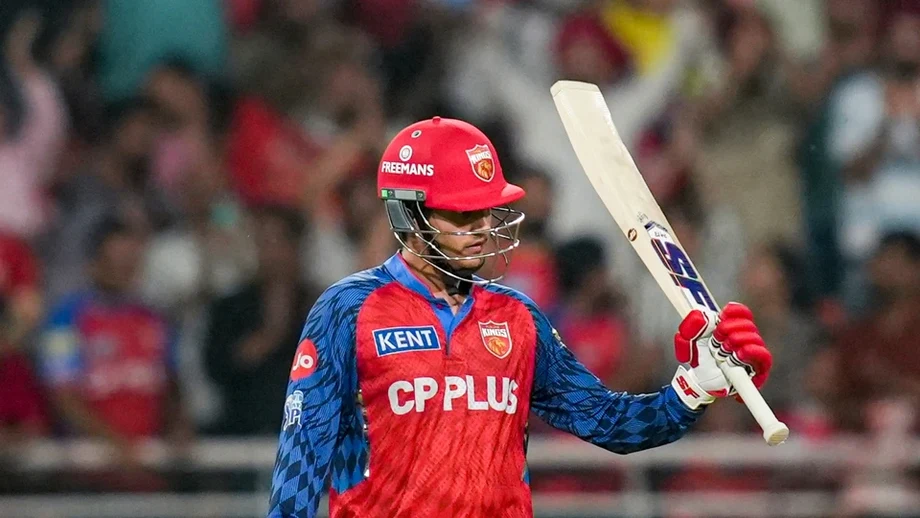
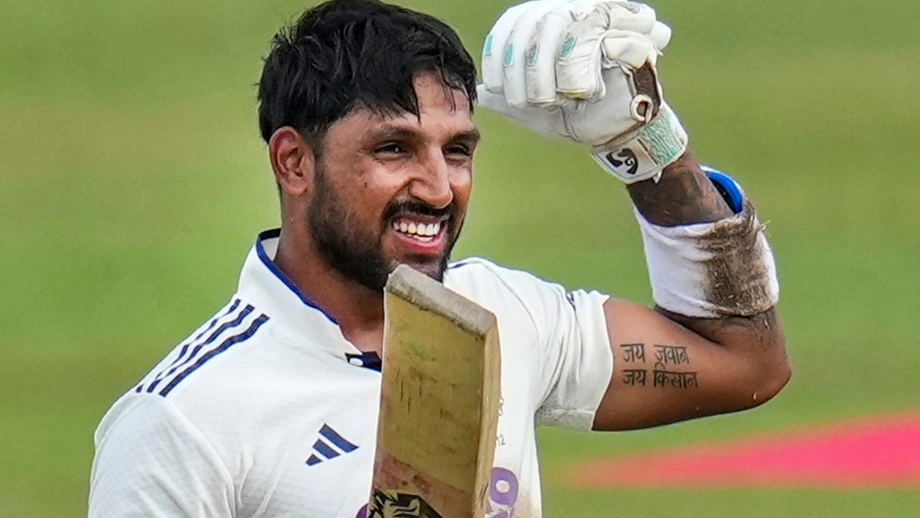
His fifty came off 102 balls, reached by hitting Jamieson through midwicket for four. Before the applause had settled, Jurel turned towards the stands and snapped a salute. He does it at every milestone, and it is always directed at the same man: a father who once wore army uniform on a battlefield his son has only read about.
It was his second half century in a row in this series, after 78 in the first Test at the Basin Reserve in Wellington. The knock made him India's most reliable lower order batter of the tour at a point when the top order had stopped delivering.
For the parents in the front row, the salute turned a good innings into a moment they will keep. Rajni, Jurel's mother, stood and clapped every time her son's name came over the public address system.
Why the 88 Put Him Beside Dhoni and Kiran More
The numbers did more than rescue an innings. Jurel became only the third Indian batter to score multiple half centuries at No. 7 or lower in a Test series in New Zealand, joining MS Dhoni and Kiran More. He is the first Indian to manage it since Dhoni.
The company is specific. Kiran More made two fifties at No. 7 on India's 1990 tour of New Zealand. Dhoni went past him with three: two at No. 7 in April 2009 and one at No. 8 in February 2014, all of them in Wellington. Ajinkya Rahane remains the only Indian with a Test century at No. 7 or lower in New Zealand, a 118 in 2014.
The 88 was Jurel's fourth Test half century and his second in the SENA countries, the shorthand for South Africa, England, New Zealand and Australia. Those four countries are grouped because their pitches generally give fast bowlers more help than the flat surfaces at home, and runs scored there carry a particular weight in Indian cricket. Jurel's own summary of the achievement was brief.
"Sapna hota hai to score and play in SENA countries." (It is a dream to score runs in SENA countries.)
He was less pleased with the total. "Had I scored a hundred, it would have been far better," he said.
Two Fathers in the Front Row
Nem watched from the front row behind the glass window of the Hadlee Pavilion, seated next to Lakhwinder Gill, the father of Shubman Gill. India selector RP Singh sat alongside them. Every run off Jurel's bat drew noise from that corner of the ground, and the loudest applause came from the two fathers as a capacity crowd at Hagley Oval recognised what the innings had saved.
Rajni sat a little further along with a relative who lives in the city. She enjoyed the sun, grew restless as her son moved through the 80s, and stood to clap each time his name was announced.
For both parents, the trip was a first. Neither had travelled outside India before, and Jurel asked them to make this one.
He asked us to come for this match, and we came. This was both his mother's and my first trip outside the country. We couldn't watch his Test debut in Rajkot from the ground because there was a wedding at home, and we didn't want to miss the game.
Nem had also skipped the invitation to Rajkot in 2024 for another reason. He was in Vrindavan at the Banke Bihari temple, and the family are devotees of Thakur ji. The debut was watched from a distance. Christchurch was watched from 20 yards.
It's a proud moment to watch him play for India. This is my first overseas trip and to watch him fight it out for India is unreal. Hope his knock can help India turn this match around. His mother is also here so it makes the moment even more special. But ultimately India should win. This is an important game.
From Agra to Noida, Alone at 14
In 2014, a 14-year-old from Agra took a train to Delhi on his own and turned up at a cricket academy in Sector 71, Noida, with no adult beside him. The academy belonged to coach Phool Chand. The boy introduced himself and asked to be taken in.
I didn't see any parent accompanying him. Seeing a 13-year-old travel alone, I knew this boy was special.
Phool Chand wanted to know whether the child had run away from home and asked for his father's phone number. Nem picked up. He wanted to come but could not, because the family was observing his own father's tehrvi, the ritual held on the thirteenth day after a death. Dhruv told his father not to worry and boarded the train anyway.
Money was tight. Nem has said the family did not have the means to fund the game comfortably and managed through sacrifice on both sides, with the one rule that his son would never lack equipment. Jurel's mother pawned her gold jewellery to buy him his first cricket kit.
Phool Chand put him into every local tournament around Delhi and the National Capital Region he could find. At one, the Vaibhav Sharma Memorial, a club picked the young boy but batted him low in the order. The coach went to the owner and asked for one promotion up the order. Jurel made 86 off 38 balls and won the final.
The climb from there was steady. Jurel played age group cricket for Uttar Pradesh, then became vice captain of the India Under-19 side that finished runners-up at the 2020 World Cup in South Africa. Rajasthan Royals bought him at the 2022 IPL auction. Phool Chand, who had waited through all of it, became the coach of a Test cricketer.
For a teacher, can there be a bigger day than seeing his student excel. He is the first among my students who will play Test cricket and second after pacer Shivam Mavi to play international cricket.
Dhoni's One Line and Gambhir's Three Games
Jurel's first IPL season in 2021 gave him a few minutes with MS Dhoni, the wicketkeeper he grew up watching. He asked for a photograph and then for advice. What he got was one sentence about the ball.
Just go out there, watch the ball, and focus on playing.
Preparation for New Zealand came from a different direction. Gautam Gambhir, the India coach, told him before the tour that he would play all three matches of the India A series, a set of games for the reserve squad, so that he would arrive in New Zealand having already seen what the ball does there.
It is very important because I spoke to GG (Gautam Gambhir) sir. He told me that I was going to play all three games in the A tour to have preparation before the series. I played three matches, and I got sort of an idea of how the ball moves, bounces. So it was very helpful for me to play all three games here.
Jurel said the same idea carried into the Christchurch innings, where New Zealand's bowlers kept landing the ball in awkward areas and the only workable response was to deal with one delivery at a time.
Watch the Ball, Be in Position
Asked to explain how he had held an innings together while wickets fell at the other end, Jurel described a narrow focus rather than a grand plan.
It's a surreal feeling to contribute for the team when the team needed it most. When I was batting, I was just thinking about one thing, just watch the ball, watch the ball. And I just kept telling myself, because they were bowling in great areas, so I just kept telling myself that you have to be in a great position to play the ball. And I was not thinking much about the game or where the game would go. I was just taking my time.
With the tail, the technical work came with talking. Jurel kept a running conversation with Brar and Akash Deep, telling them which line was coming and reminding them that opposing bowlers hate being held up by the last three wickets.
Most importantly, you have to show some belief in them, that they can bat. I kept chatting with them, saying, 'You can play this line,' and he was also telling me, like Gurnoor, as you said. So that was a great time for us, and because we were chatting well, so we were getting great runs. I think we got 90-odd runs in the first session.
He also gave the simplest version of the message he passed on: remind the tailenders how irritating it is when the other side's lower order does the same thing to them.
Where the Test Stands
New Zealand finished day three on 133 for three, a lead of 243, and remained in charge of a match India had to win from a long way back. India need early wickets on the fourth morning to keep the target within reach.
Rain is forecast for the fourth and fifth days, which could shorten the game and shape how both captains set their fields. Jurel said the dressing room was not paying attention to the weather.
We are not thinking much about rain. Just focusing on balls, session by session.
The pitch, in his reading, will get easier rather than harder. "The pitch had dried up and it became easier for batting as the Kookaburra ball became old. I believe it will be like Wellington. It will be easier and not much will be there by the time fifth day comes." He put it more plainly a moment later: "The pitch won't have much in it for the fifth day."
India's plans have one complication. Akash Deep was ruled out of the rest of the match with concussion after blows to his helmet. He had made 29 in the stand with Jurel, and the medical staff were still assessing him at the end of play.
He was feeling drowsy and had some pain. The medical team is assessing him.
What happens after the Test is unsettled. The family had made no plans beyond it and left the sightseeing to their son. "I don't ask or say much," Nem said. "It is up to him now, where he wants to take us or what he wants to show us. Maybe after the match we will do some sightseeing, but for now, we are enjoying the match. Abhi tak jo dekha hai New Zealand accha hi hai." (Whatever we have seen of New Zealand so far has been good.)
Jurel put the afternoon in his own words when he spoke to reporters. "My parents came out of India for the first time. Good to score in front of them."
Key Points
- Dhruv Jurel made 88 from 170 balls on day three of the second Test against New Zealand at Hagley Oval in Christchurch, falling 12 runs short of a century.
- India slumped to 117 for seven before Jurel's stands of 46 with Akash Deep, 64 with debutant Gurnoor Brar and 19 with Jasprit Bumrah lifted them to 246 in 86.1 overs, avoiding the follow-on and finishing 110 behind.
- Jurel became the third Indian with multiple Test half centuries at No. 7 or lower in New Zealand, joining Kiran More and MS Dhoni, and the first since Dhoni.
- He saluted his parents after reaching fifty, a gesture he makes at every milestone in honour of his father's army service.
- Nem Chand served with the 8th Jat Regiment in the Kargil war of 1999 and wrote his wife a letter listing his savings and fixed deposits before going to the front. He took voluntary retirement in 2008.
- Nem and his wife Rajni were on their first trip outside India, having missed Jurel's Test debut in Rajkot in 2024 because of a wedding at home.
- Jurel left Agra alone at 14 in 2014 to join Phool Chand's academy in Noida, and his mother pawned her gold jewellery for his first cricket kit.
- New Zealand closed day three on 133 for three, leading by 243, with rain forecast for the last two days and Akash Deep ruled out of the match with concussion.