A Costlier Plate for Indian Households
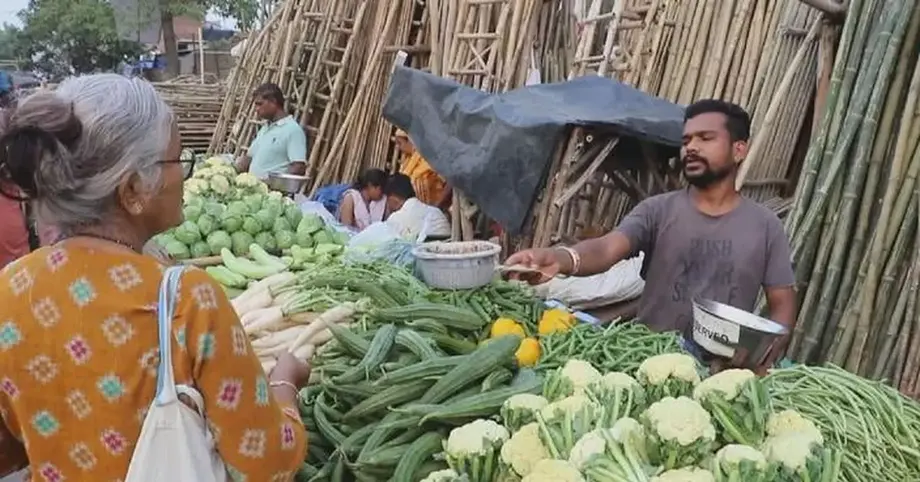
India's consumer price index rose 6.09% in October from a year earlier, up from 5.54% in September and above the Reserve Bank of India's 6% upper tolerance limit for the first time in two years. Food inflation, the force behind the jump, climbed to 8.94% from 7.74%, according to the Ministry of Statistics and Programme Implementation. Onion prices rose 116% year on year, garlic 61% and lemon 47%, turning everyday vegetables into the most visible sign of a squeeze that Indian headlines have called a dinner-table crisis.
Contents
- A Costlier Plate for Indian Households
- What the Monthly Grocery Bill Shows
- Why Rural India Feels the Shock More Sharply
- Onions, Rice and Milk: The Supply Story
- The Imported Slice of Inflation
- Fuel, Flights and Memory Chips
- When Wages Do Not Keep Up
- The RBI's December Test
- What Could Push Prices Higher
- What Is Not Yet Known
- Timeline: From War to the Kitchen Table
- Key Points
The pressure runs through the whole plate. Rice prices rose 12.5%, wheat 3.1%, arhar dal 15% and urad dal 12%. Refined and groundnut oils were about 16% costlier, while mustard oil rose 10%. Milk rose 4.6%, paneer 5.7%, curd 4.4% and sweets made from milk 10%. Chicken prices climbed 11.3%, meat 10.6%, fish 8.5% and eggs 8.3%. Potato prices fell 14%, and tomato prices rose 5.8% in October after three months of deflation.
Rural households faced a sharper shock. Food inflation was 9.09% in rural India against 8.68% in urban areas, while headline rural inflation reached 6.63% compared with 5.41% in cities. The consumer price index tracks what households pay for a basket of goods and services. Core inflation, which strips out food and fuel, rose to 4.51%. Wholesale price inflation climbed to 12.29%, the highest in the current series, with industrial input costs up 19.6% and farm input costs up 15.5%. Eleven of the 12 CPI divisions recorded a month on month increase. The Finance Ministry's monthly review said this was the first breach of the 6% mark under the new CPI series.
What the Monthly Grocery Bill Shows
Retail price data for November 24 show how little relief shoppers are getting. Onions averaged Rs 53.38 a kilogram, 98% higher than a year earlier. Sugar cost Rs 61.06 a kilogram, up 31%. Mustard oil was Rs 215.30 a kilogram, up 15%, and rice was Rs 48.25, up 11.3%. Wheat rose 3.1% to Rs 32.84. Potato and tomato prices were below last year, at Rs 23.40 and Rs 38.55 a kilogram, down 13.6% and 24.6%.
- Onion: Rs 53.38 a kilogram, up 98% from a year earlier.
- Sugar: Rs 61.06 a kilogram, up 31%.
- Mustard oil: Rs 215.30 a kilogram, up 15%.
- Rice: Rs 48.25 a kilogram, up 11.3%.
- Potato: Rs 23.40 a kilogram, down 13.6%.
- Tomato: Rs 38.55 a kilogram, down 24.6%.
Dairy prices are set to stay under pressure. The Finance Ministry's monthly economic review said demand from an extended festive season and the start of the wedding season could lift prices of milk and milk products. Two large suppliers, Amul and Mother Dairy, raised milk prices by Rs 2 to Rs 4 a litre from November 12. Higher fodder, cattle feed, packaging and transport costs have added to the burden.
Why Rural India Feels the Shock More Sharply
Village families spend a larger share of their income on food, so the same price rise hits harder. Farm labourers, rural workers and industrial workers have faced inflation above 4% for six months, according to the Finance Ministry's review. The central bank's bulletin said food and beverages inflation stayed above 6% in both rural and urban India, and more states reported inflation above 6% than before.
Food prices rose faster in rural centres, at 9.1% against 8.7% in urban areas. The difference matters because rural wages and farm incomes rarely adjust quickly to grocery bills. A poor harvest can cut earnings at the same time as it lifts prices, leaving households with less food and less cash.
Onions, Rice and Milk: The Supply Story
The kharif foodgrain harvest is estimated at 167.14 million tonnes in 2026-27, down more than 5% from the previous year, in the first advance estimate from the agriculture ministry. Monsoon rainfall was the lowest in more than a decade, and the shortfall hit crops as grain was filling. Water storage in 178 monitored reservoirs stood at 113.75 billion cubic metres on November 19, 61.56% of capacity. That was 69.27% of last year's level and 79.42% of the average for the past 10 years. About 24.1% of monitored wells showed some degree of groundwater drought.
Rice presents a puzzle. Government granaries held 55.47 million tonnes on October 1, more than four times the buffer requirement. Much of it is common grade, while shoppers in southern states pay for premium non-basmati varieties such as Sona Masoori and BPT, whose prices nearly doubled. Demand for broken rice from poultry feed and ethanol producers has added competition for supplies.
Milk costs reflect the feed chain. Poor rainfall in key growing states is expected to reduce maize and soybean output, and those crops feed poultry and cattle. Higher fodder, packaging and transport bills have reached dairy companies, which passed part of the increase to households.
Government measures cut wholesale onion inflation by 11 percentage points, and fresh kharif arrivals from Rajasthan and Karnataka began to moderate retail prices. Potato and tomato remain cheaper than a year earlier. Madan Sabnavis, chief economist at Bank of Baroda, said inflation was running high for "sugar and tur and urad which are important for households."
The Imported Slice of Inflation
India does not only grow inflation at home. Imported items make up 8.5% of the new CPI basket but contributed about 18% of October headline inflation, according to a paper by Reserve Bank of India staff. Imported inflation eased to 11.9% in October from 15.3% in June 2026, when the West Asia conflict lifted crude oil prices. It remains well above the 6.1% headline rate. Imported inflation is the part of price growth that comes from goods and commodities India buys abroad.
The drivers have changed. During the COVID-19 pandemic and the Russia-Ukraine conflict, crude oil and edible oils dominated. Since 2024, gold and silver have become large contributors as safe haven demand and central bank purchases pushed prices up. The West Asia conflict added a crude shock that was sharper than the Russia-Ukraine episode, but retail fuel prices rose less because of government controls.
"A granular assessment of imported inflation drivers is essential for distinguishing temporary external shocks from more persistent inflationary pressures and ensuring an appropriate policy response," officials in the RBI's Department of Economic and Policy Research wrote.
Precious metals show up in household bills. Gold jewellery prices rose 19.8% in October from a year earlier and silver jewellery 52.4%. Fertiliser stocks are comfortable, with 101.46 lakh tonnes of urea and 36.43 lakh tonnes of DAP on October 30, along with 12.95 lakh tonnes of MOP, 53.78 lakh tonnes of NPK and 24.82 lakh tonnes of SSP. That cushion helps farmers, while India's reliance on imported fuel leaves it exposed to oil markets.
Fuel, Flights and Memory Chips
Fuel costs are feeding into services. Bulk diesel prices are up 75% since before the West Asia war, commercial LPG 60% and aviation fuel 50%. Petrol and domestic LPG cylinder prices have been held down by government controls, so the full shock has landed on industry and transport. Airfares rose 43% in October from a year earlier, after a 30% rise in September, as fuel costs and festive demand met. Transport inflation rose to 5.84% from 5.01%.
Electronic goods tell a newer story. Prices in the electronics category rose 7.75% in October after falling 0.66% in April, as demand for memory chips from AI data centres tightened supplies. The price of one type of DRAM chip was about 112% higher by November 16 than a year earlier. Restaurant and hotel inflation reached 10.06%, cooked food 9% and snacks 10.8%.
Wholesale prices show the pressure building before it reaches shop shelves. Wholesale prices are what businesses pay before goods reach retailers. Fuel and power inflation at the wholesale level reached 32.8%. About 52% of the items in the CPI basket still had inflation below 4%, a reminder that the surge is concentrated even as it spreads.
When Wages Do Not Keep Up
A vegetarian thali cost 12% more than a year earlier, and a thali with meat 9% more, according to the Crisil Roti Rice Rate report. Rent, school fees and health costs add to the strain while wages stagnate and jobs for educated workers remain scarce. The result is a household budget squeeze that reaches beyond the dinner table.
Consumer Affairs Secretary Nidhi Khare said prices of onions, sugar and edible oils had risen because of black marketing, hoarding and profiteering. The government allocated Rs 4,100 crore to the Price Stabilisation Fund for 2026-27. It also doubled the target for open market rice sales to 50 lakh tonnes and allowed stock limits in five southern states.
More rice measures are under consideration. The government is weighing a 20% export duty on non-basmati rice, a renewed minimum export price on broken rice and a ban on broken rice exports, which India used in 2022. India is the world's largest rice exporter, with about 40% of the global trade, so such steps can lift domestic supply. No final decision or date has been announced.
The RBI's December Test
The RBI's Monetary Policy Committee meets from December 2 to December 4 with retail inflation above its tolerance band. The repo rate, the rate at which the central bank lends to commercial banks, stands at 5.50% after a 25 basis point increase in October, the first rise in nearly four years. A basis point is 0.01 percentage point. A poll of 17 economists, treasury heads and fund managers found most expect another 25 basis point rise, to 5.75%, while SBI and Nomura expect 50 basis points, which would take it to 6.00%.
The RBI aims for 4% inflation with a band of 2% to 6%. Core inflation at 4.51%, and 3.8% when precious metals are excluded, shows price pressure beyond food and fuel. The committee has kept a stance of calibrated tightening, which signals it is ready to raise rates further rather than cut them.
"A 25 bps rate hike in December appears certain," Aditi Nayar, chief economist at ICRA, said.
Dipti Deshpande, principal economist at Crisil, expected the stance to stay unchanged. "The monetary policy stance to remain at calibrated tightening, as elevated inflation makes a case for a hawkish approach," she said.
The central bank's November bulletin said frequent data through November 19 pointed to continuing pressure on food prices, with all major cereals and pulses picking up and edible oils rising, led by mustard oil. Onion prices averaged Rs 53 a kilogram in November so far, against Rs 25.6 in November 2025, even as potato rose and tomato corrected sharply.
What Could Push Prices Higher
The Finance Ministry's monthly economic review flagged demand from festivals that run into November and the wedding season, along with an unfavourable base effect. "With the festive season persisting into November and the onset of the wedding/nuptial season, upcoming inflation prints may face upside risks due to increased demand across food and non-food items," it said.
Weather remains the largest unknown. The World Meteorological Organization has warned that an exceptionally strong El Nino could peak towards the end of 2026. A positive Indian Ocean Dipole may soften its effect, but the outlook is uncertain. El Nino is a warming of the central and eastern Pacific that can disrupt rainfall and crops far from its source.
West Asia adds a second risk. Fighting and threats to shipping through the Strait of Hormuz could keep India's oil import bill and freight rates volatile. Crude prices have retreated, with the Indian basket at $95 a barrel in November 1 to 18 and global benchmarks below $100 in early November. A stronger rupee would also reduce the cost of imports. Foreign exchange reserves stood at $705.3 billion on November 13, enough to cover 10 months of imports.
Domestic growth is holding up. Bank credit grew 19.5% in the year to end October and deposits nearly 17%. Overseas investors put almost $14 billion into Indian equities in November, GST collections reached their second highest monthly level and exports grew at a double digit pace. Those buffers give the RBI room to focus on inflation without treating growth as fragile.
What Is Not Yet Known
Several decisions remain open. The government has not announced a final call on the proposed 20% duty on non-basmati rice exports. The RBI's rate decision will be known on December 4. The strength of El Nino and the effect of the Indian Ocean Dipole will become clearer only as the season develops. No date has been announced for the November inflation release, which will show whether festive demand kept prices above the 6% mark.
The immediate question for households is whether onion and rice prices follow the usual seasonal path. Fresh kharif onion arrivals have begun. Government rice stocks are large. Prices for potato and tomato are lower than a year earlier. Those facts offer relief at the edges of the grocery list, while cooking oil, milk and dal remain costly.
Timeline: From War to the Kitchen Table
- June 2026: Imported inflation reaches 15.3% as the West Asia conflict lifts crude oil prices.
- October 1: India opens the new rice season with 55.47 million tonnes in government stocks, more than four times the buffer need.
- October: CPI inflation reaches 6.09%, food inflation 8.94% and wholesale inflation 12.29%.
- November 12: Amul and Mother Dairy raise milk prices by Rs 2 to Rs 4 a litre.
- November 13: Foreign exchange reserves stand at $705.3 billion, equal to 10 months of imports.
- November 19: Water storage in 178 reservoirs is 61.56% of capacity.
- November 24: Onion retail prices average Rs 53.38 a kilogram, 98% above a year earlier.
- November 25: The RBI bulletin reports continued pressure on cereals, pulses and edible oils.
- December 2 to 4: The Monetary Policy Committee meets to set interest rates.
Key Points
- Retail inflation rose to 6.09% in October from 5.54% in September, above the RBI's 6% ceiling.
- Food inflation reached 8.94%, with onion prices up 116%, garlic 61% and lemon 47%.
- Rural inflation at 6.63% outpaced urban inflation at 5.41%.
- Weak monsoon, lower kharif output and reservoir storage at 61.56% of capacity threaten supplies.
- Imported items were 8.5% of the CPI basket but contributed about 18% of October inflation.
- The government is using onion supplies, rice sales and a Rs 4,100 crore price fund to ease costs.
- The RBI meets on December 2 to 4, with most economists expecting a 25 basis point rate rise to 5.75%.