Banks Told to Weigh Export Records and Cash Flow as Collateral
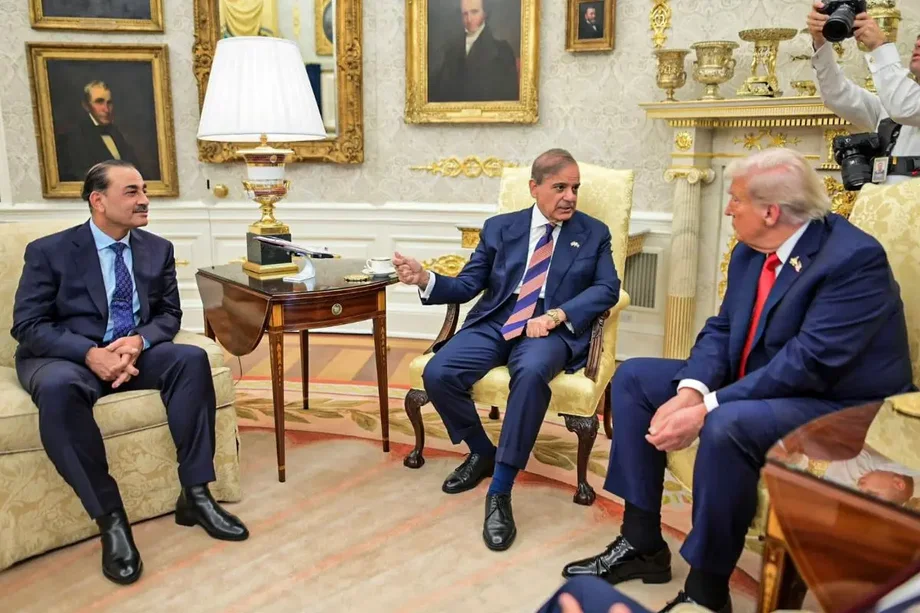
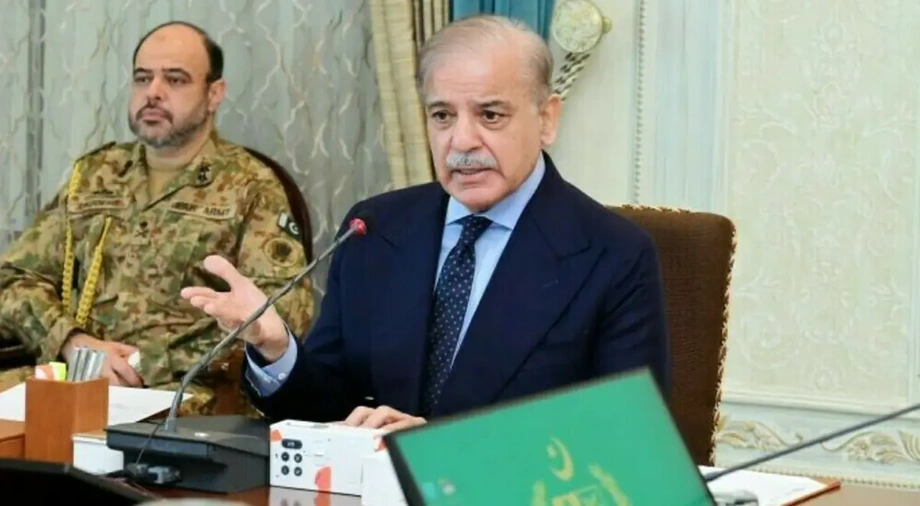
Prime Minister Shehbaz Sharif chaired a meeting on SME financing in Islamabad on 27 November 2026 and told banks and regulators to loosen the rules that keep small businesses out of the credit system, starting with what lenders will accept as security. Under the direction, a firm's export record on the Pakistan Single Window, its place in a supply chain tracked through Exim Insurance and digital invoicing, and its monthly cash flow would all count in place of the land and buildings banks usually demand.
Contents
- Banks Told to Weigh Export Records and Cash Flow as Collateral
- The Gap Between 5.2 Million Firms and 319,166 Borrowers
- What the Central Bank Numbers Show
- Why a Cash Business Cannot Get a Loan
- Rs886 Billion in New Loans and 449,000 New Borrowers
- Digital Payments as the Quiet Door In
- District Centres, a Registry and Export Finance
- A Timeline of the Push
- What Is Not Yet Decided
- Key Points
The room held the government's finance team and the lenders themselves: Federal Ministers Rana Tanveer Hussain, Ahad Khan Cheema and Riaz Hussain Pirzada, the prime minister's adviser Haroon Akhtar, Minister of State for Finance Bilal Azhar Kiyani, State Bank of Pakistan Governor Jameel Ahmad, and the chief executives of the National Bank of Pakistan, Bank Alfalah and the Bank of Punjab, along with senior officials of the institutions involved.
Shehbaz framed the sector as the country's economic core.
"SMEs are the backbone of the economy and facilitating them will boost economic activity, employment and business opportunities," he said during the meeting.
Beyond collateral, he asked for a review of the prudential regulations that govern bank lending, the rules that set how much a lender may advance and on what terms. He directed that banks be given access to relevant data held by government institutions so that loan processing speeds up, and that lenders help firms obtain letters of credit and bank guarantees. A letter of credit is a bank's promise to pay a supplier once goods have shipped, and a bank guarantee is a promise to cover a contract if the firm fails; both matter to a small exporter bidding for orders it cannot finance alone. Banks that meet their lending targets would be encouraged and rewarded, he said.
The Gap Between 5.2 Million Firms and 319,166 Borrowers
Pakistan counts about 5.2 million SMEs, roughly 99 per cent of all businesses, employing about 78 per cent of the non-agricultural workforce and producing about 40 per cent of GDP and 25 per cent of exports, according to the national SME policy approved in December 2021, which drew on an estimate by the Small and Medium Enterprises Development Authority, known as SMEDA. The count is an extrapolation from older surveys rather than a fresh census, so it describes scale and not a list of names.
Against that, 319,166 SMEs were borrowing from banks in June 2026, and SME credit made up 7.76 per cent of bank lending to the private sector. Less than 8 per cent of the credit serves a sector that produces 40 per cent of the country's output.
Most of the rest work in cash. The Pakistan Bureau of Statistics labour force survey for 2024-25 found that 72.1 per cent of non-agricultural jobs were informal and 27.9 per cent formal. A business with no books has no repayment history a credit officer can read, which is the wall the new instructions are meant to lower.
Commerce Minister Jam Kamal Khan took the same argument to a Habib Bank Limited delegation led by its president and chief executive, Muhammad Nassir Salim, on 18 November. SMEs had to be brought into the documented economy so that they could borrow, raise quality and compete for export orders, he said. The bank side described how hard it is to lend to a business that keeps no records. The minister said the government was working to simplify business regulations, remove overlapping licensing requirements and cut unnecessary administrative steps.
What the Central Bank Numbers Show
The State Bank's quarterly table on SME financing puts outstanding credit at Rs906.7 billion in June 2026, or 7.76 per cent of financing to the domestic private sector, up from 6.65 per cent a year earlier. The SME book grew about 31 per cent in the year while credit to the private sector as a whole grew about 12 per cent. Asset quality improved at the same time: the share of bad loans in the SME book fell from 12.76 per cent to 9.58 per cent.
Borrowers grew more slowly than the money. The number of SME borrowers rose from 276,593 in June 2025 to 319,166 in June 2026, an increase of about 15 per cent. Credit is deepening for firms the banks already know faster than it is reaching new ones.
Other measures put the sector higher on a different basis. Governor Jameel Ahmad has cited about Rs1,110 billion outstanding in June 2026, up from Rs491 billion in June 2024, with about 325,000 borrowers against 177,000. A review by the government's Access to Finance steering committee put outstanding SME financing above Rs1.137 trillion at the end of September 2026, with about 350,862 borrowers. The published table predates the revision of what counts as an SME, which is why the series do not line up.
Where the money went is just as telling. Lending to fund machinery and premises rose from Rs305.6 billion to Rs478.8 billion and is now more than half the book. Working capital lending, the type a shopkeeper needs to buy stock, rose about 9 per cent, from Rs354.9 billion to Rs386.4 billion. Trade finance stood at Rs41.5 billion. Trading SMEs held Rs383.7 billion in credit, manufacturing SMEs Rs251.3 billion.
Why a Cash Business Cannot Get a Loan
A bank lends against evidence that it will be repaid. In practice that means accounts or tax returns that show income, bank statements that show money moving in and out, and collateral as a backstop if the first two turn out wrong. A firm that deals in cash, keeps no formal books and files no return has nothing for the first two tests, so the lender leans on the third, and small firms rarely own enough property to satisfy it.
The State Bank has already moved the lines. The ceiling for loans that need no collateral was raised from Rs10 million to Rs50 million. A July circular rewrote the turnover limits used to sort firms: a small enterprise may now turn over up to Rs400 million, against Rs150 million before, and a medium enterprise up to Rs2 billion, against Rs800 million.
Those changes help the top of the range. A trader with a workshop, staff and a bank account gains room to borrow. The micro firm at the bottom, the one most likely to be unrecorded, still needs a record before any ceiling matters to it. That is why the direction on cash flow and payment data carries more weight than the new limits.
Rs886 Billion in New Loans and 449,000 New Borrowers
Banks at the meeting committed to lending Rs2,000 billion to SMEs by June 2028 and to raising the number of SME borrowers to 775,000. The target includes Rs886 billion in new loans and financing for 449,000 borrowers who do not bank with them today.
The number has moved fast. In October the prime minister directed authorities to lift SME financing from Rs1.1 trillion to Rs2.2 trillion by 2028, citing the sector's capacity to drive growth. The figure the banks put on paper in November is Rs2,000 billion by the same deadline.
Getting from 319,166 borrowers to 775,000 in under two years means more than doubling the client list, and most of the new names will have to come from firms that have never borrowed. The meeting was told that banks are strengthening their internal capacity to handle that volume, which speaks to staffing and systems rather than appetite.
Digital Payments as the Quiet Door In
The most direct route into a bank's books is one that asks the shopkeeper for no paperwork at all. Raast, the instant payment system the State Bank operates, handled 742.1 million transactions worth Rs23.3 trillion between January and March 2026. Of those, 55.9 million were payments to merchants, up from 36.3 million in the previous quarter. Officials said this month that the number of merchants accepting digital payments had climbed from 500,000 to 2.03 million.
Each of those payments leaves a dated record of income held by someone other than the shopkeeper, which is exactly what a lender needs and an informal firm lacks. A merchant with six months of Raast and wallet receipts has a track record that can support a small working capital line, and working capital is the part of the SME book that grew least last year. The instruction to treat cash flow as an alternative measure of creditworthiness points the same way.
District Centres, a Registry and Export Finance
On 16 November the prime minister approved SME centres at district level, with pilots in Lahore, Peshawar, Karachi and Quetta, and a restructuring of SMEDA and the Trade Development Authority of Pakistan. The centres are meant to be the first stop where an owner can ask about a loan, an export order or a licence without visiting four offices.
SMEDA's business plan, reviewed by officials in December 2025, is costed at about Rs18 billion to 2028. It lists a national SME registry, a single counter for approvals, preference for SMEs in public procurement, models that score borrowers without a long credit history, and lending assessed by industrial cluster rather than firm by firm. The procurement preference is the sharpest tool in the set, because a firm must be registered to win a public contract and the contract itself is the reward, so the first step brings a benefit before it brings a cost.
Export money is already set aside. Rs300 billion under the Export Finance Scheme has been reserved for SMEs and new exporters, which gives a small manufacturer access to credit at concessionary rates once it can show an order.
A Timeline of the Push
- December 2021: the national SME policy is approved, with the estimate of 5.2 million firms and a 40 per cent share of GDP.
- December 2025: officials review SMEDA's business plan, costed at about Rs18 billion to 2028.
- June 2026: outstanding SME credit reaches Rs906.7 billion on the State Bank table, with 319,166 borrowers.
- October 2026: the prime minister directs that SME financing targets rise from Rs1.1 trillion to Rs2.2 trillion by 2028.
- 16 November 2026: district SME centres are approved, with pilots in Lahore, Peshawar, Karachi and Quetta.
- 18 November 2026: Commerce Minister Jam Kamal Khan tells an HBL delegation that SMEs must enter the documented economy.
- 27 November 2026: the Islamabad meeting produces the banks' Rs2,000 billion commitment.
- June 2028: deadline for the lending target and for 775,000 SME borrowers.
What Is Not Yet Decided
No date has been given for the review of prudential regulations, and no document sets out how a bank should value an export record or a stream of cash when it decides how much to lend. A lender accepting a shipment history as security must still decide what happens when orders stop and the record goes quiet, and the meeting produced no common standard for that.
The reward for banks that hit their targets was not specified, and the State Bank's published table has to be rebuilt on the revised definition of an SME before the promised rise in borrowers can be tracked cleanly against the June 2026 baseline. Banks said only that they are building capacity, without saying how many new credit officers that means.
For the firms at the centre of the policy, the test is concrete: whether a workshop with six months of Raast receipts and a shipping record can walk into a branch and leave with a working capital line. The next fixed date on the calendar is June 2028.
Key Points
- Prime Minister Shehbaz Sharif chaired an SME financing meeting in Islamabad on 27 November 2026 and asked banks to accept export data, supply chain records and cash flow in place of conventional collateral.
- He directed a review of prudential regulations, access for banks to government data, and help for SMEs in obtaining letters of credit and bank guarantees.
- Banks committed to Rs2,000 billion in SME lending by June 2028, including Rs886 billion in new loans, and to 775,000 SME borrowers, including 449,000 new ones.
- SMEs produce about 40 per cent of GDP and 25 per cent of exports, but held Rs906.7 billion in credit, or 7.76 per cent of private sector financing, in June 2026.
- Borrowers rose about 15 per cent to 319,166 in the year to June 2026, while the SME loan book grew about 31 per cent.
- The State Bank raised the ceiling for loans that need no collateral from Rs10 million to Rs50 million and lifted turnover limits for small and medium firms in July.
- Raast handled 55.9 million merchant payments in January to March 2026, and merchants on digital payments rose from 500,000 to 2.03 million.
- No date has been set for the prudential regulation review, and no method has been published for valuing cash flow or export records as security.