A Lower House Vote Turns Fines Into Prison Terms
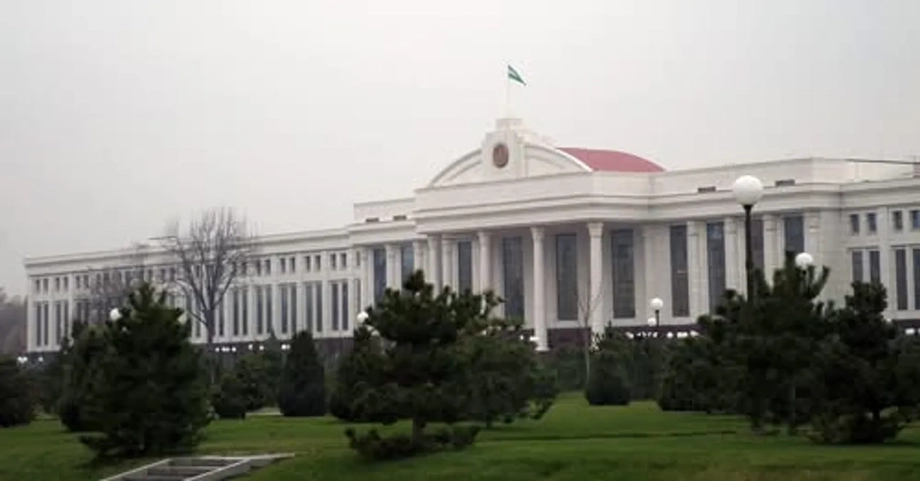
Uzbekistan's Legislative Chamber, the lower house of the Oliy Majlis, approved on 24 November a bill that would make prison the standard penalty for citizens who serve in another country's armed forces, security service, police or military courts, and for the people who recruit them. Deputies backed the draft in the first reading with 109 votes and in the second reading with 110. No deputy voted against it, and none abstained.
Contents
- A Lower House Vote Turns Fines Into Prison Terms
- What the Bill Would Change in the Criminal Code
- The Twelvefold Rise Nobody Has Put a Number To
- A War Next Door That Keeps Filling the Court Files
- From a Russian Punishment Cell to a Court in Bukhara
- Why the Region Stays Quiet
- Tajikistan Writes Harsher Laws and Opens Fewer Cases
- What Has to Happen Before the Bill Becomes Law
- Key Points
The chamber's speaker proposed moving straight to the second reading, citing the urgency of the problem and the short length of the text. A committee member told the hall that no changes of substance had been tabled in between, only editorial and language corrections. The Cabinet of Ministers submitted the draft under its legislative initiative, and deputies heard it presented by Saidullo Azimov, deputy chairman of the chamber's committee on international affairs, defence and security.
Azimov told the chamber that the bill was written because Uzbeks are being drawn into armed conflicts abroad more often, including cases in which they have been killed. He rejected the idea that signing up in a foreign uniform is a private matter.
This is not simply a matter of personal choice or the fate of individual citizens. It is, above all, a serious problem concerning human life, the safety of our citizens, the national interests of the state and its standing on the international stage.
What the Bill Would Change in the Criminal Code
Article 154-1 covers "entering military service, service in security, police, military justice bodies or other similar bodies of foreign states". It entered the code through a law of 30 August 2003, and its penalties were last revised in December 2019 for taking a foreign post and in August 2015 for recruitment.
- Serving in a foreign force: three to five years of restricted liberty or three to five years in prison, replacing a fine of up to 300 base calculation units (132 million soums, about $11,000) or up to three years of corrective labour.
- Recruiting Uzbeks for such service: five to ten years in prison, replacing three to five years of restricted liberty or the same term in prison, with restricted liberty removed as an option.
- Mercenarism under Article 154: untouched. Fighting in a foreign conflict as a mercenary carries five to ten years; recruiting, training, financing or supplying mercenaries carries seven to twelve years.
- Wording: part two of Article 154 swaps "military clash" for "armed clash" to match the language of part one.
The jail terms are the substance of the change. A fine of 132 million soums works out at roughly 11,000 dollars, and a base calculation unit is the indexed figure the government uses to peg fines, benefits and official fees. Corrective labour means work ordered by a court, with part of the wage handed to the state and no prison sentence attached. Restricted liberty is served in the community under conditions set by a court rather than behind bars. Neither punishment takes a man out of the unit he joined abroad.
Azimov said harsher punishment is one goal among several.
In improving any criminal law norm, the main goal should not be simply to toughen punishment, but to prevent crimes, ensure the rule of law and protect human security. This draft law serves exactly those goals.
The chamber's press service described the purpose in its own statement, saying the bill would "serve to prevent the involvement of our citizens in armed conflicts abroad, ensure national security, and strengthen legal mechanisms to combat crimes against peace and the security of humanity". Azimov added that the draft had been agreed with the ministries and agencies concerned and would not require extra spending from the state budget.
The Twelvefold Rise Nobody Has Put a Number To
Azimov told the chamber that the number of such crimes rose almost twelve times in 2025 compared with the previous period. He gave no absolute figures, and he did not say which period, or which article's statistics, he was comparing.
The State Security Service published a count of its own in November 2025, and it covers a different offence. It recorded 338 criminal cases opened under Article 154, the mercenarism article, since 2022. The yearly figures were 19 cases in 2022, 68 in 2023, 112 in 2024 and 139 in 2025 by the time the data appeared. Those numbers describe a rise of about a quarter between 2024 and 2025, and roughly seven times as many cases as in 2022, spread over four years.
The two articles cover different conduct. Article 154 punishes fighting as a mercenary or organising mercenaries, which requires payment or another personal gain. Article 154-1 punishes a citizen for taking a place in a foreign state's uniformed services, whether or not a war is on. The gap between the deputy's figure and the security service's caseload leaves the size of the newer offence unmeasured in public.
The bill's practical reach depends on that number. Every case the new article would produce has to be investigated by a police force and tried in a court, and the fine it replaces was small enough to be paid by a family pooling money. A prison term of three to five years cannot be paid off.
A War Next Door That Keeps Filling the Court Files
Russia's full scale invasion of Ukraine is approaching its fifth year, and Uzbekistan shares a border with neither country. Recruiting networks do not need one. Open sources have repeatedly recorded Uzbeks signing contracts with the Russian armed forces, and Uzbek courts have convicted men who came back from the fighting.
Ukraine's I Want to Live project, which gathers testimony from prisoners of war and defectors, counted 20,437 citizens of Central Asian states and Tajikistan who had signed Russian contracts as of October 2026. More than 8,200 of them are Uzbek, close to 40 percent of the total. No government in the region, Uzbekistan's included, has published its own figure.
Deaths are counted from a different set of records. A study drawing on a leaked copy of Russia's Rosstat statistics database found that at least 1,301 people from Uzbekistan have been killed in the Russian army since the invasion began in February 2022. Tallies of confirmed deaths put the toll lower, at about 1,031 Uzbeks and 720 Tajiks.
Adil Turduqulov, a Kyrgyz activist and political analyst who has travelled to Ukraine every year since 2022 to interview Central Asian prisoners, puts the official Russian side count of Central Asians in the ranks at 13,000 and says the true number is higher. He lists three motives behind the contracts: sums of money a labourer at home would never see, the promise of Russian citizenship, and a way out of a criminal case, including for men caught with drugs.
From a Russian Punishment Cell to a Court in Bukhara
Ramshid Khasanov, from Kogon in the Bukhara region, shows how a contract can begin with a Russian prison sentence rather than a recruitment office. He had worked in Russia for years, most recently as a cook in Saint Petersburg. In 2022, by his account, acquaintances carried out a robbery and he was charged as an accomplice; after 18 months of investigation and trial he received eight years.
He turned down an offer to go to the front while held before trial. After sentencing he was sent with five other convicts to a camp in Udmurtia, about 20 to 30 kilometres from the border with Tatarstan. Prisoners who refused to sign papers or fell into disputes were sent to a punishment cell that the inmates call the pit. Khasanov says he spent about a year there, that masked men beat prisoners at night, and that one of his kidneys failed.
Representatives of the Kyrgyz and Tajik embassies came to the camp, registered their citizens and arranged for them to serve their sentences at home, according to his account. About 50 Uzbeks, including him, wrote to their own embassy and received no reply, he says, and no embassy staff ever appeared.
The offer that ended the standoff was blunt. He says he was told to choose a coffin or a contract, and made to sign a paper adding six years to his sentence if he refused. He signed, was promised 400,000 roubles up front and 220,000 a month, and was assigned to drive an ATV.
His first evening at the front brought in the bodies of the previous group, mostly Uzbeks and Tajiks. Commanders explained, he says, that a family receives five million roubles for a contract soldier killed in action and nothing when a soldier is listed as missing. A Russian comrade named Kross suggested an escape, and the two drove off the training ground on their vehicles. Kross was detained two months later; Khasanov was caught as well, then got out of the school where the detainees were held together with another Uzbek, aged 19, using a rope twisted from paper napkins.
He came home through the Uzbek embassy in Belarus, paying 3,000 dollars for the travel documents and, he says, being treated badly until the money was found. In Kogon a court sentenced him to three years and six months of restricted liberty. On 9 November he was summoned to the district police department to be shown the decision. He says the deputy head of the department insulted him over his beard, an officer beat him in an office, drugs were planted on him in a second room and he was threatened with a year in prison. He says he has bruises and no serious injuries, and has asked the authorities to examine what the officers did. The department has not commented.
His sentence of restricted liberty sits at the bottom of the range the bill would raise, and it was handed down under the mercenarism article. For the men still in Russia, the new penalties would fall on the same act that begins with a signature in a camp.
Why the Region Stays Quiet
All five Central Asian states describe themselves as neutral in the war. Turduqulov argues that neutrality is formal, and that in practice the region's governments lean toward Moscow and depend on it. That, in his view, leaves prisoners with little expectation of help from their own capitals, and he says some of the men he has filmed have given up on their governments and appealed to Russia instead.
Reaching the camps and prisons where they are held is not simple. Moldova was the route into Ukraine in 2022, 2023 and 2024, until it turned toward Europe and closed off the visa free passage he had used. Since then he has needed a Schengen visa and flown through Poland, losing two or three days on the road each way.
Courts in several Central Asian states have already convicted men who fought in Ukraine and came back. The scale of those prosecutions remains unpublished in Uzbekistan, where the security service has released numbers for mercenarism cases since 2022 but no breakdown of the verdicts behind them.
Tajikistan Writes Harsher Laws and Opens Fewer Cases
Tajikistan's criminal code already goes further than what Uzbekistan proposes. Article 401-1 punishes participation in illegal armed formations and armed conflicts abroad with 12 to 20 years in prison. It allows a person to escape liability by withdrawing from the formation voluntarily before it disbands or the conflict ends, provided the conduct is not another crime. Article 401 covers recruiting, training, financing and supplying mercenaries: five to 12 years, or seven to 15 years with confiscation of property when aggravating circumstances apply.
The case files suggest those articles are rarely used. Prosecutor General Habibulo Vohidzoda told a news conference in Dushanbe on 13 February 2026 that no criminal cases had been opened in Tajikistan in 2025 over participation in the war in Ukraine. He drew a line at citizenship.
Under Tajikistan's legislation, we have no right to open a criminal case against citizens who hold Russian citizenship and participated in the conflict with Ukraine under that country's agreement.
Vohidzoda said Tajik citizens who also carry Russian passports "are obliged to fulfill the military duties of that country", and that proceedings would be opened against Tajiks without Russian citizenship who fight in Ukraine. Nearly five years after the invasion, his office maintains that nobody at home has been prosecuted for taking part in it.
What Has to Happen Before the Bill Becomes Law
Nothing changes for an Uzbek citizen yet. The bill has passed two of three readings in the lower house, and the third is expected as part of the chamber's further work with no date set. Senate approval and the president's signature follow. No timetable has been published for either step, and one report said the document had already gone to the Senate for approval.
- 30 August 2003: Article 154-1 enters the Criminal Code.
- August 2015 and December 2019: the recruitment and foreign service penalties are last revised.
- November 2025: the State Security Service reports 338 mercenarism cases opened since 2022.
- 24 November 2026: the Legislative Chamber passes the bill in the first and second readings, 109 votes then 110.
- Next: a third reading, a Senate vote and a presidential signature, with no dates announced.
A first conviction under the new article would require a citizen to return, or to be handed over, before a court at home could try him. The half million or so Uzbeks who work in Russia remain within reach of Russian recruiters whatever the code says, and the penalties can only be applied to those who come back.
Key Points
- Uzbekistan's lower house passed a bill on 24 November that sets three to five years in prison for serving in a foreign army, police force or security service, and five to ten years for recruiting others.
- The current penalty is a fine of up to 300 base calculation units (132 million soums, about $11,000) or up to three years of corrective labour.
- Deputy Saidullo Azimov said such crimes rose almost twelve times in 2025 but gave no figures or comparison period. The security service's count under the separate mercenarism article was 139 cases in 2025, against 112 in 2024.
- The bill follows almost five years of Uzbeks signing contracts with the Russian army. Ukraine's I Want to Live project counts 20,437 Central Asians and Tajiks in Russian service, more than 8,200 of them Uzbek.
- A study based on leaked Rosstat data found at least 1,301 Uzbeks killed in the Russian army.
- Article 154 on mercenarism keeps its penalties: five to ten years for fighting, seven to twelve for recruiting, training or financing mercenaries.
- Tajikistan already imposes 12 to 20 years for fighting in illegal armed formations abroad, yet its prosecutor general says no one was prosecuted there in 2025.
- The bill still needs a third reading, Senate approval and the president's signature.