Yuldashev presents a broad account of prosecutorial work
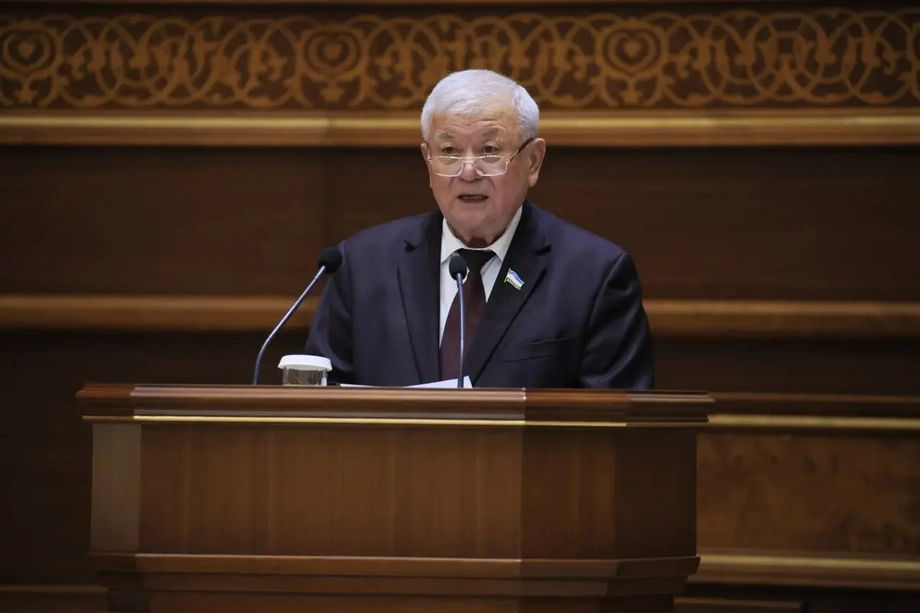
Prosecutor General Nigmatilla Yuldashev has reported that Uzbekistan's prosecution bodies restored the violated rights of more than 560,000 citizens and secured the recovery of 2.3 trillion soums in damages. The figures were presented to the Senate's 21st plenary session, with details of the hearing published on 28 November 2026. The soum is Uzbekistan's national currency.
Contents
- Yuldashev presents a broad account of prosecutorial work
- How inspections became legal action
- Why 1.4 trillion and 2.3 trillion soums are different totals
- Support for families and help for businesses
- Senators seek closer checks on health and environmental laws
- Crime prevention and maps generated with artificial intelligence
- What the Senate resolution means
- Key Points
The report also recorded practical assistance for 30,267 entrepreneurs and foreign investors. This support concerned the rule of law and the protection of their rights, freedoms and legitimate interests. The precise figure gives more detail than the rounded total of more than 30,000 recipients used in the broader summary of the hearing.
The figure for citizens covers cases in which prosecutors said a violated right had been restored. Restoring a right means securing a remedy under the law, which can involve reversing an unlawful decision or restoring an entitlement. The public summary did not divide the total by region, type of violation or remedy, so the individual circumstances behind the more than 560,000 cases were not described.
The Senate is the upper chamber of the Oliy Majlis, Uzbekistan's parliament. Its consideration of the Prosecutor General's report gave senators an opportunity to examine the results and identify areas requiring closer attention. Senators acknowledged the work carried out while calling for stronger oversight in healthcare, environmental protection, social support and crime prevention. The hearing therefore combined a numerical account of past work with parliamentary direction for subsequent prosecutorial activity.
How inspections became legal action
Inspections and other oversight work led prosecutors to challenge around 50,000 documents that contravened legislation. In this context, a prosecutorial protest is a formal legal objection, not a public demonstration. It is used to challenge an unlawful act or document and seek its cancellation or correction through the appropriate legal process.
Prosecutors also submitted more than 32,000 formal representations. A representation is an official submission to the responsible organisation or officials about violations and the conditions that allowed them to occur. It provides a mechanism for demanding corrective measures, addressing weaknesses in compliance and making officials consider the problems identified by prosecutors.
Courts received more than 20,000 applications seeking compensation totalling 1.4 trillion soums. A court application asks a judge to consider the claim and determine the legal remedy. This count sits beside the protests and representations as a separate measure of activity: prosecutors used challenges to unlawful documents, formal demands for corrective action and judicial proceedings during the reporting period.
Why 1.4 trillion and 2.3 trillion soums are different totals
The two monetary totals describe different parts of the report. The 1.4 trillion soums is the amount of compensation sought through the more than 20,000 applications sent to courts. The larger 2.3 trillion soums is the damage recovered during prosecutorial inspections and preliminary investigations. A preliminary investigation is the stage at which evidence about a possible offence is gathered before any subsequent trial.
In legal language, damages means money sought or recovered for loss or harm. Numerically, the recovered amount is 900 billion soums higher than the sum named in the court applications, a difference of about 64%. The report attaches the larger total to inspections and preliminary investigations and the smaller total to compensation requested through the courts, giving each figure its own place in the account of prosecutorial work.
The Senate account describes the results as covering the reporting year, while Yuldashev described the 2.3 trillion soums as having been recovered last year. The exact start and end dates of that period were not given. The session summary also did not break the recovered amount down by economic sector, region or recipient.
Support for families and help for businesses
Yuldashev identified the protection of families in need of social support, assistance for young people and women, and the stability of economic sectors as central priorities. Prosecutorial oversight also covered the implementation of legislation concerning culture, sport, tourism, construction, ecology and energy. The range of fields helps explain why the report includes remedies for citizens, assistance for businesses and several different forms of legal action.
The 30,267 entrepreneurs and foreign investors form a combined total rather than separate counts for domestic businesses and international investors. Their assistance was described as practical help in securing rights and lawful interests. No individual cases were set out in the session summary, and no single compensation payment was attached to this category of support.
For families and individuals, the citizen total records legal remedies rather than a single social programme. For businesses, the assistance total records interventions connected with legal protection rather than a new financing scheme. Both figures sit within a wider account of how prosecutors supervised compliance with legislation across public services and parts of the economy.
Senators seek closer checks on health and environmental laws
Healthcare was among the areas where senators wanted stronger supervision. Their recommendations covered legislation on medical services, reproductive health and the protection of mothers and children. Reproductive health concerns healthcare and legal protections connected with reproduction, pregnancy and childbirth. The request places the enforcement of existing protections within the prosecutors' future oversight agenda.
Senators also called for closer monitoring of measures intended to provide comprehensive support for young people and women. Environmental protection formed another priority, with recommendations to ensure the implementation of legislation and official documents concerning ecology and the natural environment. These instructions extend the discussion beyond the aggregate results and identify where senators expect more active checks.
The recommendations connect social and environmental duties with the legal tools already described in the report. Inspections can identify failures, protests can challenge unlawful documents, representations can demand corrective measures and courts can consider claims. The hearing did not announce separate numerical targets for the health, social support or environmental recommendations.
Crime prevention and maps generated with artificial intelligence
Drug addiction, cybercrime, organised crime, the shadow economy and corruption were named as priorities for stronger prevention. Cybercrime covers offences committed through computers or digital networks. The shadow economy refers to economic activity concealed from official registration, supervision or taxation. Including these different problems gives prosecutors a broad prevention agenda alongside their work on individual violations.
Senators recommended expanding the analysis and forecasting of crime risks, including the use of artificial intelligence to form maps of those risks. Such maps can bring together geographic information and categories of recorded incidents to show where problems are concentrated. Forecasting uses existing information to estimate where risks may increase, helping officials consider where preventive work may be needed.
Uzbekistan had already announced a plan to introduce a system that uses artificial intelligence to forecast the crime situation. The Senate's recommendation connects that earlier plan with the future work of prosecution bodies. No launch date, technical design or detailed description of the information that would feed the system was given at the hearing.
The proposal concerns the analysis of patterns and risks. Criminal cases still require evidence about specific events and people, while a forecasting system is intended to support wider prevention decisions. The recommendation therefore adds a technological element to the Senate's demands for stronger work against organised crime, cybercrime, corruption and the other listed threats.
What the Senate resolution means
The Senate adopted a resolution after discussing Yuldashev's report. The resolution formally records the outcome of the chamber's consideration, while the hearing itself did not create a new court award or change the reported totals. Its clearest published elements are the recommendations for stronger supervision and the continued development of crime analysis and forecasting.
Further details of the Prosecutor General's report were not disclosed in the public account. The detailed text of the resolution, deadlines for carrying out individual recommendations and a date for the next progress report were also not given. The published outcome consequently consists of the reported annual figures, the exact number of assisted entrepreneurs and investors, and a defined list of areas where senators want prosecutors to intensify their work.
Key Points
- Prosecutor General Nigmatilla Yuldashev presented the report at the Senate's 21st plenary session.
- Prosecutors reported restoring the violated rights of more than 560,000 citizens.
- Inspections and preliminary investigations secured the recovery of 2.3 trillion soums in damages.
- More than 20,000 court applications sought compensation totalling 1.4 trillion soums.
- Prosecutors challenged around 50,000 unlawful documents and submitted more than 32,000 formal representations.
- A combined total of 30,267 entrepreneurs and foreign investors received practical legal assistance.
- Senators requested stronger oversight of healthcare, reproductive health, mothers and children, social support and environmental legislation.
- Crime prevention priorities include drug addiction, cybercrime, organised crime, the shadow economy and corruption.
- Senators backed wider use of artificial intelligence for analysing crime risks and preparing risk maps, but no implementation timetable was announced.