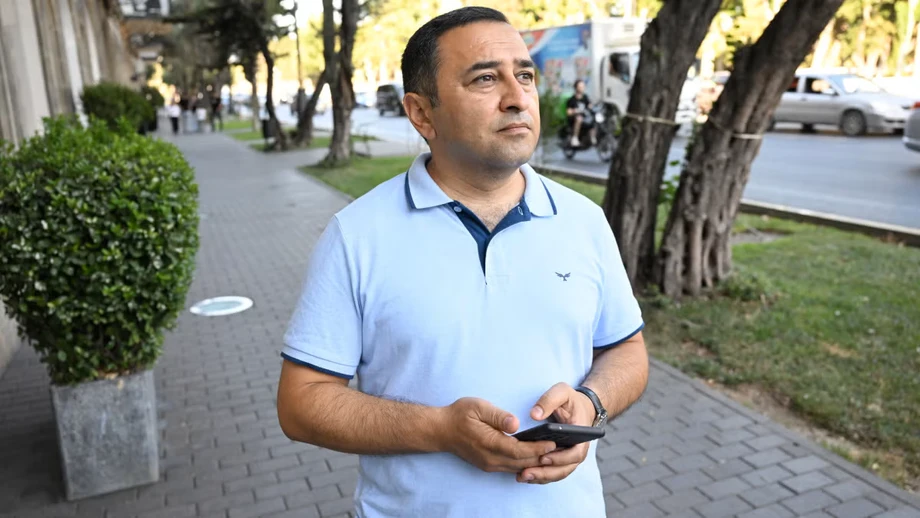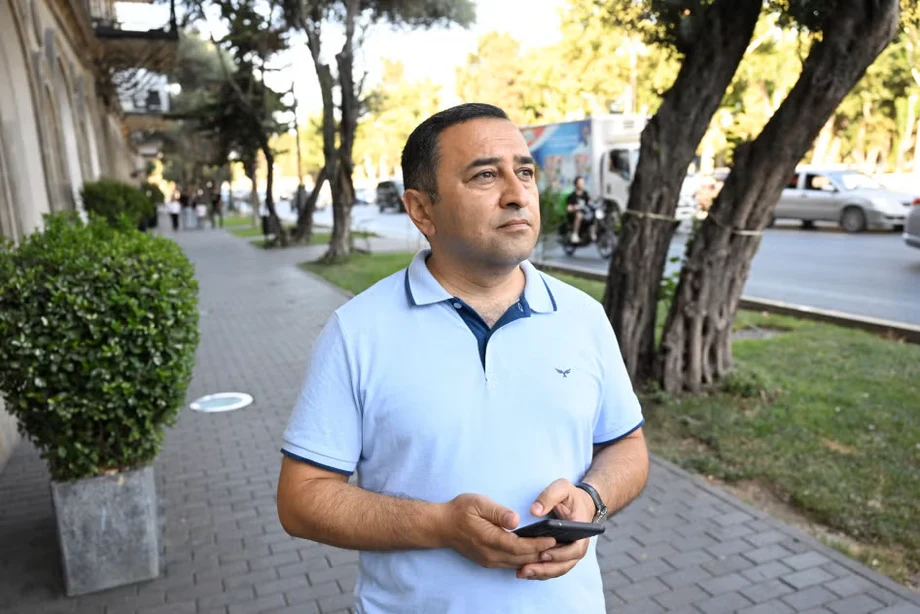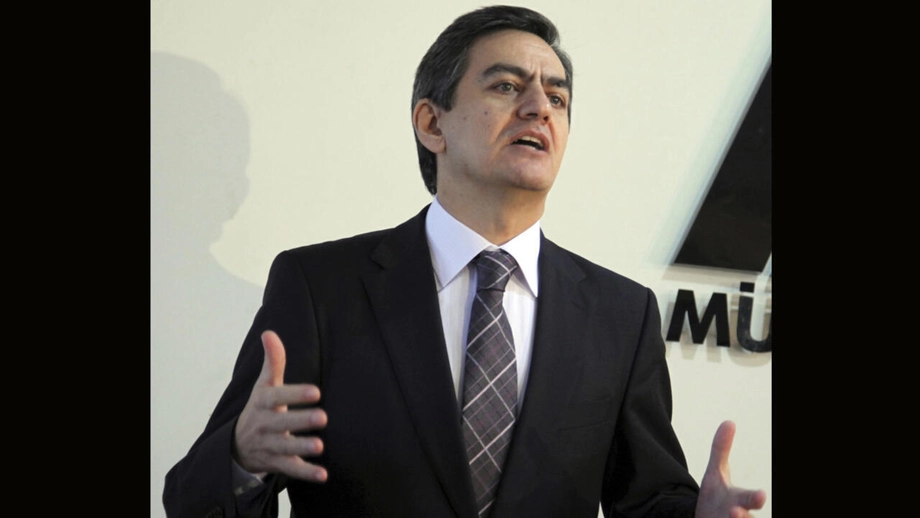
A leader in custody as the case reaches a decisive stage
Ali Karimli, the 61 year old chairman of the Azerbaijan Popular Front Party, has spent a year in detention as his coup trial moves toward a stage in which the court will review the case materials. He was detained by the State Security Service on November 29, 2025, and a Baku court ordered pretrial detention on December 1. One prison interview published the following June described him as imprisoned since December 1; the two dates mark arrest and court authorization.
Contents
- A leader in custody as the case reaches a decisive stage
- What the State Security Service alleges
- Karimli's answer: elections, not violence
- A timeline of the arrest and trial
- Why the courtroom is closed
- Mehdiyev's testimony and the alleged link
- Detention conditions and health concerns
- Ibrahim, the party and a wider crackdown
- International reaction and the politics of energy
- What the case changes for Azerbaijan's opposition
- What remains unknown
- Key Points
Karimli has led the APFP since 2000. He was Azerbaijan's secretary of state in 1993 and was elected to parliament in 1995 and 2000 on the party list. His party is one of the country's main opposition groups, operating in a political system dominated by President Ilham Aliyev, who took power from his father, Heydar Aliyev, in 2003.
Karimli and Mammad Ibrahim, a Presidium member and longtime party adviser, are charged under Article 278.1 of Azerbaijan's Criminal Code, covering actions aimed at the violent seizure of power or forcible change of the constitutional order. Constitutional order means the structure of government set out in the constitution. A conviction can bring 12 to 20 years in prison or life imprisonment. Both men deny the charges and say the case is political.
Karimli spoke through his legal team on the eve of the planned June trial and called himself a prisoner of conscience. He said the accusations were 'entirely fabricated and politically motivated'.
I have committed no crime - nor even a minor administrative offence.
What the State Security Service alleges
On February 12, 2026, the State Security Service issued a statement alleging that Karimli had conspired with Ramiz Mehdiyev, the former head of Azerbaijan's Presidential Administration, and others to seize state power. The agency linked the alleged plot to interference by foreign intelligence services in Azerbaijan's political affairs. It also named former first deputy prime minister Abbas Abbasov and APFP figures including Mammad Ibrahim, Fuad Gahramanly and Ganimat Zaiidov.
Investigators said Karimli planned to use a mass rally in Baku in July 2020 to provoke unrest and take over the parliament and state television buildings. That rally was originally held in support of the Azerbaijani army. A 15 page copy of a court motion from the APFP leadership gives Karimli's answer: he said he did not attend the rally and that his party was not involved in organizing it.
Nazim Musayev, a lawyer representing Ibrahim, said both defendants considered the prosecution politically motivated. Karimli's and Ibrahim's cases were later separated from the investigation involving Mehdiyev, although the allegations against them grew out of that inquiry.
Karimli's answer: elections, not violence
Karimli submitted his motion at a preliminary hearing on November 3, 2026. The court rejected his request to drop the charges but added the motion to the case file. In it, Karimli, the APFP chairman, said he wanted political change but had always opposed violence as a way to achieve it. He wrote:
I accept only one way of coming to power - through democratic elections.
Karimli also disputed the prosecution's description of the National Council of Democratic Forces, an opposition coalition formed in 2013. He said the group was created openly to support a joint opposition candidate in the presidential election, not to organize a coup.
He denied any cooperation with Mehdiyev, saying the two had never met or communicated and had represented opposing political positions for decades. Mehdiyev's lawyer also said his client denied any connection to Karimli.
A timeline of the arrest and trial
The case has moved through raids, detention orders, a public accusation, closed hearings and a final witness stage. The key dates are:
- November 29, 2025: Security agents raided Karimli's home in Baku and detained him. Amnesty International said he was held incommunicado for two days. Ibrahim was also detained and held incommunicado.
- December 1, 2025: The Sabayil District Court ordered Karimli held for two months and 15 days.
- February 12, 2026: The State Security Service set out the alleged coup plot in a public statement.
- June 10, 2026: A prison interview was published on the eve of a planned trial date. A court also extended Karimli's pretrial detention by five months, leaving him held until at least November.
- July 2026: New restrictions were reported, including bans on family food parcels, television access, newspapers and written materials from lawyers.
- August 6, 2026: Amnesty International said Karimli fainted from severe dehydration during a court hearing. The APFP rights committee said the collapse happened while he was being taken to a hearing on house arrest.
- November 13, 2026: The Baku Serious Crimes Court began hearing the Karimli and Ibrahim case behind closed doors, with lawyers bound by a non disclosure agreement.
- November 20, 2026: Two of three witnesses did not confirm the coup preparation version. Karimli accused the third witness of lying.
- November 23 and 25, 2026: Karimli was allowed a family phone call after about six months and then a family meeting after five months.
- November 27, 2026: Mehdiyev and his daughter testified, and witness questioning ended.
- December 1, 2026: The court was due to begin examining the criminal case materials.
No public sentencing date was given after witness questioning ended. The next listed court step was the examination of case materials on December 1.
Why the courtroom is closed
The trial against Karimli and Ibrahim is being held behind closed doors. Foreign diplomats have also been denied entry. Nazim Musayev said the closed proceedings were justified on the grounds that the case involved state secrets.
Karimli said in the June prison interview that neither he nor his lawyers had access to the investigation file or the prosecution case file. He said he had given no testimony to investigators. The lawyers' non disclosure agreement adds another barrier for anyone outside the process trying to follow the evidence.
The court's decision to add Karimli's motion to the case file means his written defence is part of the record. The public still has limited access to what witnesses said and what material the judges will review.
Mehdiyev's testimony and the alleged link
Ramiz Mehdiyev was charged in October 2025 with attempted seizure of power, high treason and legalization of property obtained through criminal means. He was later sentenced to 14 years of imprisonment with the term suspended, meaning the sentence was imposed but not ordered to be served under the court's conditions. He has appealed. His age was given as 88.
On November 27, Mehdiyev testified by video link from his home. He told the court he was 'completely unrelated' to Karimli. He also addressed the claim that his assistant, Eldar Amirov, had passed documents or money to the opposition leader.
I did not pass any letters or money to anyone through Eldar Amirov.
Mehdiyev said he was not acquainted with Fuad Gahramanly, the APFP deputy chairman, and said money found in his house was his own savings. He said he had worked since 1957 and accumulated it over that time. His daughter, Kamila Aliyeva, testified that she knew Karimli only by reputation and that her family had no ties to him.
Gahramanly had earlier described attempts to link Mehdiyev with the APFP as absurd. Karimli has made the same point in his defence, saying Mehdiyev was associated with repressions against the party while the APFP advocated European integration and a democratic future for Azerbaijan.
Detention conditions and health concerns
In an Human Rights Watch statement dated August 5, the rights group said Karimli's detention conditions had become increasingly punitive. Giorgi Gogia, deputy director for its Europe and Central Asia division, called for Karimli's release and for international partners to raise the case.
The Azerbaijani authorities should end the punitive restrictions, release Karimli from pretrial detention, and drop the unfounded charges.
The statement said phone access was cut after the June prison interview and later limited to four minutes of an allotted 15 minute call. Courts refused to register applications seeking to restore communication rights. A new cellmate who spoke and recited religious phrases through the night was placed in Karimli's cell, and requests to move him were rejected. In July, family food parcels were prohibited, his television was switched off, newspapers were confiscated and lawyers were barred from giving him written materials. His defence team said on July 13 that the treatment violated the ban on inhuman or degrading treatment in article 3 of the European Convention on Human Rights.
Karimli's son Turkel, who lives in the United States, said he last spoke to his father in late April or early May. He said his mother had been denied phone calls and in person visits since June. Turkel said conditions worsened over the summer, citing information from lawyers that food parcels were temporarily rejected and additional drinking water was limited to 5 liters, or 1.3 gallons, a week. Food deliveries were later allowed again, and lawyers were told in November that the water allowance would rise to 10 liters a week.
Karimli's legal team said he had lost considerable weight. He has complained of persistent noise, restricted family contact, limits on exercise, worsening back pain and poor ventilation. Amnesty International warned that the reported lack of clean drinking water and ventilation could amount to torture or other ill treatment. Official authorities had not commented publicly on several of those specific claims.
Ibrahim, the party and a wider crackdown
Mammad Ibrahim has his own history of politically contested prosecution. He served three years in prison after a 2016 conviction on hooliganism charges that Human Rights Watch described as spurious. His family now says he is not receiving adequate medical treatment in detention.
Ibrahim's son Turan, who lives abroad, said his father has kidney problems and insomnia. Turan said doctors appointed by the authorities had examined Ibrahim several times, while the family consulted outside doctors and tried to arrange medication. Ibrahim's wife delivers food and supplies once a week and is allowed to see him through a glass partition twice a month. Turan said she is unemployed, lives in rented accommodation and has faced financial difficulties since the arrest.
The APFP has continued to operate during Karimli's detention. Rahim Hajiyev, a founding member now living in France, said the party had long relied on collective decision making and that Karimli's arrest had not halted its organizational work. He said members, especially those active on social media, continued to face short term administrative detention.
Since November 2025, more than 20 APFP members have been detained, held in pretrial detention or subjected to travel bans. Authorities have repeatedly denied the party permission to hold rallies in central Baku. Jamal Hasanli, chairman of the National Council of Democratic Forces, said no other party in Azerbaijan had faced the same level of pressure over the past 20 years.
International reaction and the politics of energy
On October 8, the European Parliament adopted a resolution calling for the immediate and unconditional release of Karimli and other political prisoners in Azerbaijan. Lawmakers urged the authorities to provide adequate medical care, access to lawyers and contact with family members. Karimli was awarded the 2026 Magnitsky Human Rights Award earlier this month.
In an Amnesty International statement dated December 1, Denis Krivosheev, Amnesty's deputy director for Eastern Europe and Central Asia, said the arrest showed the government's campaign against dissent. He said:
There appears to be no limits to the government's campaign to crush all political opposition and suppress all dissent in the country. Authorities must release Ali Karimli unless they can demonstrate reasonable evidence of an alleged criminal offense.
Karimli's case was raised in Baku on November 18 at a joint press conference with Azerbaijani Foreign Minister Jeyhun Bayramov and German Foreign Minister Johann Wadephul. Bayramov said membership in the opposition did not exempt anyone from legal responsibility. He said the case was being handled under Azerbaijani law and that the court would decide the outcome.
Karimli used the June prison interview to address European support. He said the European Parliament had called for his release and that of 400 other political prisoners, and he praised the Parliamentary Assembly of the Council of Europe. He said European governments and the European Commission had been cautious. On energy, he said Europe's reliance on Azerbaijani gas was 'somewhat exaggerated' because the dependence was mutual: Azerbaijan relies on the European market and has few alternative buyers for gas moved through pipelines rather than ships.
He also said Azerbaijan remained tied to Russia through the Commonwealth of Independent States, a Russia led grouping founded in December 1991 with 11 former Soviet republics, and through Russian language schools. On France, he said relations had swung between tension and reconciliation, and that French policy should adapt to a peace agreement being finalised after the Second Karabakh War. The South Caucasus is the region made up of Azerbaijan, Armenia and Georgia.
What the case changes for Azerbaijan's opposition
The case reaches beyond two defendants because the APFP is a central organised opposition party. Karimli's detention has not stopped party activities, but it has removed its long serving chairman from public politics during a period when rallies are being refused and members are being detained or restricted from travelling. Families close to the defendants have also been drawn into the case through limited calls, supervised visits and efforts to deliver food, water and medicine.
Azerbaijan's size and energy links give the case an international dimension. The country is a hydrocarbon rich state in the South Caucasus, and European governments buy its gas. Karimli argues that this trade should not lead Europe to ignore repression. Bayramov's public response placed the issue inside Azerbaijan's legal system, while rights groups and the European Parliament have pressed for Karimli's release and better treatment in custody.
The closed trial shapes what the public can know. Prosecutors have set out a plot involving a 2020 rally, foreign intelligence services and Mehdiyev. Karimli, Ibrahim, Mehdiyev, Mehdiyev's daughter and two witnesses have given a different account of the alleged connection. The court's review of case materials on December 1 was the next step toward a decision.
What remains unknown
The verdict and any sentence had not been announced after witness questioning ended, and no public date for a decision was given. The investigation file and prosecution case file remained unavailable to Karimli and his lawyers, according to his prison interview. Official authorities had not commented publicly on the health and detention allegations.
Karimli also warned in the interview that his life could be in danger. He cited the death of 22 year old activist Elbey Karimli in detention on December 12, 2025, officially ruled a suicide, and alleged that he had already been subjected to severe torture on President Aliyev's orders. He said he had no illness that threatened his life and rejected any suggestion of suicide. He said:
Therefore, if I do not leave prison alive, it must be understood by all as a political assassination.
Those comments come from Karimli himself and have not been verified in court. They show how he understands the risks of his detention while the case continues behind closed doors.
Key Points
- Ali Karimli, 61, has been held since November 29, 2025, and faces charges under Article 278.1, which can carry 12 to 20 years in prison or life imprisonment.
- The State Security Service alleges that he worked with Ramiz Mehdiyev and others to seize power, including by exploiting a July 2020 rally in Baku.
- Karimli denies the charges, says he has always opposed violence and says he has had no access to the investigation or prosecution files.
- Mehdiyev testified on November 27 that he was completely unrelated to Karimli, and his daughter said her family had no ties to him.
- The trial is closed to the public and foreign diplomats, and witness questioning ended on November 27, with case materials due to be examined on December 1.
- Rights groups have raised alerts about water, food, sleep, medical care and family contact, while the European Parliament has called for Karimli's release.