Hanoi has moved beyond its 2025 record
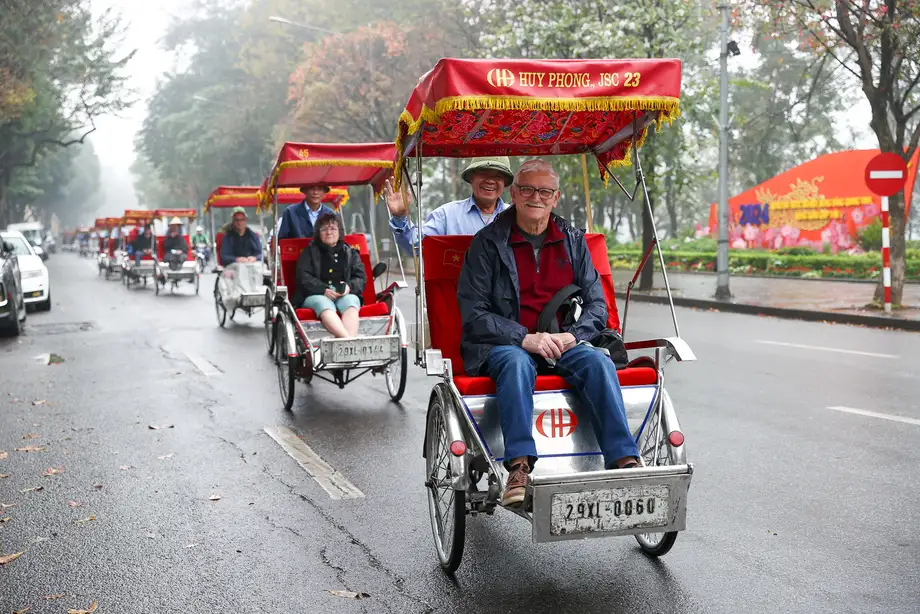
Hanoi is expected to finish 2026 with 36.31 million visitors, exceeding its target of 35.8 million. Pham Tuan Long, Director of the Hanoi Department of Culture, Sports and Tourism, gave the estimate at a 26 November meeting of the Hanoi Party Committee. He said international arrivals should pass 9 million, above the goal of 8.6 million, while tourism revenue should reach VND 160 trillion, or about US$6.3 billion.
Contents
- Hanoi has moved beyond its 2025 record
- How growth built through 2026
- The visitor map is widening
- The challenge begins after visitors arrive
- Hanoi is selling more than a short stop
- Noi Bai offers a large test market
- What Gia Binh is designed to add
- Construction progress and the dates that matter
- Why airlines are being shown a northern Vietnam market
- What changes for travellers and the region
- What to Know
The new estimate builds on a remarkable 2025. The Hanoi Department of Tourism counted 33.7 million visitors that year, 20.8% more than in 2024. They included 7.82 million international arrivals, up 22.8%, and 25.9 million domestic visitors, up 20.3%. Tourism revenue reached an estimated VND 134.46 trillion, about US$5.3 billion, representing growth of 21.5%.
The capital received roughly 29 million visitors in 2019, its busiest year before COVID-19, so the 2025 total was about 4.7 million higher. Hanoi had aimed for 32 million visitors in 2020 before the pandemic halted that plan. Normal tourism activity resumed in early 2022. By the first six months of 2025, the city was receiving 15.5 million visitors, compared with 14.3 million during the same period of 2019.
How growth built through 2026
Hanoi's original 2026 plan called for 35.8 million visitors, comprising 8.6 million international arrivals and 27.2 million domestic travellers. The revenue goal of VND 160 trillion represented a planned increase of 19% from 2025. The latest estimate suggests the city will meet that revenue goal while receiving more people than planned.
The first six months produced approximately 18.01 million visitors, 15.7% more than a year earlier. International arrivals reached 4.64 million, an increase of 26.8%. By the end of October, Hanoi had received 30.36 million visitors, up 6.8%, including 7.57 million international arrivals, up 21.4%. Tourism revenue for those ten months reached VND 125.24 trillion, 13% higher than in the corresponding period.
Pham Tuan Long estimated full year international growth at 14.21% and hotel room occupancy at 68.34%, above the planned 66%. Hanoi also approved 668 cultural and artistic events during 2026, an increase of 19.7% from 2025. The programme included the Jazz Festival and large concerts such as Big Bang and Anh Trai Say Hi. Growth in arts and entertainment was expected to reach 12.22%, compared with a target of 11.48%. For hotels, restaurants and transport companies, these figures indicate business beyond the simple count of people entering the city.
The visitor map is widening
Australia supplied one of the clearest examples of changing demand. Hanoi received 135,382 Australian visitors in 2025, compared with 82,275 in 2019. That is an increase of 64.5%, equivalent to more than 53,000 additional arrivals. Indian visitor numbers grew fivefold over the same comparison, helped by new direct air routes.
Asia still provides most of Hanoi's international business. Japan, South Korea and China together account for around 60% of visitors. Asian markets delivered 4.5 million arrivals in the first ten months of 2025, 20% more than in the corresponding period of 2024 and 26% above the 2019 level. Arrivals from predominantly Muslim markets in the Middle East and Southeast Asia rose by 20% to 30% between 2022 and 2025.
Vietnam Airlines has recorded growth of 10% to 30% from Europe, Australia and the Americas compared with levels before the pandemic. Russia is the exception: flights resumed in May 2025, but the market had recovered to only 72% of its 2019 size. For airline planners, the changing mix creates several distinct opportunities, from Australian holiday travel to Indian direct services and the large Northeast Asian market.
The challenge begins after visitors arrive
Tran Trung Hieu, Deputy Director of the Hanoi Department of Tourism, has acknowledged that visitor spending and length of stay remain modest. International tourists commonly stay for just two or three nights, with the average visit put at 2.8 days. Shopping expenditure is also limited. Vietnam Airlines has described Hanoi as a transit destination, meaning that many travellers use it as the beginning or end of a journey rather than remaining for a longer holiday.
Travel agencies see strong competition from Bangkok, Seoul, Singapore and Kuala Lumpur, where visitors find broad event calendars and varied tourism products. Hanoi has also lacked enough large international events around which travel companies can build major promotion campaigns. More arrivals alone will not address that weakness if visitors continue leaving after a short stay.
Nguyen Quy Phuong, Head of Tourism Promotion at the Vietnam National Administration of Tourism, said the city needed to reposition its brand and use digital marketing based on visitor data. He explained the intended change in these words:
Hanoi should no longer be seen only as a 'heritage city', but as a destination where tradition and modernity coexist, where cultural values are not just preserved but lived every day.
One proposal is to package Hanoi with Ninh Binh, Ha Long and Sa Pa in cultural, heritage, nature and leisure itineraries. The aim is to raise the average international stay from 2.8 days to between four and six days. Each additional day creates more demand for rooms, meals, local transport and guides, while regional itineraries spread that activity beyond the capital.
Hanoi is selling more than a short stop
Quan Thanh Temple, craft villages and railway journeys have become part of the response. The 2025 programme introduced the Bell of Tran Vu night event at Quan Thanh Temple and expanded the Southern Thang Long Heritage Road tour. Its villages include Ngau, known for chrysanthemum wine, Phuc Am, known for votive paper, and Cuu, where French style heritage houses stand in a rural setting.
Other experiences include the Truc Bach Subsidy Street and Leng Keng heritage route, a herbal village visit with the Dao community at Ban Mien in Ba Vi, and new rail services. Sjourney offers a higher quality night train experience, Hoa Phuong Do combines food with a journey between Hanoi and Hai Phong, and the Five City Gates train began service on 19 August 2025. These products give travel companies something more specific to sell than a general city break.
Tran Trung Hieu credited investment in transport and hospitality for helping the recovery. Hanoi now has 3,769 accommodation establishments with about 72,400 rooms, alongside roughly 140 tourist sites. Hieu also cited international recognition from TripAdvisor and Time Out when describing the opportunity created by the new products:
Hanoi is entering a golden period to accelerate both visitor volume and experience quality.
The development pipeline has included the Vietnam Exhibition Centre, Kim Quy Park, the Soc Son horse racing project, renovation around Hoan Kiem Lake and additional luxury hotels. Their value to tourism will depend on how effectively they are connected with events, tours and transport.
Noi Bai offers a large test market
Noi Bai International Airport remains Hanoi's operating gateway. Vietnam's winter 2026 schedule involved 83 airlines, including four Vietnamese carriers and 79 foreign airlines from 31 countries and territories. They operated 3,523 international round trips each week across the country, 271 more than in winter 2025, an increase of just over 8%.
At Noi Bai, 53 international airlines operated 1,299 international round trips each week, an increase of 181. The airport also handled 1,916 domestic flights each week. Its international network connects Hanoi with Northeast and Southeast Asia, South Asia, the Middle East and Europe. A separate measure put activity at about 305 international passenger flights a day, comprising 153 departures and 152 arrivals.
Expansion of Terminal T2 is intended to raise its design capacity from 10 million to 15 million passengers a year, with more check in facilities, departure gates and automated equipment. That work matters because Noi Bai must continue handling growth while Gia Binh is being built.
Connecting passengers represent another opportunity. Noi Bai handled 224,848 transit passengers in 2023, 271,160 in 2024 and 397,688 in 2025, equivalent to average annual growth of roughly 33%. The first nine months of 2026 produced 412,613, already 3.75% above the total for all of 2025.
Vietnam Airlines operates a Transit Tour for passengers with layovers lasting between 8 and 35 hours, providing airport assistance, transport, accommodation, meals, guides and insurance. It served about 900 passengers in 2025, a small fraction of the 397,688 people who connected through Noi Bai that year. Proposals prepared for a 1 December seminar by Hanoi's National Assembly delegation include experiences lasting four to six hours, city tours of six to eight hours and programmes lasting 12 to 24 hours. A multilingual transit information point at the airport and clearer coordination for tour registration, entry procedures and return transport are also under consideration.
What Gia Binh is designed to add
Gia Binh International Airport is under construction in Bac Ninh province, within the Hanoi Capital Region. Its codes are VVGB for ICAO and GBN for IATA. The National Assembly approved the project in December 2025 under Resolution 256/2025/QH15, with investment of about VND 196 trillion, roughly US$7.5 billion.
The Ministry of Public Security is the project owner. Masterise Aviation Infrastructure, part of Masterise Group, is the investor and developer. Its international partners include daa International, McKinsey & Company, SOM, NACO, Nikken Sekkei, Artelia and AAC.
Plans call for capacity of 30 million passengers and 1.6 million tonnes of cargo a year by 2030. By 2050, those figures are intended to reach 50 million passengers and 2.5 million tonnes of cargo. Two runways are planned, with 70 to 80 aircraft movements an hour at full development. The Code 4F airfield standard allows the largest passenger aircraft to operate there. CAT III approaches will support suitably equipped aircraft and crews when visibility is very poor.
The developer wants service quality to earn five stars from Skytrax, an aviation rating organisation. Its route plan foresees 17 domestic services at launch and around 69 international destinations by 2030. Gia Binh is intended to work alongside Noi Bai rather than leave Hanoi dependent on a single airport.
Construction progress and the dates that matter
Construction began in August 2025. By late November 2026, the air traffic control tower structure was essentially complete, runway pavement work was under way and the VIP terminal roof was being installed. On 24 and 25 November, the airport conducted its first flight inspection of the DVOR/DME navigation system, equipment that helps aircraft determine their direction and distance from a ground station.
- 31 May 2027: The developer's tentative date for the official opening, beginning with the VIP terminal.
- End of October 2027: The planned opening of the direct expressway to Hanoi, reducing the journey from central Hanoi to about 30 minutes. Its corridor is 120 metres wide.
- Late 2028: The Civil Aviation Authority of Vietnam's target for commercial operations.
- 2029 and 2030: The period by which rail services running at high speed and metro connections are expected to reach the airport.
The commercial passenger terminal will follow in a separate phase, and the developer's timetable did not give it a detailed public opening date. All of the milestones remain dependent on construction, supporting infrastructure and operational approvals.
Why airlines are being shown a northern Vietnam market
Vietnam handled a record 83.5 million air passengers in 2025, while its economy grew by more than 8%. The country received 21.2 million international visitors during the year and is targeting 45 million to 50 million annually by 2030. Hanoi's air traffic is forecast to reach approximately 60 million passengers a year by that date.
The airport developer's market assessment estimates that around 4 million passengers travel between Hanoi and Europe or the Americas each year without a direct flight. Those journeys currently require a connection somewhere else. Direct services could reduce travel time, although an airline would still need to assess fares, operating costs, aircraft availability and demand throughout the year before committing a route.
Business travel and cargo provide another source of demand. The corridor running through Hanoi, Bac Ninh, Hung Yen and Hai Phong attracts around 42% of Vietnam's foreign direct investment, which is money invested by companies in operations abroad. Large electronics manufacturers in the corridor generate corporate travel and valuable exports. Gia Binh's cargo plans are therefore connected to industrial activity as well as tourism.
What changes for travellers and the region
Hanoi already gives visitors a compact group of experiences around Hoan Kiem Lake and the Old Quarter, where several hours can be spent without a long transfer. The Temple of Literature and the Imperial Citadel of Thang Long, a UNESCO World Heritage Site, add historical depth. Craft villages, street food, festivals and evening entertainment provide material for longer visits.
Regional connections can turn those attractions into a broader northern Vietnam journey. Ha Long Bay, Ninh Binh's Trang An landscape and Sa Pa's mountain scenery are all within reach. Neighbouring Quang Ninh, home to Ha Long Bay, received about 21 million visitors in 2025, including 4.5 million international arrivals. Joint itineraries could allow hotels, tour operators and transport providers in several localities to share visitor spending.
Business tourism also has a dated opportunity. Vietnam's government announced on 27 November 2026 that it expects more than 200 events during APEC Year 2027. APEC, or Asia Pacific Economic Cooperation, brings together member economies for trade and policy meetings. Phu Quoc will host APEC Economic Leaders Week in November 2027, while Hanoi will participate in the wider programme. The capital's diplomatic and government activity already supports demand for meetings, conferences and exhibitions.
For 2027, Hanoi plans to use new venues such as the Vietnam Exhibition Centre in Dong Anh to attract international cultural and sporting events. An international photography festival is also planned, and the city has promised shorter administrative procedures for event organisers. Until Gia Binh begins commercial service, travellers should continue using Noi Bai and confirmed airline schedules.
What to Know
- Hanoi received 33.7 million visitors in 2025, including 7.82 million international arrivals, and earned VND 134.46 trillion from tourism.
- The city expects 36.31 million visitors and more than 9 million international arrivals in 2026, beating both targets.
- International visitors typically stay for two or three nights; regional itineraries are intended to extend visits to between four and six days.
- Noi Bai remains the operating gateway and handled 412,613 transit passengers in the first nine months of 2026.
- Gia Binh is planned for 30 million passengers a year by 2030 and 50 million by 2050.
- The VIP terminal has a tentative opening date of 31 May 2027, while the Civil Aviation Authority targets commercial operations in late 2028.
- About 4 million passengers a year travel between Hanoi and Europe or the Americas without a direct flight.
- Phu Quoc will host APEC Economic Leaders Week in November 2027, with Hanoi taking part in the wider programme.