A proposed 20% tariff, not a final one
Singapore could face a US tariff of up to 20% on goods exported to the United States under a proposal announced on November 25, 2026. The rate could fall to 10% if Singapore reaches an Agreement on Reciprocal Trade with Washington or concludes other negotiations that answer the findings of the investigation. The duties are not yet in force. Written comments and a public hearing are scheduled for January 2027, with early 2027 identified as a possible implementation period.
Contents
- A proposed 20% tariff, not a final one
- The six findings against Singapore
- Why Singapore calls the findings a poor fit
- The trade surplus at the center of the dispute
- What exporters could actually pay
- How Singapore compares with the other economies
- Why Section 301 matters after the court setback
- Markets, Congress and China react
- The consultation and negotiation calendar
- Key Points
The USTR's November 25 determination found that manufacturing policies in Singapore and 13 other economies were unreasonable and burdened or restricted US commerce. United States Trade Representative Jamieson Greer made the determination under Section 301 of the Trade Act of 1974, a law that allows Washington to investigate foreign trade practices and propose responsive action.
The investigation began in March 2026 and covered 16 economies. The 14 covered by determinations were Singapore, China, the European Union, Switzerland, Indonesia, Malaysia, Cambodia, Thailand, South Korea, Vietnam, Taiwan, Bangladesh, Japan and India. Mexico and Norway remain under investigation, with no determinations announced for them.
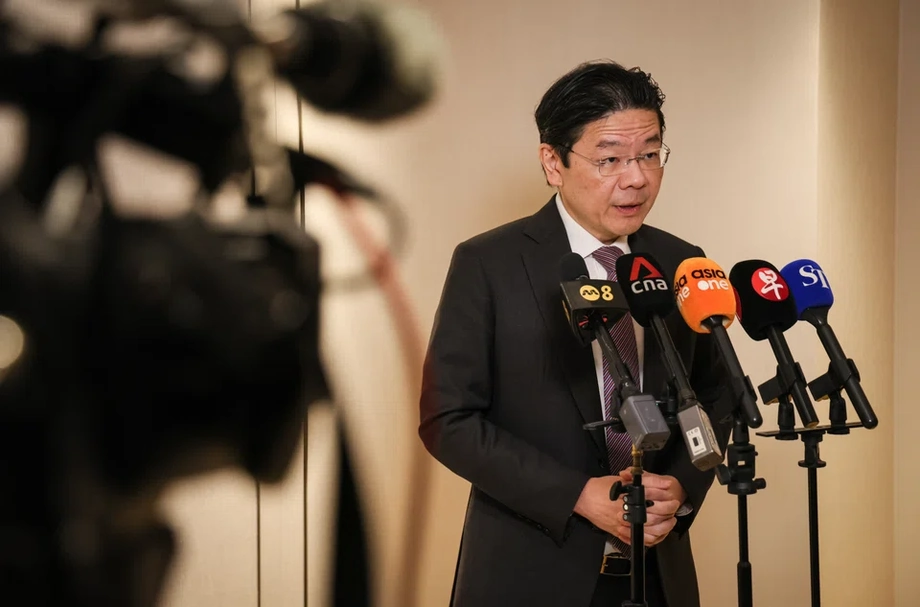
Singapore's Ministry of Energy, Trade and Industry responded on November 26. In METI's media statement, the ministry disagreed with the findings and made its displeasure plain.
We are very disappointed with the proposed actions against Singapore.
METI said it had answered USTR's queries throughout the investigation. It will submit further comments during the public consultation, urge USTR to reconsider and explore ways to reduce the tariff.
The six findings against Singapore
Structural excess capacity means factories have the ability to produce more goods than markets can absorb under normal commercial conditions. USTR argues that industrial support, restrictions on consumption and other government practices can sustain that extra production. The resulting exports can then intensify competition for manufacturers elsewhere.
USTR listed six broad findings against Singapore:
- Industrial plans that support manufacturing.
- Financial repression.
- Savings promotion policies that suppress domestic consumption.
- Inadequate labor protections.
- Financial support for key sectors.
- Failure to address global excess capacity and production, including through imports and foreign direct investment from non-market economies.
Financial repression is a broad term for government policies that suppress financial returns or steer savings and credit rather than leaving those decisions entirely to markets. In USTR's argument, such policies and incentives to save can restrain consumption while industrial support expands production. A non-market economy, often abbreviated as an NME, is one in which the state exercises substantial influence over prices, production or investment.
USTR's report on Singapore runs to 168 pages. It identifies the Singapore Manufacturing 2030 plan and the Research, Innovation and Enterprise 2030 plan, known as RIE2030. It also examines financial support for manufacturing companies in electronics and semiconductors, health and petrochemicals, the three groups of sectors singled out in the announcement.
The report raises concerns about investment and imports from non-market economies, particularly China. USTR says these flows can allow additional capacity to develop and enable Chinese companies to sell excess production through international markets. It says the practices reduce opportunities for US producers, contribute to lost American production, exports, jobs and investment, and increase economic security risks through reliance on NME inputs.
Greer presented the determinations as a response to practices extending well beyond Singapore. He said years of international discussions had not produced the changes Washington wanted.
For decades, many of our trading partners have adopted industrial strategies built on targeting manufacturing, wage and labor suppression, financial and other support, non-market economy inputs, and other market distorting practices that tilt the trade balance in their favor while eroding America's manufacturing base.
Why Singapore calls the findings a poor fit
METI's central objection is that the findings do not account for the structure of Singapore's economy. It describes the country as a small nation with limited resources whose global trade surplus reflects an economy directed toward international markets and its role as a trusted business and trading hub. Its priority, the ministry said, is to keep markets operating efficiently and preserve international competitiveness.
The ministry rejected any suggestion that Singapore shields its domestic market or pays manufacturers to export. It also defended the country's network of trade agreements.
Singapore's economic policies do not protect our domestic market or subsidise manufacturing for export. Our free trade agreements seek to lower barriers to trade and investments, and are fully compliant with World Trade Organisation rules.
The United States Singapore Free Trade Agreement, or USSFTA, is a major part of that defense. METI said Singapore levies no tariffs on US exports under the agreement, while the United States committed to levy no tariffs on imports from Singapore.
The dispute therefore turns on how the same policies are classified. Singapore presents its manufacturing, research and trading policies as compatible with open markets. USTR treats parts of that framework as contributors to excess production. Singapore has not announced changes to Manufacturing 2030 or RIE2030, and its stated response is to contest the findings through consultation and negotiation.
The trade surplus at the center of the dispute
METI said the United States has recorded a trade surplus with Singapore for more than 20 years since the USSFTA was signed. It put that surplus at US$27 billion in 2024 and US$33 billion in 2025. The US$6 billion increase equals roughly 22% in one year.
USTR's report acknowledges a sizeable Singapore deficit in bilateral goods trade with the United States during nearly all of the past decade. The descriptions use different measures: METI supplies figures for total trade, while the USTR passage refers specifically to goods. USTR argues that the bilateral balance does not settle the wider question of manufacturing capacity and consumption.
Although Singapore has run a sizeable bilateral goods trade deficit with the United States for nearly all of the past decade, this does not outweigh the negative effects of Singapore's outsized manufacturing sector and comparatively low consumption.
USTR also argues that Singapore's surpluses with other trading partners capture potential market share from US exporters. Without the policies under investigation, it says, American companies could sell more goods to Singapore as well.
Singapore has considerable commercial ties to use in its representations to Washington. Despite its size, it is the third largest Asian investor in the United States, behind Japan and South Korea. Bilateral trade and Singapore investments support about 350,000 American jobs. Approximately 6,600 American companies are based in Singapore, while more than 250 Singapore companies operate across 45 US states in activities including logistics, agribusiness, aerospace and shipbuilding.
What exporters could actually pay
The phrase net of existing Section 301 tariffs is essential to understanding the proposal. It means existing duties under that law count toward the proposed ceiling rather than a full new 20 percentage points simply being added. A November 26 summary described the 20% as added to existing Section 301 duties, but the official USTR proposal and METI statement both use the net formulation.
Singapore already faces previously announced Section 301 tariffs of 12.5% connected to forced labour concerns. For goods subject to that rate and the full new ceiling, the arithmetic allows an additional Section 301 component of up to 7.5 percentage points, bringing the Section 301 total to 20%. Product exemptions and the final decision will determine the charge on each shipment.
Certain goods would be exempt under annexes to the relevant Federal Register notices. USTR has also said the new duties would not stack on top of sectoral national security tariffs. Some Singapore exports already face sectoral rates ranging from 25% to 50% on products including steel, aluminium, copper and automotive parts.
For an exporter, a new border charge can mean absorbing the cost, raising the US sale price or seeking an exemption. For an American buyer, it can increase procurement costs. Those practical effects will depend on the final rate and product list, neither of which has been settled.
How Singapore compares with the other economies
The proposed ceilings vary according to existing duties, trade agreements and negotiations. Singapore's possible reduction to 10% is among the clearest conditional offers, but other economies also have lower rates tied to successful talks.
- Singapore faces up to 20%, with a possible 10% rate after a reciprocal trade agreement or other responsive negotiations.
- Vietnam faces up to 35%, or a capped 20% rate if it reaches an agreement with Washington.
- India faces up to 25% if talks fail, or 17% if an agreement is completed.
- Bangladesh, Cambodia, Indonesia, Malaysia and Thailand face proposed ceilings of 18%.
- The European Union, Japan, South Korea, Taiwan and Switzerland face proposed rates of 15%, including existing Most Favoured Nation duties, which are standard import tariffs.
- China faces a capped rate of 20% alongside duties of roughly 25% dating from President Donald Trump's first term. Its rate could rise to 40% if the US China trade truce unravels.
China's 20% proposal accounts for the truce reached by Trump and President Xi Jinping on October 30, 2025, which expires on January 10, 2027. USTR also said the proposed tariffs would not apply to about US$30 billion of Chinese imports being considered for reduced duties through a bilateral mechanism called the Board of Trade.
Greer said the caps were consistent with trade agreements reached during the previous year and with their provisions lowering barriers to US exports. He said those agreements could address some of the capacity problems identified by USTR. The different calculation methods matter: Singapore's ceiling is net of existing Section 301 duties, while the 15% group includes standard Most Favoured Nation rates.
Why Section 301 matters after the court setback
The proposals are part of an effort to rebuild the administration's tariff authority after the Supreme Court struck down Trump's broad global duties in February 2026. Those earlier duties had been imposed under a national emergencies law. The new process instead rests on Section 301 investigations, written determinations, reports for individual economies, Federal Register notices and public consultation.
Section 301 has been used in trade disputes by administrations of both major US parties. The current investigation also addresses foreign subsidies and industrial policies that concern Republicans and Democrats, potentially making the resulting measures harder to reverse than duties resting solely on a presidential emergency declaration.
The political environment is nevertheless difficult for the administration. Tariffs and their effect on living costs were major issues in the Democrats' sweeping midterm election victory. Polling conducted after the Republican losses found that 62% of respondents supported Democratic efforts to repeal the tariffs.
Markets, Congress and China react
US stock markets weakened on November 25 as the new trade barriers were proposed during a renewed sale of technology shares. Major indices opened more than 1% lower, while the Nasdaq Composite, which carries a large technology weighting, fell more than 3%.
A spokesperson for China's embassy in Washington rejected the allegation that China generates excess capacity. The spokesperson did not threaten retaliation and urged both countries to implement agreements reached by Trump and Xi.
The so-called issue of 'industrial overcapacity' does not really exist and should not be used as a pretext for political manipulation.
Senator Ron Wyden, an Oregon Democrat expected to chair the Senate Finance Committee when the new Congress begins in January, promised to challenge the measures.
Not even a month after voters rejected his disastrous trade agenda, Trump has decided to yet again increase prices for Americans. As Finance Committee chair, I will use every tool at my disposal to end Trump's disastrous tariffs.
Nathaniel Halvorson, a former USTR official who is now a trade partner at Baker McKenzie, said reversing the measures would be difficult because both parties support action against excess capacity concentrated largely in China. He also said undoing the tariffs could cause some negotiated trade arrangements to collapse, leaving Democrats to weigh whether those arrangements serve US interests.
The consultation and negotiation calendar
Singapore now has a defined opportunity to challenge the findings before any final action. The main dates are:
- March 2026: USTR opened its investigation into 16 trading partners.
- November 25, 2026: USTR announced determinations and proposed action against 14 economies.
- November 26, 2026: METI rejected the findings concerning Singapore and said it was very disappointed.
- January 5, 2027: Written comments, requests to appear at the hearings and summaries of testimony are due.
- January 25, 2027: USTR is scheduled to hold hearings on the proposed actions.
- Early 2027: The Singapore tariff could take effect if approved, although no precise start date has been announced.
Deputy Prime Minister Gan Kim Yong said on September 8 that Singapore would continue engaging the United States on lower tariffs, help businesses and workers adapt, and carefully consider its response. He made those comments in the context of possible measures connected to forced labour. Gan put Singapore's annual trade in goods and services at about S$2.5 trillion, including S$1.4 trillion in goods, illustrating the exposure of its trading economy to import restrictions.
The forthcoming negotiations could reach beyond duty rates because USTR has named industrial plans, research support, investment flows and core manufacturing sectors. Singapore must therefore decide how to answer Washington without abandoning policies it considers necessary for competitiveness and job creation. METI has committed to further written comments and continued engagement, but no agreement text, final exemption list or definitive implementation date has been announced.
Key Points
- USTR has proposed a tariff of up to 20% on Singapore goods, net of existing Section 301 tariffs, with exemptions for certain products.
- The rate could fall to 10% through a reciprocal trade agreement or other negotiations that address the findings.
- Singapore is among 14 economies facing determinations after an investigation covering 16; Mexico and Norway remain under review.
- USTR cited industrial plans, financial policies, savings promotion, labor protections, sector support and failures to address excess capacity.
- Electronics and semiconductors, health and petrochemicals are the sectors specifically identified for Singapore.
- METI says Singapore does not protect its domestic market or subsidise manufacturing for export, and that its trade agreements comply with WTO rules.
- The US trade surplus with Singapore rose from US$27 billion in 2024 to US$33 billion in 2025, according to METI.
- Comments are due January 5, 2027, hearings are set for January 25, and no precise implementation date has been set.