A Museum That Changes After Sunset
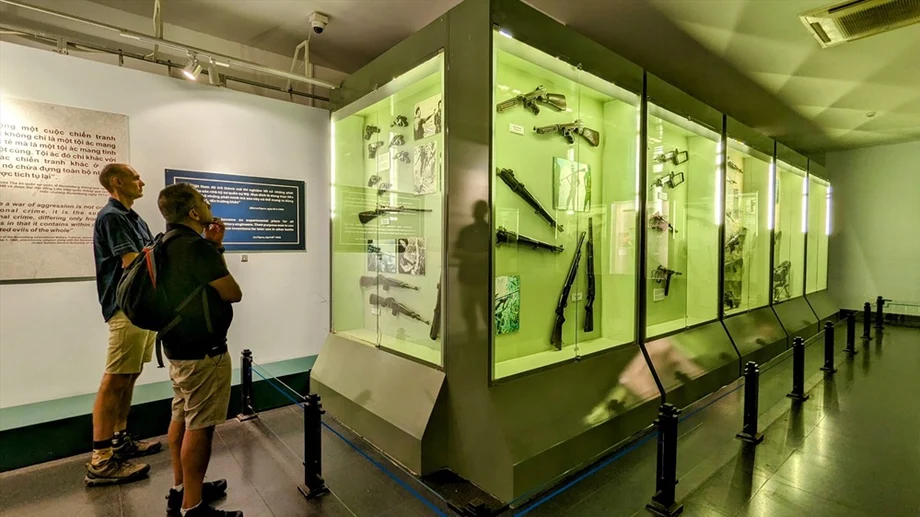
The War Remnants Museum in Ho Chi Minh City opened its first night visitor experience on the evening of 23 November 2026, turning a site known for photographs, artefacts and stark exhibition rooms into an after dark route of live performance, projected images and sound. The trial programme, called Night of Memories - Aspiration for Peace, begins welcoming visitors on 24 November, Vietnam Culture Day, with four sessions each evening. Each session lasts just over 30 minutes.
Contents
- A Museum That Changes After Sunset
- How the Three Part Route Works
- Hanoi 12 Days And Nights Sets The Opening Scene
- Con Dao Tiger Cages Bring Harsh History Into Focus
- The Peace Bell Turns History Into A Shared Moment
- Why Museum Leaders Say Technology Has Limits
- Tour Operators See A New Market For Evening Culture
- What A First Visitor Noticed
- Dates, Free Sessions And What Remains Unsettled
- What Changes For Visitors And The City
- Key Points
The museum, in Xuân Hòa ward, developed the tour with Visual Arts and Technology Joint Stock Company. The museum describes it as its first cultural and tourism product for evening use, created for Vietnam Cultural Heritage Day on 23 November and Vietnam Culture Day on 24 November. Ho Chi Minh City officials have been promoting a night economy and cultural industries; in plain terms, they want more cultural activities and spending after normal closing hours.
At the opening, Deputy head of the Ho Chi Minh City Party Committee's Propaganda and Education Commission Dinh Thi Thanh Thuy and Ho Chi Minh City Cultural Heritage Association chairman Le Tu Cam attended the ceremony and rang the Peace Bell. The museum used the night to present an idea that is simple to describe but hard to stage: historical artefacts can remain still while the story around them moves.
The trial also tests pacing. Four sessions a night can only move through the displays at a controlled rhythm, so the museum is trying to give each room enough time while keeping the whole route short enough for an evening stop.
How the Three Part Route Works
The tour follows the narrative line From Hanoi's Sky to the Door of Freedom. An English version has also used From Hanoi's Skies to the Gates of Freedom for the same Vietnamese phrase. That line guides visitors through three spaces, from the air war over Hanoi in 1972 to a reconstructed prison and then to an outdoor bell made from a bomb casing.
Three dimensional mapping, usually shortened to 3D mapping, is the main visual tool. It means projecting moving images onto real surfaces, such as a stone wall or the front of a building, so the surface seems to change shape, glow or carry a scene. The programme combines that technique with live actors, archival materials, sound effects and artificial intelligence, often shortened to AI. AI is a broad term for software that can create or arrange content.
Group size is limited to 50 to 60 people. Visitors use individual headsets for guided commentary with separate channels so they can hear the story clearly and keep the exhibition space calm. At the stated cap, four sessions could welcome up to 240 people each night. The museum has already received more than 1,000 online bookings for the trial, showing that the free opening week is likely to draw steady interest.
Hanoi 12 Days And Nights Sets The Opening Scene
The first indoor space begins with Hanoi 12 days and nights, a live performance paired with 3D mapping. It recreates the final days of 1972, when North Vietnamese forces and civilians resisted strategic B-52 air raids. The B-52 was an American bomber built for long flights and heavy bomb loads. The exhibition presents the late 1972 battle as a turning point leading to the Paris Peace Accords, signed on 27 January 1973.
The room then moves from air raids to diplomacy. A projection about the Paris Peace Accords is followed by an art installation called Puppets of Peace. The organisers use the puppets as a metaphor for a fragile moment: peace existed in writing, while bombing and division continued. That choice gives visitors a visual way to understand a period that can sound abstract when described only through treaty dates.
Speaking about the design, Lam Ngo Hoang Anh, acting director of the War Remnants Museum, said linking artefacts through one continuous story helps visitors understand the context of each space. He said the approach matters for young people, who can follow the prison reconstruction and then take part by ringing the bell themselves.
Con Dao Tiger Cages Bring Harsh History Into Focus
The second space is the Tiger Cages area, where part of the prison on Con Dao Island is recreated. Stone walls carry 3D mapped images of political prisoners, while performers act out scenes from prison life. The programme describes the site as hell on earth, a phrase long associated with the Con Dao prison system, and uses it to explain the harsh conditions faced by prisoners.
The presentation is not only about suffering. It also tells stories of comradeship, stubborn resistance and faith in freedom among revolutionary fighters and patriotic Vietnamese people. The move from Hanoi's skies to prison walls gives the route its emotional centre: visitors see how the war reached into places far from the battlefield and how prisoners held onto political belief in confinement.
The Peace Bell Turns History Into A Shared Moment
The final stop is outside, beside the Peace Bell. The bell was made from the casing of a bomb used by the United States military during the war in Vietnam. When a visitor rings it, sound sensors activate projections across the front of the exhibition building and nearby outdoor artefacts.
Images of sunrise and flowers appear while the song Bai ca khong quen, translated as The Song We Never Forget and also as Unforgettable Song, plays in the background. The organisers use that closing scene to express renewal and the wish for lasting peace. For a visitor coming for the first time, the sequence is easy to follow: a bell made from a weapon becomes the object that calls people together at the end.
Why Museum Leaders Say Technology Has Limits
Lam Ngo Hoang Anh, acting director of the museum, said the tour was a new way to approach heritage in the evening and an emotional journey about memory, historical truth and peace. He also said the project is in a trial phase and will collect feedback from visitors and the public. Scripts, narration and projected images were built and reviewed from the museum's original archive materials, with care taken to protect documents and artefacts.
Technology brings new experiences but does not change the value of history. We always uphold the principle that historical value comes first.
That principle shapes what visitors actually see. The project uses Panasonic projectors with high intensity beams, 3D mapping and AI, but the museum says each technical choice must serve the historical record. Before the ceremony, technical crews installed and checked the equipment during a full rehearsal, and viewers could also watch online through VTV8.
Tour Operators See A New Market For Evening Culture
Nguyen Khoa Luan, director general of Anh Viet Hop on - Hop off Vietnam, said the night tour answers growing demand for cultural and historical experiences, especially among international visitors. His company's buses with two levels already ran evening routes past the museum when it was closed. The new programme gives the business a reason to drop visitors at the door.
The company plans points where buses pick up and drop off visitors at the museum every 30 minutes and will work with travel firms to bring visitors there and return them to hotels or nearby stops. That detail matters because a tour lasting 30 minutes is short. Regular buses can turn the museum visit into one part of a wider evening in the city rather than a separate trip.
What A First Visitor Noticed
Gilles Francioni, general director of Whisper, a company providing services for tour operators, and an Italian audio technology executive, was among the first people to experience the tour. He had visited the museum during the day before the opening and compared the two experiences. He said the photographs and the recreation of prison life stayed with him most.
I was really shocked by this visit. I visited yesterday and was really surprised by the entire museum space and the photographs displayed here. What impressed and surprised me most was the recreated prison area, especially the conditions the prisoners had to live in.
Francioni also suggested automated audio guides and applications that support visitors to help foreign tourists. His suggestion points to a practical question for the trial: the show may use advanced projection, but simpler visitor tools can still decide whether people understand what they have seen.
Dates, Free Sessions And What Remains Unsettled
The schedule is fixed for the first month and the longer run. The launch took place on 23 November, public visits start on 24 November, and free entry applies from 24 to 30 November. The programme is set to continue until 31 December 2026. Registration is listed at demkyuc.baotangchungtichchientranh.vn.
- 23 November 2026: opening ceremony, attended by city cultural and Party officials.
- 24 to 30 November: four free sessions each evening, with each session just over 30 minutes.
- 31 December 2026: current end date for the programme.
The museum has not announced ticket prices for sessions after 30 November, and the exact start times of the four evening sessions were not given. Those details will matter once the free trial ends and the museum sees how many visitors want to return or book in advance.
What Changes For Visitors And The City
The night tour gives Ho Chi Minh City another reason to keep museums open after dark. Instead of reading captions under photographs in daylight, visitors follow a timed route with actors, lights and a final act they can trigger by ringing a bell. That changes the role of the visitor from observer to participant, even if the historical material stays the same.
For younger audiences, the prison reconstruction and the bell offer concrete moments to hold onto. For foreign visitors, the headsets and planned bus links lower the practical barriers of language and transport. For the museum, the trial offers feedback before any decision about extending the product later.
At city level, the idea is also clear. A museum open at night can support evening meals, bus routes and nearby stops. Officials mean that a cultural product can create activity beyond the museum itself when they link cultural industry with the night economy.
Key Points
- The War Remnants Museum launched its first night tour on 23 November 2026 and starts public visits on 24 November.
- The programme is free from 24 to 30 November, with four sessions each evening lasting just over 30 minutes.
- The route has spaces covering Hanoi in 1972, the Paris Peace Accords, Con Dao prison and the Peace Bell.
- Groups of 50 to 60 visitors use headsets for guided commentary with separate channels.
- The museum received more than 1,000 online bookings before the public opening.
- The programme is scheduled to run until 31 December 2026, while ticket prices after the free period have not been announced.