Taiwan substrate expansion sets out a supply timetable
Nvidia is putting more than $1 billion in cash into equipment for Kinsus Interconnect Technology's Youth campus in Taoyuan, Taiwan, securing a critical component for future artificial intelligence systems. Kinsus disclosed the investment on November 18, 2026, with production expected to begin in the second half of 2027 and additional capacity targeted for the third quarter of 2028.
Contents
- Taiwan substrate expansion sets out a supply timetable
- What the money buys at Kinsus
- Why AI systems need more complex substrates
- Samsung and other suppliers widen the substrate plan
- Packaging investment extends across Taiwan, Arizona and Korea
- New platforms connect the factory plans
- Testing and optical connections get their own expansion
- Shares surge, then surrender much of the gain
- The dates that shape the expansion
- Key Points
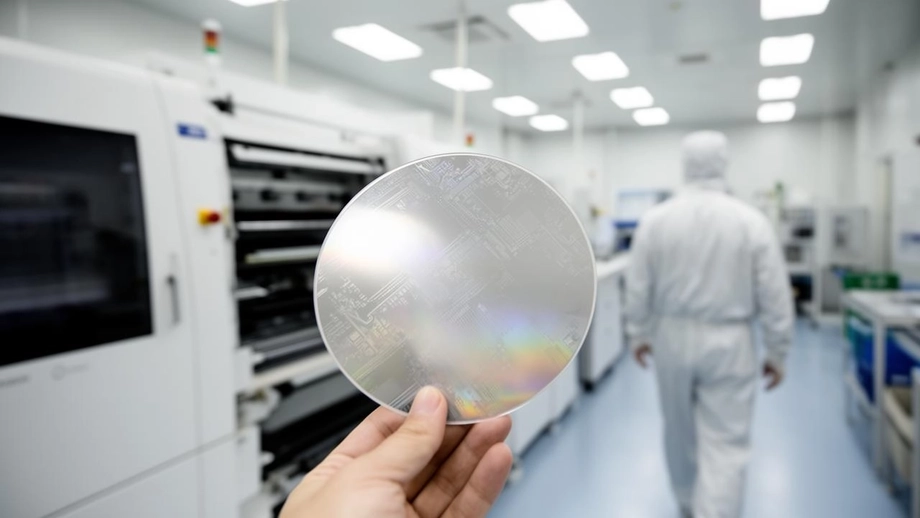
The agreement calls for Kinsus to expand advanced ABF package substrate capacity dedicated to Nvidia to more than 3.5 times current levels. Substrates are the intricate foundations beneath semiconductor packages, carrying electrical connections between powerful chips and the larger systems that use them.
Kinsus said the companies are also discussing investments at other factories, seeking stable substrate supplies through at least 2030. The immediate investment therefore sits within a longer manufacturing plan, rather than a single equipment purchase.
Nvidia's November 17 announcement places the Kinsus expansion alongside commitments involving Amkor Technology, Samsung Electro-Mechanics, Siliconware Precision Industries (SPIL), TSMC and Foxconn. Together, the projects address several stages between manufacturing a chip and delivering a working AI computing system.
What the money buys at Kinsus
Kinsus said Nvidia's cash will purchase new equipment for the Youth factory expansion. The companies are planning capacity specifically for Nvidia, giving the chip designer a clearer view of the manufacturing resources available for future platforms.
The proposed scale is substantial. Capacity exceeding 3.5 times the current level means an increase of more than 250 percent over today's base. That makes the Taoyuan project a major expansion of the factory's Nvidia business, rather than a modest increase in output.
Production starting in the second half of 2027 and the additional capacity target for the third quarter of 2028 are separate milestones. The first marks the beginning of manufacturing; the later date allows for equipment installation and the gradual increase in production.
Kinsus has described the funding's equipment purpose, but the precise financial structure and terms for investments at other sites have not been disclosed. The additional factory projects remain under discussion.
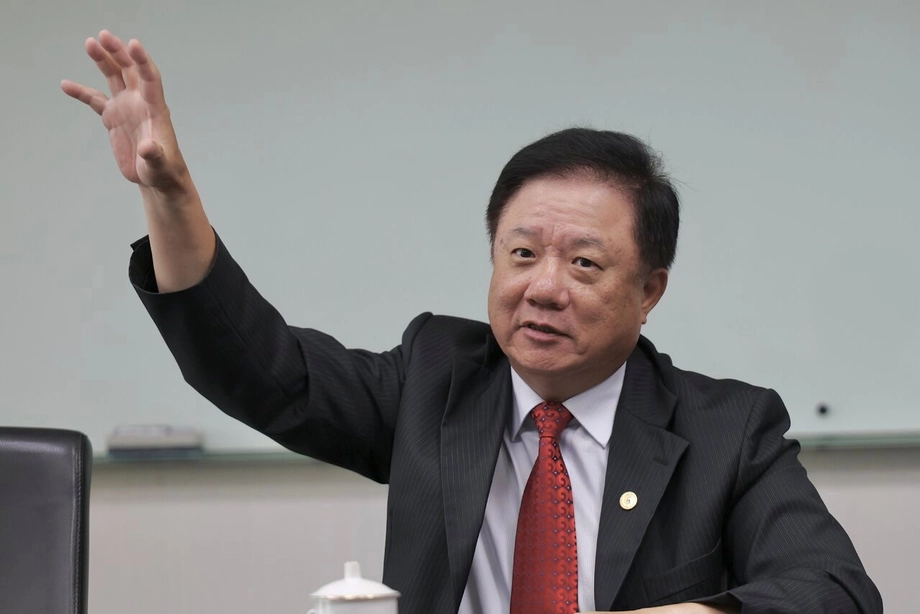
Scott Chen, CEO and president of Kinsus, said the agreement extends a relationship lasting more than a decade:
We believe AI will be one of the most important technology transitions of our lifetime. After more than a decade of partnership with NVIDIA, we are excited to continue building the future together.
Why AI systems need more complex substrates
Kinsus links the expansion to three concrete changes in AI chip packages: larger package areas, more substrate layers and increasingly complex structures. Each change adds manufacturing work to the component that connects the chips to the rest of a computer.
ABF stands for Ajinomoto Build-up Film, an insulating material used in advanced package substrates. A simple way to picture the substrate is as a miniature network of roads. Its fine electrical pathways connect the chip package to the circuit board, while insulating layers keep those pathways separated.
A larger package can require more substrate area for each finished unit. More layers and finer connections also make production more demanding. Manufacturers must therefore plan for changes in the size and complexity of products as well as the number ordered.
Kinsus said AI demand is spreading from the construction of data center computing capacity toward applications used outside those facilities. It expects future AI models and physical applications to require a dependable supply of advanced substrates. Its investment discussions with Nvidia are intended to support that progression through at least 2030.
Samsung and other suppliers widen the substrate plan
Nvidia is also amending its substrate agreement with Samsung Electro-Mechanics to improve operating capabilities at existing factories. That work builds on an earlier collaboration covering production in Sejong and Busan, South Korea, for Nvidia computing and fast networking technologies.
The Samsung project and the Kinsus expansion use different approaches. Kinsus is adding equipment and substantial dedicated capacity at Taoyuan, while Samsung is improving existing operations to support increased production. Both address the need to deliver more demanding substrates for successive computing platforms.
Nvidia said its October commitments involving several suppliers included an aggregate increase in substrate capacity to 2.5 times the starting level over three years. IBIDEN and Unimicron were among the partners named in that earlier expansion program.
The Kinsus target of more than 3.5 times current dedicated capacity applies to its own Nvidia production base. The broader 2.5 times target covers an aggregate supplier program. Their different starting points explain why both figures appear in Nvidia's manufacturing plans.
IBIDEN president and CEO Koji Kawashima said expansion at the company's Ono Plant would strengthen production capabilities and help meet growing demand for advanced integrated circuit package substrates.
Packaging investment extends across Taiwan, Arizona and Korea
SPIL, part of Taiwan's ASE Technology Holding, is expanding advanced packaging operations in Taiwan under a multiyear agreement supported by billions of dollars from Nvidia. The project is expected to increase packaging capacity dedicated to Nvidia by mid-2029.
Advanced packaging brings semiconductor components together so they can exchange information efficiently. SPIL's project covers several steps, including forming tiny electrical contacts, making interposer wafers, assembly and testing. An interposer is a connecting layer that helps link components within a package.
Nvidia said SPIL's new production lines will provide these services together. That matters because an AI product needs more than a finished computing chip: its components must also be connected, assembled and checked before the package can become part of a working system.
Amkor's expansion has another large financial commitment behind it. Nvidia said agreements announced in July and October 2026 total nearly $3 billion and support advanced packaging capacity in Arizona and South Korea. Those agreements include prepayments to help Amkor expand manufacturing.
Kevin Engel, Amkor's president and CEO, said the arrangements are designed around more than one generation of products:
Our agreements with NVIDIA support investments in Arizona and South Korea that will serve multiple generations of AI platforms. That long-term planning allows us to advance our packaging technologies and add manufacturing capacity as NVIDIA's production needs grow.
New platforms connect the factory plans
Nvidia said volume shipments of its Vera Rubin NVL72 systems and Vera CPUs began in the third quarter of 2026. These products use TSMC's 5 nanometer and 3 nanometer manufacturing processes, alongside its CoWoS advanced packaging technology.
The process names identify generations of chip manufacturing technology. CoWoS is a packaging approach that connects computing chips and other components within a sophisticated package. Nvidia's announcement links its new products to both chip fabrication and the packaging resources needed to assemble them.
Nvidia describes the products as supporting agentic AI, a term for software systems that can carry out sequences of tasks toward a goal. Their manufacturing requirements help explain why the company is planning substrates, wafers, packaging and finished system production together.
Foxconn chairman Young Liu said the company is deepening cooperation with Nvidia on future graphics processing unit and networking platforms. Foxconn's production network across Asia, North America and Europe will support increasing volumes of AI infrastructure.
The investments cover different parts of the same production chain: TSMC manufactures chips, substrate makers provide their connections, packaging companies assemble components, and contract manufacturers help turn them into systems.
Testing and optical connections get their own expansion
Nvidia's October plans also called for semiconductor testing capacity to double from 2026 to 2027. Testing checks whether manufactured components operate as required, making it another necessary step before products can reach customers.
King Yuan Electronics, known as KYEC, is part of that wider expansion. Its president, Gauss Chang, said extending testing operations into the United States would bring the company's capabilities closer to Nvidia's growing American manufacturing supply chain.
SPIL's optical engine capacity has a separate growth schedule: an increase to 15 times its starting level by mid-2027, with an aim to double again by the end of 2028. Optical engines help move information using light, supporting the connections needed by large computing systems.
These targets show the breadth of Nvidia's planning. More substrate output must be matched by enough packaging, testing and connection technology to keep products moving through factories. Each project has its own timetable because the processes and equipment differ.
Shares surge, then surrender much of the gain
Kinsus shares opened at their daily upper trading limit in Taiwan on November 18 before retreating. By 9:58 a.m., they were quoted at NT$550, up more than 1 percent, leaving much of the initial surge behind.
Other substrate shares also reversed early gains. Nan Ya PCB reached an intraday high of NT$846, up more than 6 percent, before trading at NT$748, down more than 5 percent. Unimicron was quoted at NT$629, down more than 1 percent.
The trading session brought an immediate market reaction to a factory plan whose production milestones stretch into 2027 and 2028. For Kinsus, the concrete next steps are equipment purchases and the start of expanded manufacturing. For Nvidia, the benefit sought is a more predictable supply of components for successive AI platforms.
The dates that shape the expansion
Nvidia's commitments span several years, combining agreements already announced with future manufacturing targets. The main dates are:
- July and October 2026: Nvidia announces Amkor agreements totaling nearly $3 billion.
- Third quarter of 2026: Volume shipments begin for Vera Rubin NVL72 and Vera CPUs.
- November 17 and 18, 2026: Nvidia announces broader supplier commitments, and Kinsus discloses the investment exceeding $1 billion.
- Mid-2027: SPIL targets optical engine capacity at 15 times its earlier level.
- Second half of 2027: Production is expected to begin under the Kinsus expansion.
- Third quarter of 2028: Kinsus targets the additional dedicated substrate capacity.
- Mid-2029: SPIL expects increased advanced packaging capacity dedicated to Nvidia.
- Through at least 2030: Kinsus and Nvidia seek stable substrate supplies through further investment planning.
Nvidia identifies these future production targets as forward looking statements subject to risks, including changes in demand, manufacturing problems and economic conditions. The spending commitments provide factories with resources to prepare, while the production schedules set out when that preparation is expected to deliver additional supply.
Key Points
- Kinsus says Nvidia is investing more than $1 billion in equipment for its Youth campus in Taoyuan.
- Dedicated advanced substrate capacity is planned to exceed 3.5 times current levels.
- Production is expected to start in the second half of 2027, with additional capacity targeted for the third quarter of 2028.
- Further Kinsus factory investments are being discussed to support supply through at least 2030.
- Nvidia is also funding packaging expansion at Amkor and SPIL while broadening substrate, testing and system manufacturing capacity.