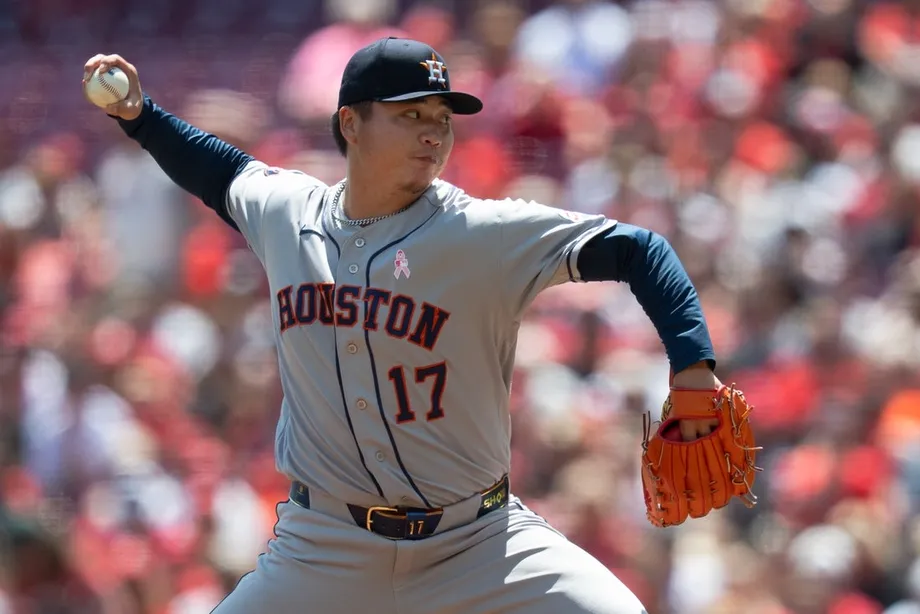
A Place on the Roster Changed His Outlook
Taiwanese pitcher Teng Kai-wei finished his first season with the Houston Astros with 73 strikeouts in 73 2/3 innings, career highs that helped carry him past 100 strikeouts in Major League Baseball. His 2026 season also brought another milestone: for the first time, he began the year on a major league Opening Day roster.
Contents
- A Place on the Roster Changed His Outlook
- What the Season Numbers Mean
- The Advice That Changed His Approach
- How He Challenged Ohtani
- An Injury Made Patience Part of the Job
- Houston Offered Support On and Off the Mound
- A Competitive Mindset With a Taiwanese Soundtrack
- Two Pitching Roles Could Bring More Opportunities
- Key Points
Speaking at a media gathering in Taipei on November 2, 2026, Teng described that early vote of confidence as a turning point. After two seasons with the San Francisco Giants, when his chances often depended on injuries or other roster needs, he felt more secure facing the best hitters in the game.
Teng, a right hander who turns 28 on December 1, explained what the selection meant to him:
Making the Opening Day roster made me feel like I was truly a major league player.
He finished with five wins, seven losses and a 4.76 earned run average across 30 appearances, including 10 starts. The appearance total, innings and strikeouts were all personal bests in the majors. His season included injuries and a return to the minor leagues, making it a year of progress alongside setbacks.
His growing confidence also had roots in a memorable confrontation from 2025: a strikeout of Los Angeles Dodgers star Shohei Ohtani. Behind that moment was advice from former Giants teammate Joey Lucchesi, who encouraged Teng to trust his pitches instead of letting fear of a hitter's strengths control every decision.
What the Season Numbers Mean
Houston used Teng in two jobs. He began the season in the bullpen, the group of pitchers who enter games after the starter, before injuries created a need in the starting rotation. Ten of his 30 appearances were starts, meaning he began one third of the games in which he pitched.
Teng's 73 strikeouts in 73 2/3 innings amounted to about 8.9 strikeouts per nine innings. That calculation puts his strikeout total on a familiar baseball scale: approximately one strikeout for every inning he pitched. In baseball notation, the two thirds represents two outs, because three outs complete an inning.
His 4.76 earned run average, or ERA, means he allowed earned runs at a rate of 4.76 per nine innings. Earned runs generally exclude runs attributed to fielding errors. The figure measures a different part of his performance from strikeouts: how often opponents turned their opportunities into runs.
The five wins and seven losses reflect decisions credited to him under baseball's scoring rules. For Teng, the broader achievement was having enough opportunities to set several personal records and reach 100 career strikeouts. The date and opponent for his 100th strikeout were not specified at the Taipei gathering.
The Advice That Changed His Approach
Lucchesi's message reached Teng while they were teammates at Triple A in 2025. Triple A is the highest level of the minor leagues, one step below MLB. Both pitchers also spent time together in the majors during that season.
Teng recalled studying scouting reports that showed hitters' hot zones, the parts of the strike zone where they tended to hit well. He then concentrated on avoiding those areas. By aiming for the edges too carefully, he repeatedly missed the strike zone.
A pitcher who falls behind in the count can face a difficult choice: throw a more predictable strike or risk walking the hitter. Lucchesi urged Teng to give his own pitches a greater place in that calculation. Teng recalled the veteran pitcher telling him:
Scouting reports are only a reference. The most important thing is to believe your stuff can get them out.
Lucchesi also offered a shorter warning that stayed with Teng:
If you pitch scared, you'll regret it afterward.
For a pitcher, "stuff" means the qualities that make a pitch difficult to hit, such as speed and movement. Lucchesi's advice gave Teng a way to use the scouting information while still committing to his own strengths.
How He Challenged Ohtani
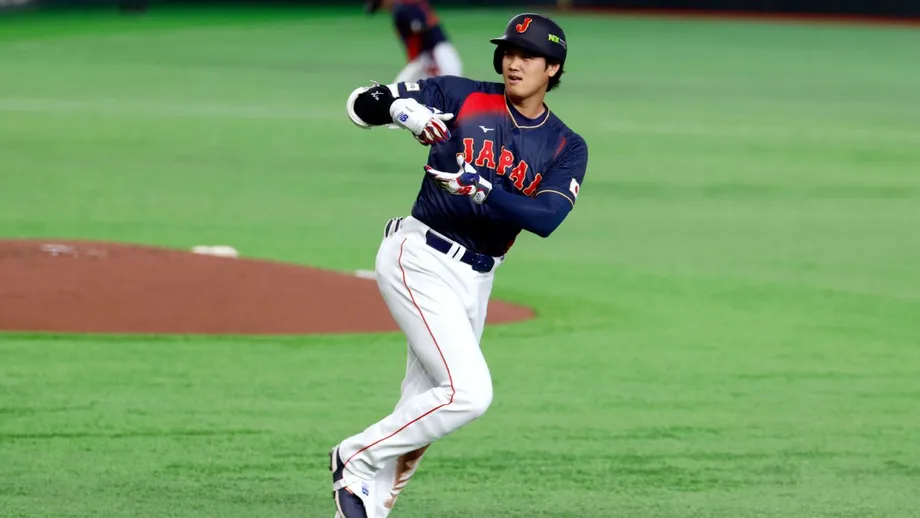
Ohtani provided the clearest test of that approach during a September 2025 series in Los Angeles. On September 19, Giants starter Robbie Ray threw a fastball high and toward the outside of the strike zone, a location recommended in the scouting report. Ohtani hit it for a home run.
Teng watched Ray make the intended pitch and still lose the contest. Remembering Lucchesi's words, he decided he would challenge Ohtani in a similar area and try for a different result.
On September 20 in Los Angeles, September 21 in Taiwan, Teng struck out Ohtani with a four seam fastball during their first matchup of the game. A four seam fastball is typically a pitcher's straighter, faster pitch, named for the grip and seam rotation used to throw it.
The successful challenge gave Teng greater confidence against elite hitters. The lesson he carried away was practical: he could face a dangerous opponent with a clear plan and trust himself to execute it, even after watching a teammate get punished for attacking a similar location.
The main events in Teng's progression were:
- During 2025: Teng and Lucchesi played together at Triple A and also spent time together with the Giants.
- September 19, 2025: Ohtani hit a home run off Ray in Los Angeles.
- September 20, 2025, in Los Angeles: Teng struck out Ohtani with a four seam fastball.
- Opening Day 2026: Teng began a season on an MLB roster for the first time, with Houston.
- November 2, 2026: Teng discussed his season and changing mindset at a gathering in Taipei.
An Injury Made Patience Part of the Job
Teng's place on the Opening Day roster did not bring an uninterrupted season in Houston. After moving from relief work into a rotation affected by injuries, he spent time on the injured list and later in the minors while trying to regain his form.
Houston explained its decision to send him down after his return from injury, Teng said. He needed more recovery and adjustments to address physical problems that had developed as he compensated for the injury. A player protecting an injured area can change his movements, which can affect how he pitches.
Teng said having a specific explanation changed how he handled the assignment. Instead of treating the minors mainly as a place he needed to escape quickly, he could concentrate on the work required to return.
Describing the difference from his earlier experiences, Teng said:
I had a clear goal and knew what I needed to do. It wasn't like before, when I kept thinking about when I could get back up and became too impatient.
His account connects two parts of the season that might otherwise seem separate: the confidence of making the opening roster and the patience needed after losing that place temporarily. Houston's explanation gave him a concrete task at a difficult point in the year.
Houston Offered Support On and Off the Mound
The Astros also gave Teng more freedom over where he stood on the pitching rubber, the narrow slab from which a pitcher delivers the ball. He said Houston allowed him to work from his preferred position in the middle.
With San Francisco, Teng had been asked to use a position farther from the center for particular pitches. Moving along the rubber changes the angle from which the ball travels toward the hitter. For Teng, Houston's flexibility meant he could use a starting position that felt more comfortable.
Outside the ballpark, Teng praised the organization's assistance for international players. He described help finding neighborhoods for rental housing and Asian restaurants, along with a clubhouse whiteboard displaying expressions in multiple languages.
Those details show what support meant in his daily life: somewhere suitable to live, familiar food and help communicating with teammates. Alongside the pitching adjustments, they formed part of his account of settling into a new organization.
A Competitive Mindset With a Taiwanese Soundtrack
Teng chose Taiwanese singer Wu Bai's "Go To The Graveyard" as his entrance music. Its Taiwanese language title roughly means "I'd even dare go to a graveyard," and Teng connected that boldness with his desire to face formidable opponents without fear.
He also compared himself and many teammates to Honda, a traffic police officer in the Japanese manga "KochiKame." The character's mild personality changes dramatically when he rides a motorcycle. Teng used the comparison to describe the difference between everyday friendliness and competitive intensity.
Explaining that change in attitude, Teng said:
Off the field, they're really nice people, but on the field, it's about winning and not giving in.
The song and the manga reference expressed the same idea as Lucchesi's advice in more personal terms. Teng wanted to keep his willingness to compete when the opponent was intimidating, rather than spend the encounter worrying about what might go wrong.
Two Pitching Roles Could Bring More Opportunities
Houston had yet to discuss with Teng whether he would start or relieve in 2027. He remained under team control, meaning the Astros retained his MLB playing rights, although his contract status for the coming season was unclear.
Teng saw his ability to handle both assignments as useful. A team may have no vacancy among its starters while still needing another relief pitcher. Injuries can also change those needs during a season, as they did for Houston in 2026.
Explaining why he valued that flexibility, Teng said:
If I'm only a starter and there's no opening up there, it's harder. Being able to do both gives me more opportunities.
His next role will determine how Houston uses him, but his third MLB season already gave him a larger body of work: 30 appearances, 10 starts and more innings and strikeouts than he had previously recorded in a major league season. For Teng, the numbers accompanied a more personal change, feeling that he belonged at that level.
Key Points
- Teng recorded 73 strikeouts in 73 2/3 innings for Houston in 2026 and reached 100 career MLB strikeouts.
- He finished with five wins, seven losses and a 4.76 ERA in 30 appearances, including 10 starts.
- Making his first Opening Day roster helped him feel more confident against major league hitters.
- Teng credited Joey Lucchesi's advice to trust his pitches before his September 2025 strikeout of Shohei Ohtani.
- Injury recovery included time in the minors, where Houston gave him specific adjustments to work on.
- The Astros had not yet discussed whether he would start or relieve in 2027.