A major manufacturing push takes shape
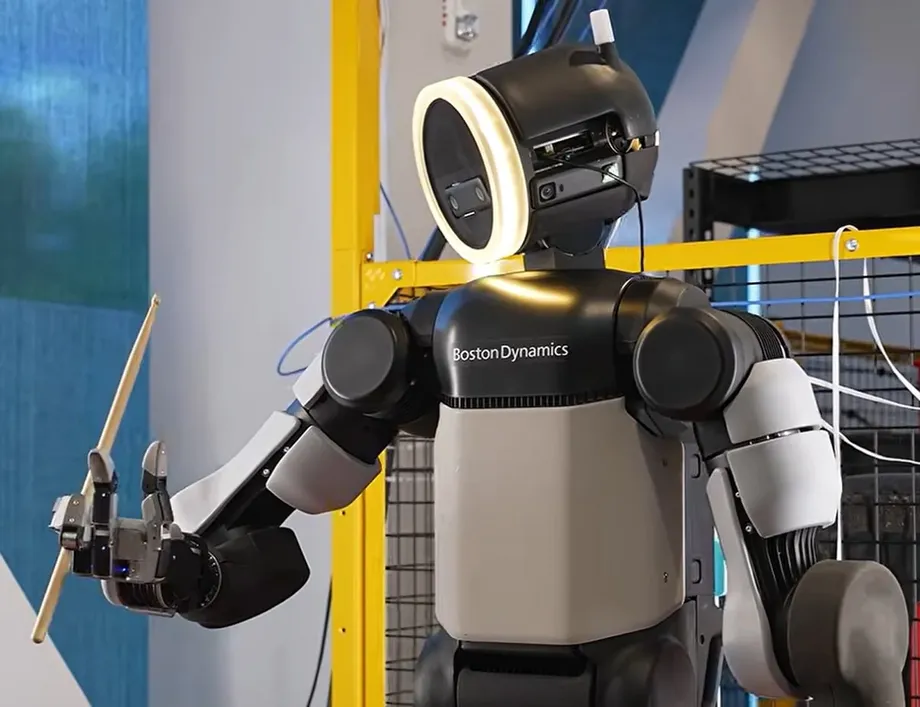
Boston Dynamics has asked South Korean suppliers to prepare components for 10,000 Atlas humanoid robots, putting Hyundai Motor Group's automotive supply network at the center of its plans to bring robots into factories. Hyundai Mobis, Samsung SDI, LG Energy Solution and several camera and vehicle component makers are among the companies named in the reported purchasing preparations.
Contents
- A major manufacturing push takes shape
- Which companies would build Atlas?
- Why joint mechanisms matter so much
- Automotive factories offer a starting point
- Georgia will connect training with factory work
- Production capacity and useful work must grow together
- Hyundai targets the most expensive components
- Reducing Chinese dependence brings another challenge
- Key Points
The request gives suppliers a substantial production target as Atlas trains for work at Hyundai's manufacturing operations in Georgia. Initial jobs are expected to include sorting parts and arranging them in the order that factory workers or assembly systems need them.
Boston Dynamics has reportedly selected suppliers and notified them individually. Final purchasing quantities and prices remain undecided, however, and the purchasing timetable is unsettled: the initial account says purchase orders will follow soon, with components to be ready by the end of the following year, while an October 27 account places initial orders as early as late 2027 or early 2028.
Hyundai's broader roadmap targets annual robot production capacity of 30,000 units from 2028. Factory applications such as parts sequencing are planned for 2028, followed by component assembly in 2030. Those milestones put the supplier preparations within a larger effort to turn Atlas into equipment that can perform useful work repeatedly.
For Korean manufacturers, the opportunity extends beyond selling individual parts. Motors, sensors, batteries and structural components developed through years of automotive production could become the foundation of a new industrial business. Boston Dynamics, meanwhile, needs both reliable hardware and software capable of handling changing conditions on a factory floor.
Which companies would build Atlas?
Hyundai Mobis is expected to have the largest role in the component network. Its actuator partnership with Boston Dynamics was announced in January, and the latest purchasing accounts describe a wider package that includes robotic hands and vision equipment.
Actuators turn electrical power into movement at a robot's joints. Grippers serve as its hands, allowing it to pick up, hold and release objects. Cameras help the machine identify parts and judge where to move.
- Hyundai Mobis is named for joint actuators and is expected to supply hand grippers.
- Samsung SDI and LG Energy Solution are named for batteries, described in one account as cylindrical cells measuring 21 millimeters in diameter.
- BH EVS is named for charging equipment, and CTR for control arms.
- A Hyundai Mobis consortium involving Namuga and a partner identified as IL or IEL is named for headlamps and main cameras.
- MCNEX and Cammsys are reportedly handling cameras built into the robot's hands.
- NVIDIA is identified as the processor supplier.
NVIDIA's role makes this a Korean led manufacturing network with an American processor supplier. The purchasing strategy concentrates much of the hardware work among companies familiar with Hyundai's production requirements.
Why joint mechanisms matter so much
Hyundai Mobis reportedly would supply all 31 actuators covered by the purchasing plan. Their importance goes beyond the number of joints: the mechanisms must move Atlas accurately while handling the forces involved in lifting objects, reaching and maintaining balance.
One estimate puts actuators at around 70% of Atlas component costs. Another places actuators and hand grippers together at more than half of a robot's cost. Both estimates put movement hardware at the center of the effort to make Atlas economical to manufacture.
Boston Dynamics chief financial officer Amanda McMaster has described managing costs while rapidly expanding production as part of the Atlas strategy. Improving the manufacturing process for expensive components could reduce the amount spent on each robot as volumes rise.
Automotive factories offer a starting point
About 10 Boston Dynamics engineers reportedly spent nearly a month visiting more than 10 Korean automotive component factories. Their assessments covered manufacturing capacity and engineering design skills, giving the company a way to judge whether prospective partners could move from small batches to sustained production.
Hyundai Mobis, Hwashin Precision and SOS Lab were among the companies evaluated. Hwashin Precision, based in North Gyeongsang Province, was considered for lightweight aluminum structures in robot legs and bodies. Its automotive business includes suspension control arms, which connect wheels to a vehicle's frame.
SOS Lab, based in Gwangju, was assessed for lidar technology. Lidar uses laser light to measure distances and build a three dimensional map, helping a robot locate people, objects and obstacles. These earlier evaluations describe the supplier search; the later purchasing accounts identify a more specific component lineup.
Industry estimates put the number of parts in a humanoid robot at between 5,000 and 10,000. Estimates also suggest that 60% to 70% of those components resemble automotive parts, while a separate assessment gives a similar range for shared production processes and core technologies.
Those connections explain Hyundai's interest in established partners. A supplier already making motors, sensors or precision metal components has relevant equipment and manufacturing experience. Atlas still requires those capabilities to be adapted to its own movements, dimensions and operating demands.
Georgia will connect training with factory work
Atlas is being trained at Hyundai Motor Group's robot training center in Georgia, close to the group's planned industrial applications. Hyundai Motor Group Metaplant America is expected to be an early destination for robots carrying out tasks such as parts sorting.
Parts sequencing means arranging components in the order needed for production. For Atlas, this requires recognizing an object, choosing a suitable grip and placing it in the correct location. Component assembly, targeted for 2030, would add work that involves fitting parts together.
The main milestones described in the production and deployment plans are:
- January: Boston Dynamics and Hyundai Mobis announced their actuator partnership.
- June 30, 2026: Supplier evaluations were described as covering more than 10 Korean automotive component manufacturers.
- October 21: Hyundai executive Song Ho-deuk outlined plans to develop more high value robot components with Korean companies.
- October 27: Purchasing preparations for components covering 10,000 robots were described.
- 2028: Hyundai targets initial factory parts sequencing and annual robot production capacity of 30,000 units.
- 2030: Hyundai's roadmap targets component assembly applications.
Production capacity and useful work must grow together
The 30,000 unit annual target would be three times the 10,000 robot volume covered by the supplier preparation request. The figures describe different measures: one is a yearly manufacturing capacity goal, while the other is the scale of components suppliers have been asked to prepare.
The scope of the larger target also varies in the accounts. Some describe 30,000 Atlas robots annually, while another describes 30,000 robots including Atlas. Hyundai's factory deployment plans give the manufacturing expansion a potential customer within the group, alongside the task of developing a wider market.
Lee Ho-geun, an automotive engineering professor at Daeduk University, said the immediate priority was to establish whether humanoids could become practical industrial equipment through a gradual introduction.
China may be leading in humanoid robot commercialization and pricing, but cost is not the main issue for now. The more immediate challenge is to validate scalability and industrial viability through a soft rollout, then upgrade physical AI capabilities and deepen the robots' applicability across various industrial settings.
Physical AI means software that helps a machine perceive its surroundings and act in the real world. For Atlas, success depends on connecting that software with dependable joints, cameras and hands, then repeating useful tasks under factory conditions.
Hyundai targets the most expensive components
Hyundai executive Song Ho-deuk set out the group's component strategy at an October 21 forum on the AI and robotics industry ecosystem at the National Assembly Members' Office Building in Seoul. He identified actuators, control boards containing graphics processing units and charging systems as early priorities.
Song said Hyundai wanted to concentrate Korean development and production on components with a large share of robot costs and substantial technical value.
"In developing robot components, we want to pursue localization focused on items that account for a high share of robot costs and carry high added value," Song said.
Hyundai also plans to work with domestic companies on camera sensors, grippers and data collection equipment. A control board is the electronic platform that connects computing hardware with other systems. Graphics processing units, or GPUs, provide computing power for demanding AI tasks.
Atlas has an indicative price of about $130,000 in market estimates, compared with cited figures of $20,000 to $30,000 for Tesla's Optimus and $29,900 for Unitree's H2. These are indicative figures rather than finalized Atlas contract prices. At those levels, the Atlas estimate is more than four times the upper Optimus figure and the H2 figure, putting pressure on manufacturing costs and the value of the work Atlas can perform.
Reducing Chinese dependence brings another challenge
Boston Dynamics' supplier choices are also described as an effort to reduce reliance on Chinese components and protect technical knowledge. Hyundai Mobis reportedly received core design drafts, keeping sensitive engineering work within the Hyundai group while suppliers prepare manufacturing capacity.
China remains deeply embedded in the wider robotics supply network. Figures attributed to the Korea International Trade Association put Korean imports of Chinese controllers at $316.965 million from January through July, an increase of 14% from a year earlier. Chinese force and torque sensor imports were put at $2.571 million. Such sensors measure pushing and twisting forces, helping machines control how they handle objects.
Industry estimates cited alongside the purchasing plans put China's share of rare earth refining at 90% and permanent magnet production at 94%. Permanent magnets are key materials in many electric motors. Reducing dependence therefore involves materials and smaller components as well as selecting the companies that deliver finished assemblies.
Proposed American restrictions add a policy incentive. The American Security Robotics Act would restrict federal use and purchasing of certain robots from adversary countries. Other proposals described in the accounts would subject Chinese robots to security reviews or restrict imports. The measures are legislative proposals, with different scopes, rather than a single blanket rule covering Atlas components.
Boston Dynamics is also planning a $100 million robotics and AI hub in Waltham, Massachusetts. The facility would consolidate operations spread across three nearby sites and expand advanced manufacturing, AI development, workforce training and research. Together with Korean component production and Georgia factory training, it forms a development and manufacturing network spanning both countries.
Key Points
- Boston Dynamics has reportedly asked Korean suppliers to prepare components for 10,000 Atlas robots; final quantities, prices and purchasing dates remain unsettled.
- Hyundai Mobis is central to the plan through actuators and expected gripper work, alongside Korean battery, camera and charging suppliers.
- NVIDIA is named as the processor supplier.
- Hyundai targets factory parts sequencing in 2028 and component assembly in 2030.
- The broader annual production capacity target is 30,000 robots from 2028, although accounts vary on whether that total covers Atlas alone.
- Cost reduction, dependable factory performance and reduced reliance on Chinese components are central to the rollout.