Sepang has support, but Malaysia still has a decision to make
Malaysia is weighing a regular Formula One return after the October 2 to 4, 2026 Bahrain Grand Prix at Sepang generated an estimated economic impact of nearly RM950 million, according to the Youth and Sports Ministry. Mercedes wants to race there again, lighting companies say a night event is technically achievable, and a government assessment is expected to reach cabinet by November.
Contents
- Sepang has support, but Malaysia still has a decision to make
- How the Bahrain race brought F1 back
- Why Mercedes wants another visit
- What a night race would require
- The financial terms would change for a regular race
- What the economic and attendance figures show
- Fans faced a difficult journey home
- Could Malaysia and Singapore both benefit?
- Malaysia joins a crowded Asian contest
- Key Points
The choice extends beyond putting cars back on a popular circuit. Bahrain covered the hosting rights fees for the relocated race, giving Malaysia an opportunity on financial terms that would change under a permanent arrangement. Ministers are considering an annual event or a race held once every few years, potentially in partnership with another country.
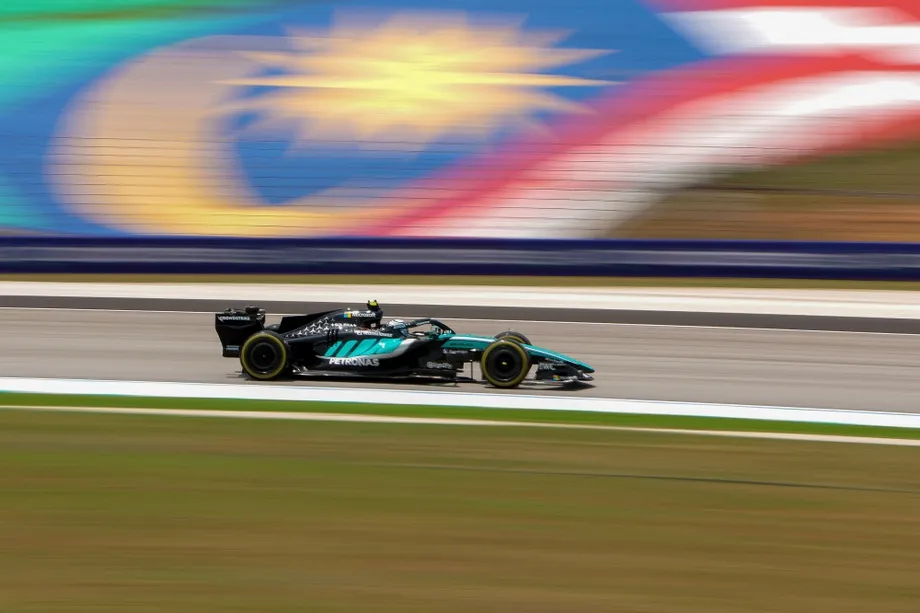
Mercedes deputy team principal Bradley Lord welcomed a return after thousands of supporters attended a team appearance at the Petronas Twin Towers in Kuala Lumpur. Speaking during the Singapore Grand Prix weekend, he described Malaysia as feeling a little like a home race for the team, whose title and technical partner is Petronas.
"For us, it feels a little bit like a home race in Malaysia. We'd love to go back. We might ask them to resurface the circuit as well. It would be brilliant to go back," he said.
Malaysia's next step is a government review of costs, infrastructure and recurring economic returns. A possible night race sits within that larger decision: organisers must first decide what event they want to stage and how to pay for it.
How the Bahrain race brought F1 back
Formula 1 and the FIA announced the relocation on July 26, 2026, following conflict in the Middle East. Their joint calendar announcement placed the Formula 1 Gulf Air Bahrain Grand Prix in Malaysia between the Azerbaijan and Singapore rounds, with the rest of the schedule unchanged.
The July announcement made the event subject to final agreements and official approval, including approval from the World Motor Sport Council. It described an arrangement between Formula 1, the FIA and the governments of Bahrain and Malaysia to preserve a race that otherwise would not have taken place.
Bahrain's Crown Prince and Prime Minister, Prince Salman bin Hamad Al Khalifa, said the move reflected his country's enduring commitment to the sport. Malaysian Prime Minister Anwar Ibrahim highlighted Malaysia's infrastructure, operational capability and readiness to welcome teams and fans.
The main dates show how a replacement event developed into a discussion about a longer return:
- 1999 to 2017: Sepang hosted 19 consecutive Malaysian Grands Prix.
- July 26, 2026: Formula 1 and the FIA announced Malaysia as the replacement venue for the Bahrain Grand Prix.
- October 2 to 4, 2026: Sepang staged the relocated race weekend.
- October 9 to 11, 2026: Singapore hosted the next Grand Prix weekend.
- October 15, 2026: Malaysia's sports minister told parliament that discussions about regular hosting were at an early stage.
- November 2026: A government assessment is expected to go to cabinet before a decision on a possible return.
Why Mercedes wants another visit
Lord said Mercedes had an enjoyable weekend in Malaysia despite a disappointing result. The welcome in Kuala Lumpur stood out, with Petronas colleagues telling him that the team's appearance had brought the city to a standstill.
Mercedes also has a sporting history at Sepang. Its Sepang race announcement recalled Lewis Hamilton's victory from pole position in 2014 and Nico Rosberg's third place in 2010, the team's first podium after returning to Formula One that year.
The team recorded one win in its eight Malaysian Grand Prix appearances before the circuit left the calendar. Sepang also delivered a painful championship moment in 2016, when Hamilton's engine failed while he was leading with 15 laps remaining. Rosberg went on to win that season's drivers' title.
George Russell described Sepang as a favourite circuit to drive in a simulator, while Kimi Antonelli expressed eagerness to race there. Their enthusiasm connects a newer generation of drivers with a venue whose previous final Grand Prix, won by Max Verstappen in 2017, took place before either joined the F1 grid.
What a night race would require
Signify chief executive As Tempelman said lighting technology could support a Malaysian night race. His starting point, however, was a decision by organisers and authorities about what they wanted from the event.
Tempelman expressed confidence that his company could develop an appropriate system if Malaysia chose to proceed.
"I dare say that technology will not be a constraint. So, of course, if there were a night race in Malaysia, I'm sure we can find solutions. I have no doubt about it whatsoever," he said.
DZ Engineering general manager Roberto Grilli also expressed interest in proposing a solution using Signify technology. The companies have worked together on motorsport lighting since Singapore's first Formula One night race in 2008, with projects extending to Las Vegas and Formula E events in Diriyah and London.
Singapore offers a specific example of an upgrade: Philips ArenaVision LED floodlights introduced at Marina Bay in 2023 reduced lighting power consumption by 30 per cent compared with the previous metal halide system. In simple terms, the newer system used about 70 units of electricity for every 100 used by the old lighting.
Sepang's requirements would need their own design and budget. No approved lighting project, cost or construction timetable has been announced. Lord's suggestion that the track might need resurfacing adds another potential item for the infrastructure assessment.
The financial terms would change for a regular race
Bahrain paid the hosting rights fees for the October event through its collaboration with Sepang International Circuit, according to Malaysia's Youth and Sports Ministry. Reporting placed that fee at about US$50 million, with Bahrain covering most or all of it.
Malaysia spent about RM16 million upgrading the venue for the replacement race. Historical annual hosting fees exceeded RM300 million, more than 18 times that upgrade expenditure. A future Malaysian agreement would need a budget covering hosting rights alongside circuit work and event operations.
Youth and Sports Minister Mohammed Taufiq Johari told parliament that the government needed to examine both the scale of the expense and the prospect of receiving similar economic returns repeatedly.
"Staging F1 is not cheap. It involves quite substantial costs, and there are several important aspects that we need to assess," he said.
A committee involving representatives from all ministries and the chief secretary to the government is assessing the proposal. Taufiq said responsibility should extend beyond the Youth and Sports Ministry and Sepang because the benefits reach other parts of the economy.
Malaysia's options include hosting annually or sharing an arrangement that brings a race once every few years. The report expected by November will inform cabinet's decision. After the Sepang weekend, Anwar also said he had discussed a permanent return with Formula 1 president and chief executive Stefano Domenicali, while acknowledging existing calendar commitments.
What the economic and attendance figures show
The Youth and Sports Ministry estimated economic impact at nearly RM950 million after the event. Hong Leong Investment Bank had earlier forecast as much as RM1.3 billion, putting the ministry's later estimate about RM350 million below that forecast.
Economic impact describes activity across businesses, such as accommodation, transport, restaurants and suppliers. Government revenue and the event organiser's finances are separate parts of the budget assessment. For ministers, the practical task is to weigh public spending against benefits spread across those businesses and workers.
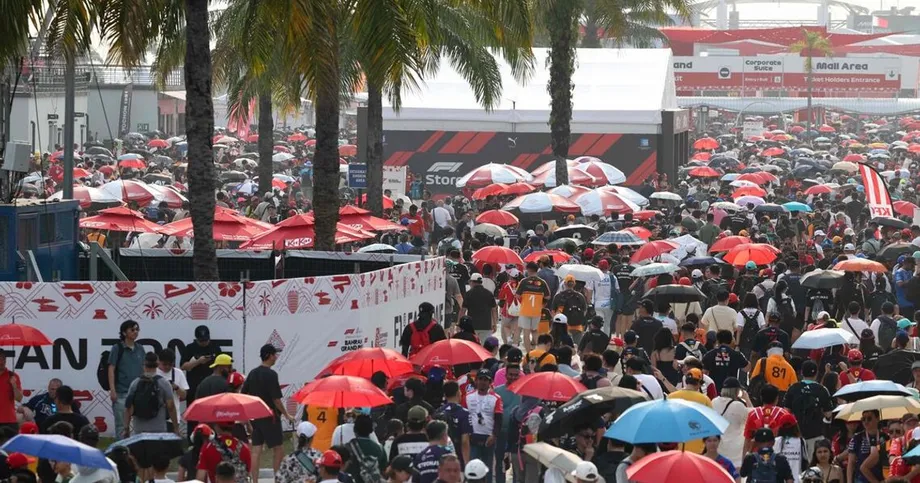
The ministry reported about 261,000 spectator visits over the weekend, including an estimated 103,000 on race day; other reporting put race day attendance above 110,000. The ministry also cited more than 97,000 tickets sold, over 50,000 international tourists and approximately 5,000 foreign workers arriving for the event.
A spectator counted on several days contributes several visits to the weekend total. Ticket sales, daily attendance and international arrivals therefore measure different parts of the event's reach.
The ministry also cited Formula 1 Management figures of 827 million viewers for the championship's worldwide broadcast reach. Its assessment identified tourism, hospitality, aviation and smaller Malaysian businesses among the beneficiaries of the international influx.
Fans faced a difficult journey home
Sepang's large crowd also exposed problems that a future organiser would need to address. Fans reportedly walked up to 11 kilometres after shuttle services stopped, while exclusion zones for rideshare services made it harder to arrange alternative transport.
Bahrain's organisers handled operations for the relocated event. Their usual venue caters for about 55,000 fans a day, compared with more than 100,000 at Sepang on race day. The Malaysian event required managing roughly twice that familiar crowd size, along with different roads and access arrangements.
Reports described long queues for water, refill stations running dry and up to 50 ambulances being sent to the circuit on Friday. A concert area intended for about 10,000 people reportedly attracted more than 50,000, creating severe crowd pressure.
For a returning spectator, the attraction of another Grand Prix would depend partly on getting safely to the venue, finding drinking water and leaving without hours of uncertainty. Those services would remain central whether racing took place during daylight or under floodlights.
Sepang regularly hosts MotoGP without similar reported disruption. A future Malaysian operation would have more opportunity to plan around local roads, transport providers and the circuit's actual capacity than organisers managing an emergency replacement event.
Could Malaysia and Singapore both benefit?
The October calendar placed Malaysia and Singapore on consecutive weekends. That creates an opportunity for visitors to combine two events in one regional trip, although travel and ticket costs limit how many fans can attend both.
Samer Elhajjar, a senior lecturer in marketing at the National University of Singapore Business School, suggested that the two races could grow the regional audience together. Singapore's event runs through a city centre at night; Sepang offers a permanent circuit with fast corners, heavy braking areas and tropical weather.
Payment company Adyen's data from Singapore's 2025 race week gives a measure of the commercial opportunity. Overseas visitors accounted for 76 per cent of hotel revenue, while hotel receipts were 24 per cent above a typical week in the second half of that year. Retail sales rose 27 per cent over the race weekend, and food and beverage revenue increased by up to 31 per cent.
William Saunders, head of F1 at marketing agency MKTG, also identified competition for sponsors' budgets. Companies may choose between promotional spending in Kuala Lumpur and Singapore when the events are close together. He suggested a March slot could make Malaysia more attractive by separating those commitments across the year.
Matthew Marsh, founder of EDJ Motorsport, argued that Malaysia's earlier approach placed too much weight on ticket income rather than the country's wider visibility. He remained sceptical about a permanent return because a full calendar and other countries willing to pay substantial fees would make the commercial terms demanding.
Malaysia joins a crowded Asian contest
Formula One is considering interest from Malaysia, Thailand, Vietnam and South Korea. Thailand's cabinet approved a bid worth 40 billion baht, about US$1.2 billion, in 2025 for a Bangkok race targeted for 2028.
Asia is expected to host nine races in 2027, compared with Europe's eight, following the return of the Turkish Grand Prix. Malaysia would be seeking space in a region already attracting substantial interest and investment.
A person familiar with calendar discussions put 2030 as the earliest possible regular Sepang return under existing agreements. The Malaysian government has not announced a return year. Anwar's account of his discussion with Domenicali also identified the packed schedule and contracts with current hosts as constraints.
Lord welcomed the possibility of Thailand joining, while acknowledging the investment and commitment involved. He also backed India's efforts to return to the Buddh International Circuit near New Delhi in 2028, describing its former venue as an excellent circuit and facility.
India is working through tax and regulatory issues after its Grand Prix ended following the 2013 edition. Hosting agreements are decided by Formula One management, leaving team enthusiasm as support for a bid while governments and organisers negotiate the practical terms.
For Malaysia, November's assessment is the next concrete step. Cabinet will have to judge whether the visitor spending, public interest and international exposure justify a recurring commitment, and what improvements fans should receive in return.
Key Points
- Mercedes supports another Sepang race after Malaysia hosted the relocated Bahrain Grand Prix on October 2 to 4, 2026.
- Malaysia is considering annual hosting or a race once every few years, with a cabinet assessment expected by November.
- The Youth and Sports Ministry estimated economic impact at nearly RM950 million and weekend attendance at about 261,000 visits.
- Bahrain covered the hosting rights fees for the replacement event, giving it different financial terms from a regular Malaysian race.
- Signify and DZ Engineering expressed interest in lighting a possible night race, with no approved project or budget announced.
- Transport disruption, water access and crowd management are central issues for any future event.
- Existing calendar contracts and competing Asian bids complicate Malaysia's pursuit of a regular return.