Airport warnings put November plans under pressure
South Korea's proposed November football trip to the Middle East faces a security problem extending beyond the stadium: whether its players, staff and supporters can safely reach and leave Saudi Arabia. Following attacks on Riyadh's King Khalid International Airport on October 10 and 11, South Korea raised its travel advisory for the entire kingdom to Level 3, recommending departure unless a stay is essential.
Contents
- Airport warnings put November plans under pressure
- What happened at Riyadh's airport?
- A nationwide advisory limits the alternatives
- Which matches are actually confirmed?
- Replacement plans face a short timetable
- Flight disruption reaches beyond the capital
- Riyadh carries much of the Asian Cup schedule
- Safety concerns extend across teams and supporters
- No Asian Cup move or postponement has been announced
- What to Know
The U.S. Mission security alert, issued on October 11, 2026, independently confirms attacks at the airport the previous day. It strongly recommends that American citizens avoid the airport and surrounding areas, warns of possible flight cancellations and airspace closures, and requires special authorization for U.S. government employees to use airports in Riyadh, Jeddah and Dammam.
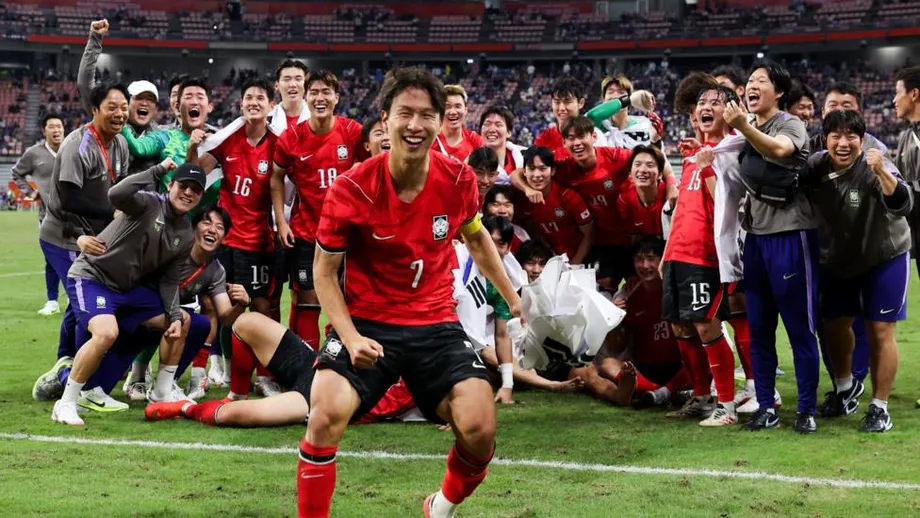
Those restrictions matter to the Korea Football Association's proposed itinerary during the November 9–17 international window, the period when national teams can assemble players released by their clubs. South Korea had been pursuing two away friendlies, beginning in Saudi Arabia and continuing in a neighboring country, to prepare for the Asian Cup scheduled for January 7 to February 5, 2027.
Saudi Arabia and Qatar have been identified as the intended opponents, although South Korea's schedule was not finalized. The association is reviewing alternatives, including another Saudi city, a neutral venue, different opponents or matches at home. No cancellation or replacement arrangement has been announced in the accounts describing that review.
The immediate decision concerns November travel. The larger question concerns a 24 team Asian Cup spread across Riyadh, Jeddah and Khobar, with much of its schedule concentrated in the capital whose main airport has been repeatedly attacked.
What happened at Riyadh's airport?
A missile attack struck King Khalid International Airport on October 10. A second attack on October 11 hit Terminal 4, also described as Passenger Hall No 4, causing a fire. Saudi officials said the second incident killed one person and injured 11. The General Authority of Civil Aviation identified the person killed as a Pakistani resident.
Reports differ on the casualties from the first attack. Some give 12 deaths and at least 309 injuries; others give 13 deaths and 308 injuries, or describe more than 300 wounded. Another account gives at least 14 deaths across the airport attacks. The Indian Embassy also said an Indian national injured in the first strike later died. These figures should not be combined into a new total because the reporting does not establish a consistent counting period.
Responsibility also needs to be distinguished by incident. The Houthis claimed the October 10 strike and several earlier airport attacks. Some accounts describe the following day's incident as another Houthi strike, while another says it had not been claimed. Saudi coalition spokesman Major General Turki al-Maliki described an intercepted missile near Riyadh airport and an unknown projectile that caused the passenger hall fire.
The principal dates reported so far are:
- October 10: A deadly missile attack struck King Khalid International Airport.
- October 11: A further projectile hit Terminal 4; South Korea's nationwide Level 3 advisory took effect at 10 p.m.
- October 12: Further missile activity was reported near Riyadh, while the airport remained closed.
- October 13: The Korea Football Association said it was consulting the AFC and examining options for November; Singapore advised deferring all travel to Saudi Arabia.
- October 17: The earliest reported date through which Riyadh airport operations were suspended, subject to safety and operational checks.
- November 9–17: The international window in which South Korea hopes to play two friendlies.
A nationwide advisory limits the alternatives
South Korea's Foreign Ministry raised the warning for all of Saudi Arabia, rather than Riyadh alone, at 10 p.m. on October 11. Its Level 3 advice recommends that Korean nationals leave unless they have urgent business and that prospective visitors cancel or postpone travel. The recommendation does not itself establish that the football matches have been canceled, but it changes the conditions under which a trip would be assessed.
Foreign Minister Cho Hyun reviewed regional security with South Korean diplomatic missions in 15 Middle Eastern countries, including Saudi Arabia, Yemen, Iran and Israel. He instructed diplomats to take extra care in protecting nationals and prepare for possible contingencies.
Moving a match to another Saudi city would therefore not remove the nationwide Korean warning. The U.S. Mission's notice also goes beyond Riyadh: government employees require special authorization to use Jeddah and Dammam airports, cannot travel within 20 miles of the Yemen border, and need authorization for several other provinces and cities. Those employee restrictions are distinct from the advice issued to the general public.
Australia, New Zealand, Canada, Japan and the United Kingdom have also issued travel warnings, with different geographical limits. Singapore's Foreign Ministry advised on October 13 that citizens defer all travel to Saudi Arabia, citing increased attacks on civilian aviation and energy infrastructure since July 2026.
Which matches are actually confirmed?
The intended sporting plan was straightforward: play the Asian Cup host in Saudi Arabia, then travel to a neighboring country for a second match against another Middle Eastern team. That would give South Korea competitive preparation and time in the region before January.
Reports of Saudi Arabia's November program identified South Korea and Uzbekistan as its intended opponents. Imam University Stadium in Riyadh was mentioned as a preparation site. These reports support the existence of planning, but do not establish a finalized Korean itinerary or confirmed match dates.
Qatar was identified as South Korea's second opponent in the initial account of the proposed trip. Subsequent reporting describes that fixture more generally as a match against a Middle Eastern side in a neighboring country. Without a finalized announcement, both the opponent and venue remain unsettled.
The Korea Football Association explained its position in a statement about coordination with the Asian Football Confederation, the body responsible for the continental tournament:
We are in constant contact with the Asian Football Confederation and are closely monitoring the situation on the ground.
The association also distinguished its responsibility for November arrangements from the AFC's authority over the Asian Cup:
Whether the tournament goes ahead is for the AFC to decide, but for the November international window we are at the stage of reviewing multiple scenarios.
Replacement plans face a short timetable
The alternatives under review include moving the Saudi fixture to another city, using a neutral country such as Qatar or the United Arab Emirates, finding different Asian opponents, or bringing matches back to South Korea. Each option would require agreement on opponents, venues, travel and accommodation.
Keeping the intended opponents while changing the venue could preserve much of the football preparation. It would still require both teams to accept the arrangement and organizers to secure a stadium and safe transport. Changing opponents introduces another constraint: other national teams have already arranged matches during the same November window.
Australia, for example, plans to face Qatar in Doha and Jordan in Amman. That schedule illustrates why a neighboring country cannot be treated as an automatically available replacement destination or opponent. Football Australia has also been conducting security assessments for its own November travel.
Matches in South Korea could avoid sending the Korean squad into Saudi Arabia, but would change the purpose of a trip designed partly for experience in the tournament's host region. Cancellation would remove two preparation opportunities. Neither outcome is settled, and the association has not announced a deadline for its final decision.
Flight disruption reaches beyond the capital
The airport problem is broader than whether one runway reopens. Saudi civil aviation authorities suspended operations at King Khalid International Airport until at least October 17 to complete checks on the safety and operational readiness of its facilities. That date is a minimum suspension period, not a guarantee of unrestricted service afterward.
Etihad and Qatar Airways postponed Riyadh flights. Singapore Airlines postponed the launch of its Riyadh services until March 28, while Scoot canceled Jeddah flights until December 2. Other airlines also canceled or postponed services to Saudi Arabia's main cities.
King Fahd International Airport in Dammam was also reported closed. At Jeddah's King Abdulaziz International Airport, flight tracking figures recorded more than 150 cancellations and 374 delays on October 11. The disruption makes a change of Saudi destination more complicated than simply selecting a different stadium.
Brendan Sobie, an independent aviation analyst and consultant based in Singapore, said the duration of the crisis and any restrictions after reopening would determine its effect on air travel. His assessment underlines a practical uncertainty for football planners: an operating airport does not necessarily mean reliable arrivals, onward connections or departure options.
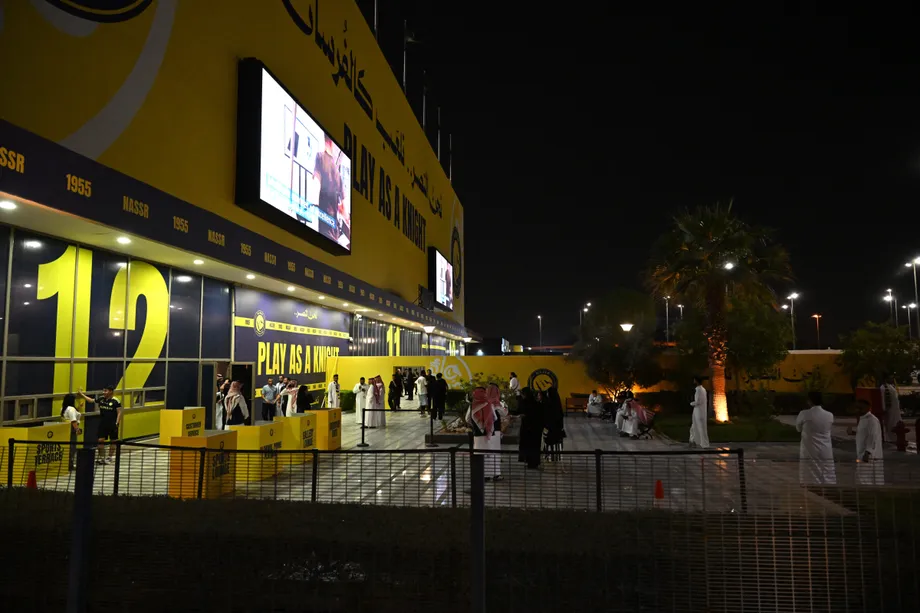
A security alert also delayed an AFC Champions League match involving Cristiano Ronaldo's Al Nassr in Riyadh by one hour, reported on October 13 in Korea. Accounts differ on whether an attack was intercepted during that incident, but agree on the delay. It demonstrates that security concerns are already affecting football scheduling.
Riyadh carries much of the Asian Cup schedule
The 2027 Asian Cup is scheduled across eight venues in Riyadh, Jeddah and Khobar. Five venues are in Riyadh, which is due to stage 31 matches, including the final. Five out of eight means 62.5 percent of the tournament's venues are concentrated in the capital.
For South Korea, Riyadh is relevant beyond any proposed November friendly. Reporting places the team in Group E and says its matches against Vietnam and Yemen would be played there. It also says that, if South Korea wins its group, its round of 16 match and quarterfinal would take place in Riyadh.
The reported group schedule is inconsistent. One account lists Yemen on January 10, Vietnam on January 15 and the United Arab Emirates on January 20. Another describes Vietnam as the second group opponent and Yemen as the third. The conflicting order means that itinerary should not be presented as settled without a definitive tournament schedule.
Singapore's plans illustrate the tournament's wider travel demands. Its first Asian Cup campaign includes Australia on January 9 and Iraq on January 19 in Khobar, with Tajikistan on January 14 in Riyadh. Teams and supporters may therefore need to move between cities during the competition, rather than remain near one stadium.
Safety concerns extend across teams and supporters
Football Australia and the Football Association of Singapore have said they are monitoring developments and assessing travel risks. Their statements make clear that planning must cover staff and supporters as well as players.
Beau Busch, chief executive of Professional Footballers Australia, set out the players' union's position:
The safety of players, fans and staff must be the priority and the central consideration in the planning and delivery of the AFC Asian Cup.
Busch said the union was monitoring developments through the global players' organization FIFPRO and engaging with Football Australia and external specialists. Football Australia said risk assessment was part of planning for every national team camp and would be a central focus before January.
Singapore captain Hariss Harun described the concern shared by people attending the tournament:
We want to play in the biggest continental competition but we also want world peace.
His comments included the safety of staff, volunteers, family members and fans. For South Korea, the same planning problem includes routes between airports, accommodation, training grounds and stadiums, alongside the availability of flights.
No Asian Cup move or postponement has been announced
The AFC has maintained its plan to hold the tournament in Saudi Arabia and has said it has not officially discussed changing the venue. Other reports say it did not respond to requests for comment after the latest attacks. Neither position amounts to an announced relocation or postponement.
Australia was mentioned as a possible alternative host in April. A delay until January 2028 has also been discussed in reporting as a scenario if the conflict persists. That is a possibility, not an AFC decision. It would affect more than venues: Australia coach Tony Popovic's contract, for example, runs until the 2027 Asian Cup, with no clarity reported on how a delay would affect it.
The security outlook remains unsettled. A reported Saudi investigation is examining why defenses failed to intercept the deadly airport attack or provide earlier warning. Two regional officials described drones preceding cruise and ballistic missiles that traveled more than 1,000 kilometers to Riyadh. Those details are preliminary accounts, not published findings.
Houthi military spokesman Brigadier General Yahya Saree has warned that Saudi airports and airspace are targets. Saudi Energy Minister Prince Abdulaziz bin Salman acknowledged continuing danger while addressing an energy congress in Riyadh:
Our gathering here does not mean the risk is gone.
Coach Moreno's reported contract runs through November 27, leaving two planned matches before that date. Reports of tensions involving captain Son Heung-min and speculation about Kim Min-jae, Hwang In-beom and Hwang Hee-chan add uncertainty around the squad, but no confirmed personnel decisions follow from them. South Korea's pursuit of its first Asian Cup title since 1960 now depends on resolving the immediate travel arrangements while the AFC assesses January's tournament.
What to Know
- South Korea is reviewing two proposed away friendlies during the November 9–17 international window; its schedule was not finalized.
- The nationwide Level 3 travel advisory for Saudi Arabia took effect at 10 p.m. on October 11.
- Reports differ on casualties from the October 10 airport attack. Saudi officials reported one death and 11 injuries in the following day's incident.
- Riyadh airport operations were suspended until at least October 17, with wider airline disruption affecting alternative routes.
- The Asian Cup remains scheduled for January 7 to February 5, 2027, in Saudi Arabia. No relocation or postponement has been announced.
- Five of the tournament's eight venues are in Riyadh, which is scheduled to host 31 matches, including the final.