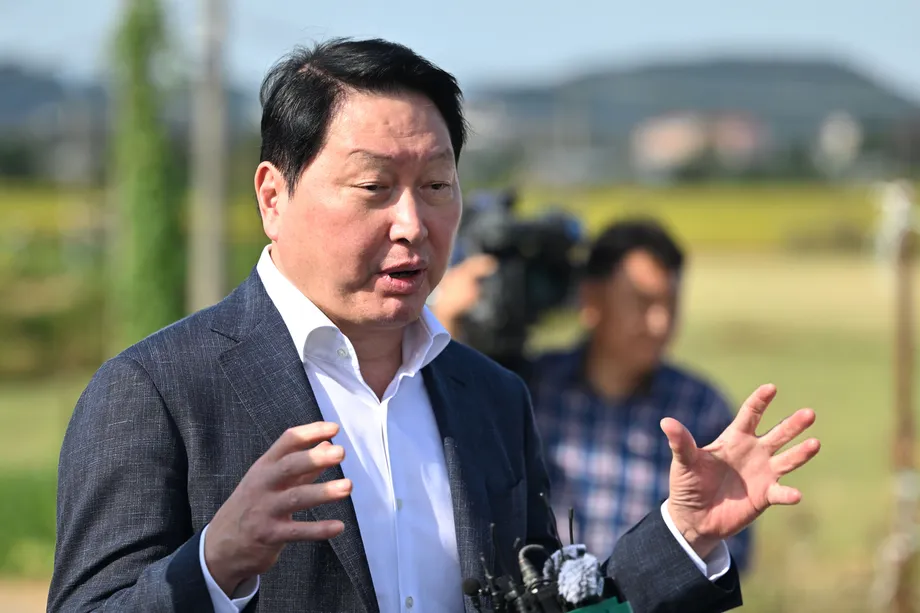
Chey warns that factory delays could cost Korea market share
SK Group Chairman Chey Tae-won called on October 11, 2026, for faster semiconductor factory construction in South Korea, warning that expansion by China's chipmakers and US memory producer Micron Technology could erode the country's market share. His remarks in Shanghai came two days after he visited a proposed semiconductor cluster site at Gwangju's military airport and signaled that construction there could proceed alongside SK Hynix's accelerated Yongin project.
Contents
- Chey warns that factory delays could cost Korea market share
- Honam construction could run alongside Yongin
- The timetable turns on water and electricity
- A site visit addresses doubts about investment
- Public funding faces parliamentary scrutiny
- Chinese rivals complicate the expansion strategy
- Chey challenges the logic of US restrictions
- Shanghai research plans continue alongside factory concerns
- Key Points
The urgency is reflected in a major scheduling change: SK Hynix has brought forward the planned completion of its Yongin semiconductor cluster from 2045 to 2033, a reduction of 12 years. Chey nevertheless indicated that Yongin alone might not provide enough production capacity as artificial intelligence drives rising demand for memory chips.
Speaking at the venue of the 38th Shanghai Mayor's International Entrepreneurs Advisory Conference, Chey, who leads the group that includes SK Hynix, connected the speed of factory expansion directly to South Korea's competitive position.
We need to expand as quickly as possible. If Chinese companies or U.S.-based Micron Technology, Inc. expand capacity at a faster pace, our country's market share will decline.
His message extended beyond a single investment location. He said production facilities should continue expanding in Gwangju and elsewhere, while confirming that overseas factory expansion, including in Japan, was being studied. Those comments describe a broader search for capacity, but they do not amount to an announcement of an approved Japanese factory or a firm construction schedule for every proposed site.
The central issue is whether SK can turn strong demand into additional output quickly enough. More orders do not automatically produce more sales when factories are already constrained. Competitors that make additional capacity available sooner could capture business that Korean producers cannot yet supply.
Honam construction could run alongside Yongin
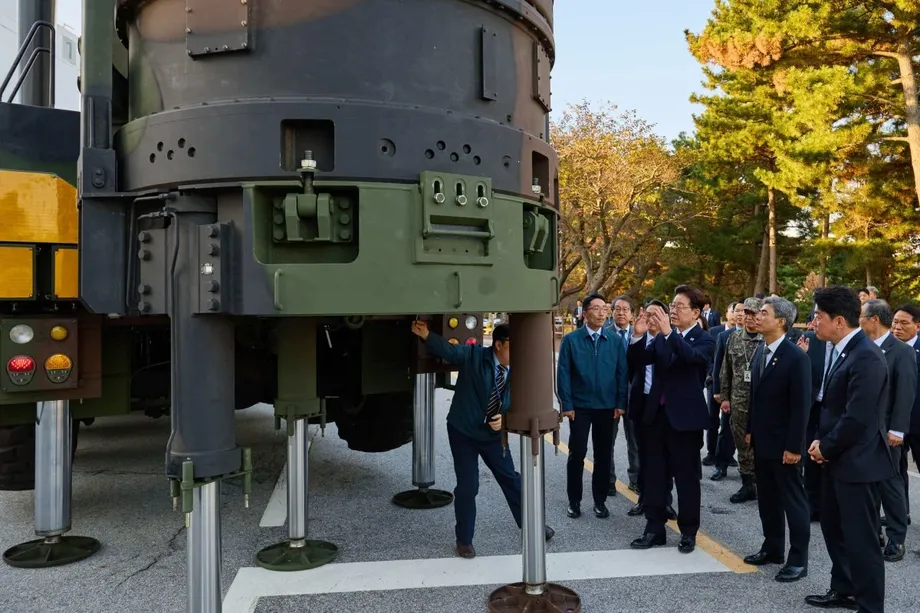
During his October 9 visit to the Gwangju military airport area, Chey said SK would build as quickly as possible once conditions allowed. He also raised the possibility of constructing the Honam factories in parallel with Yongin, rather than treating the southwestern project as something that must wait until expansion elsewhere is complete.
The Honam proposal is described as a 400 trillion won investment involving two semiconductor fabrication plants, commonly called fabs. A fab is the facility where chips are manufactured through tightly controlled production processes. Chey suggested that the scale could grow further if additional land and demand were available. The figure and proposed factory count describe the project's intended scale, not a statement that the full investment has already been spent.
His comments also addressed the sequence of construction and infrastructure delivery. Chey indicated that factory work could begin even if water and electricity infrastructure were not yet complete, provided their eventual delivery could be coordinated with the production schedule.
That distinction matters. Starting building work before utility projects are finished is different from operating a semiconductor factory without dependable supplies. Chip production requires substantial electricity and carefully treated water, so the relevant test is whether infrastructure will be ready when manufacturing equipment and production lines need it.
The timetable turns on water and electricity
Authorities in the Jeonnam and Gwangju area aim to secure initial water and power infrastructure by the end of 2028 and begin mass production in 2030. To meet that production target, they believe fab construction needs to start in early 2028.
The sequence puts construction before completion of the initial utility infrastructure, making coordination between public works and corporate investment central to the plan. The key dates are:
- October 9, 2026: Chey visited the proposed Honam cluster site at Gwangju's military airport.
- October 11, 2026: He urged faster expansion during the Shanghai conference.
- October 22, 2026: A parliamentary audit in the Jeonnam and Gwangju area is scheduled, with semiconductor investment expected to be a major issue.
- Early 2028: Local authorities consider this the necessary construction start for the 2030 production target.
- End of 2028: The target for securing initial water and electricity infrastructure.
- 2030: The local target for mass production at the Honam cluster.
- 2033: The accelerated planned completion date for the Yongin cluster, previously 2045.
These dates are not interchangeable. The 2030 milestone concerns the start of production in Honam, while 2033 concerns planned completion of the Yongin cluster. Comparing them as though they were identical project milestones would give a misleading picture of which development is progressing faster.
A site visit addresses doubts about investment
Chey's visit followed local concern about whether SK might slow or withdraw from the Honam investment. The controversy included reports of remarks by the local mayor about rumors of a possible retreat. The local administration said the remarks had been taken out of context and were made while rejecting a citizen's suggestion that SK might not invest.
Lim Moon-young, a Democratic Party lawmaker representing Gwangsan B, interpreted Chey's personal visit as evidence of an intention to begin construction promptly. The visit strengthened the public signal of commitment, although it did not itself establish a binding construction date.
Ryu Sang-wan, director of Chonnam National University's semiconductor joint research institute, pointed to a related business concern: a company may commit to a factory only to face utility delays if political conditions change. He said expressing investment intent while pressing for faster infrastructure delivery was a natural way for a company to reduce that uncertainty.
The distinction between willingness and readiness remains central. Chey has expressed a desire to move quickly, but the production target still depends on construction, public infrastructure and the timing of investment decisions fitting together.
Public funding faces parliamentary scrutiny
The government is seeking to speed up the Honam industrial complex by exempting its water and electricity infrastructure projects from preliminary feasibility studies. Such studies normally assess whether a proposed public investment is justified before it proceeds. The government also plans to use a future response fund financed through excess tax revenue from the semiconductor industry.
Opposition lawmakers have challenged the allocation. People Power Party lawmaker Kim Sang-hoon argued that spending from the fund was too heavily concentrated on the Honam semiconductor project. Fellow lawmaker Park Soo-young also questioned whether the fund was serving regional political interests. Those are political allegations, not established findings of improper spending.
Park Hong-geun, the minister responsible for planning and the budget, responded that the spending was strategic investment intended to sustain the semiconductor industry, rather than investment designed solely for one region. A separate parliamentary examination of the transport ministry also raised objections to support intended to help employees of investing companies settle in the area.
Transport Minister Hong Ji-seon said site selection had considered location, electricity, water and corporate demand together. The scheduled October 22 local audit will provide the next identified occasion for scrutiny of those decisions. For SK, the debate matters because the speed of factory construction depends partly on public infrastructure whose financing and execution remain politically contested.
Chinese rivals complicate the expansion strategy
Chey identified ChangXin Memory Technologies, known as CXMT, and Yangtze Memory Technologies Corp., or YMTC, as rapidly advancing competitors. CXMT produces DRAM, a type of memory used to hold data that processors need to access quickly. YMTC produces NAND flash memory, which retains data without power and is widely used for storage.
He argued that Chinese producers were increasing both their production capabilities and technical strength. For Chey, the competitive problem is compounded by Korean companies' inability to expand freely in China, where they already operate substantial manufacturing facilities.
Explaining his concern about the pace of Chinese competition, the SK chairman said:
If we leave things as they are, they'll all catch up. They're coming after us at a rapid pace,
His warning should not be read as evidence that the companies have already reached the same technical level in every product. No comparable production volumes, market share figures or product performance measurements were given with these remarks. The argument is about the risk posed by their direction and speed of development.
Micron was also named as a competitive threat through expansion. Chey did not provide a quantified comparison of Micron's new capacity with SK Hynix's planned output. His position was that strong demand makes the relative timing of new factories commercially important, regardless of whether the additional supply comes from the United States or China.
Chey challenges the logic of US restrictions
The expansion debate also intersects with US concerns over semiconductor manufacturing in China. John Moolenaar, chairman of the US House Select Committee on Strategic Competition between the United States and China, recently wrote to Secretary of State Marco Rubio warning about Chinese factories operated by Samsung Electronics and SK Hynix.
The letter identified Samsung's Xi'an facility and SK Hynix's Wuxi and Dalian facilities. Moolenaar argued that those operations could create vulnerabilities in US supply chains and might become instruments of Chinese pressure against the United States.
Chey rejected the idea that restricting those facilities would necessarily stop China's semiconductor industry. Responding to the concerns, the SK chairman said:
I don't think it's very wise to believe that blocking them like that can stop China's semiconductor industry.
The disagreement involves two different priorities. Moolenaar's warning concerns dependence on manufacturing located in China and the possibility of supply disruption. Chey's argument concerns competition: limits on Korean companies' operations do not, in his view, prevent Chinese manufacturers from advancing.
The letter is a congressional intervention, not itself a new regulation or an order closing the named factories. No resulting policy decision or deadline was identified. The immediate uncertainty is how Washington might respond to the concerns and what that would mean for the companies' existing operations.
Shanghai research plans continue alongside factory concerns
Despite those pressures, SK is pursuing further engagement with China's technology sector. At the Shanghai conference, Chey said the group had invested about $60 billion in China across semiconductors, batteries and petrochemicals, describing a business presence built over 35 years. That amount refers to the group's broader investment history, not spending solely on semiconductor factories or a new commitment announced at the event.
SK is also working to establish an AI research and development center in Shanghai. Its planned research areas include AI data centers, physical AI and biopharmaceuticals. Physical AI refers to systems that apply artificial intelligence to interaction with the physical world, such as machines that perceive their surroundings and act on them.
The group presented the proposed center as a way to strengthen cooperation with China's AI industry and follow local technological development. The research plan is separate from the factory expansion question: establishing a research center does not necessarily provide additional chip manufacturing capacity.
The conference brought together Shanghai officials and global business representatives, with Chey attending for a second consecutive year. He also argued that Shanghai's ambitions as an AI innovation center depend on transparent and predictable regulation. His concern was that unclear rules can be more difficult for businesses to manage than rules whose requirements are known.
No opening date, budget or staffing plan for the proposed Shanghai center was specified. Likewise, overseas factory expansion remains under study. The most concrete near term test is whether the Honam construction and utility schedules can be converted into coordinated action while public funding faces parliamentary examination.
Key Points
- Chey Tae-won urged faster chip factory expansion on October 11, warning that US and Chinese competitors could take market share.
- SK Hynix has advanced planned completion of the Yongin cluster from 2045 to 2033.
- Chey raised the possibility of building Honam factories alongside Yongin and expanding production beyond Gwangju.
- Local authorities target early 2028 construction, initial utilities by the end of 2028 and mass production in 2030.
- Public infrastructure funding is under political scrutiny ahead of a scheduled October 22 parliamentary audit.
- Chey questioned whether restrictions on Korean factories in China would stop Chinese chipmakers from advancing.
- SK is pursuing an AI research center in Shanghai, while possible factory expansion in Japan remains under study.