Urumqi Accounts for Two Thirds of Cancellations
Asia's airports recorded 1,680 flight delays and 227 cancellations on December 30, 2025, with the heaviest cancellation burden falling on Urumqi Diwopu International Airport in western China. Urumqi registered 151 cancellations, about 66.5% of the total, alongside 258 delays. Bangkok's Suvarnabhumi Airport had the highest delay count, at 341, but cancelled just two flights.
Contents
- Urumqi Accounts for Two Thirds of Cancellations
- Bangkok, Singapore and Hong Kong Keep Flights Moving
- China Southern Leads Airline Disruption Counts
- Smaller Carriers Have Fewer Recovery Options
- Weather and an Airbus Software Problem Add Pressure
- Holiday Demand and Route Reductions Complicate Recovery
- Passengers Face Missed Connections and Extra Costs
- Disruptions Had Already Recurred Through Late 2025
- Airport Capacity and Staffing Remain Under Strain
- Care, Refunds and Rebooking Depend on the Applicable Rules
- Compensation Turns on the Cause and Jurisdiction
- Airlines Work Through Backlogs and Maintenance
- Travelers Can Build More Flexibility Into Their Plans
- Key Points
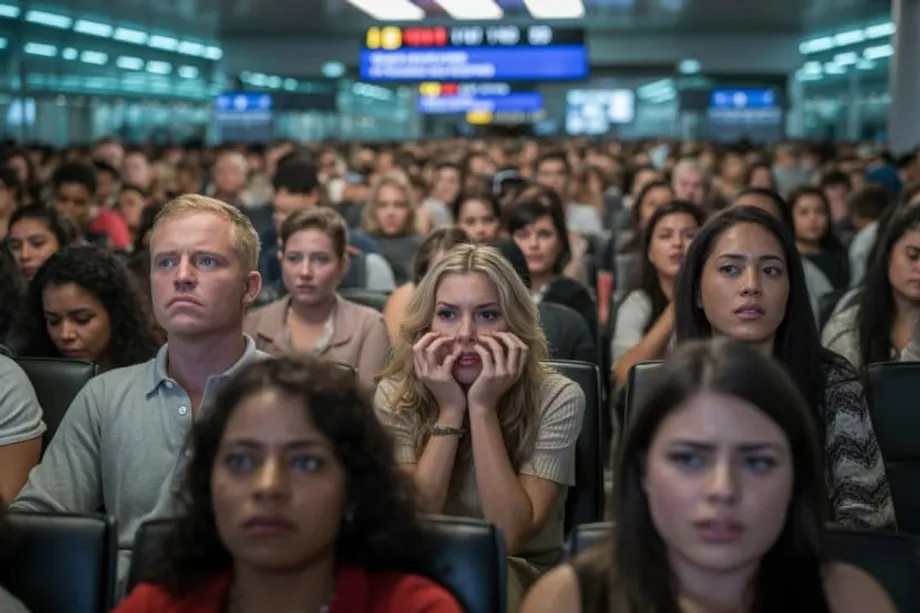
Thousands of passengers were stranded as disruption spread through major gateways from Tokyo to Manila. Domestic services and international connections were affected, leaving travelers waiting for new departure times, replacement flights and information about whether they could complete their journeys.
The day's disruption was described as among the most extensive in Asian aviation in recent memory. Its reach across major international gateways and regional airports suggested pressure across the network, rather than trouble confined to one location. The wider network potentially exposed millions of travelers to uncertain journeys, although no passenger total was given.
Weather, aircraft maintenance requirements, airport congestion and crew availability all featured in the explanation for the disruption. Holiday demand added pressure by filling seats that airlines might otherwise have used to accommodate passengers whose flights were cancelled.
Airports experienced very different outcomes. Some kept services running with substantial delays, while Urumqi lost a large number of flights altogether. Those differences mattered for passengers: a late departure could still get them to their destination, while a cancellation meant finding another flight or seeking a refund.
Bangkok, Singapore and Hong Kong Keep Flights Moving
Bangkok's 341 delays and two cancellations reflected an operation struggling to maintain its schedule while continuing to fly. Congestion at Suvarnabhumi left arriving and departing aircraft competing for gate space and runway slots, the allocated times when aircraft can take off or land.
Urumqi's 151 cancellations and 258 delays pointed to more severe operational difficulties. Weather conditions in western China or technical problems that could not be resolved quickly were suggested as possible explanations for its unusually high cancellation count.
Singapore Changi Airport recorded 242 delays with minimal cancellations. Its pattern reflected the importance of maintaining connections at a major international transit hub, where passengers frequently change aircraft rather than end their journeys.
Hong Kong International Airport recorded 216 delays and no cancellations. Flights continued operating, but behind schedule. The contrast with Urumqi showed how widely the effects varied across the region, even on a day when several large airports were under pressure.
Tokyo Haneda logged 200 delays and eight cancellations across domestic and international operations. As Japan's main domestic hub, with a growing international presence, disruption there affected connections throughout the country's aviation network.
Beijing Capital International Airport recorded 127 delays and 14 cancellations. Manila's Ninoy Aquino International Airport had 138 delays and two cancellations. An aircraft arriving late at one hub can depart late for another, spreading problems through connecting flights and subsequent aircraft assignments. That is how trouble in one part of the network can reach passengers traveling through Singapore or Hong Kong.
China Southern Leads Airline Disruption Counts
China Southern Airlines recorded 122 delays and 38 cancellations, the largest combined disruption total among the carriers highlighted. Its extensive domestic and international network left it exposed to difficulties across Chinese aviation.
Air China registered 72 delays and 12 cancellations. It accounted for a substantial part of the disruption at Beijing Capital and also contributed to delays across western China. Sichuan Airlines, whose network focuses on western China, reported 52 delays and three cancellations.
Sichuan Airlines' much smaller cancellation count suggested an effort to complete flights despite late departures. All Nippon Airways (ANA) recorded 91 delays and two cancellations, accounting for much of the disruption at Haneda and showing how a large network creates exposure when operations become unstable.
Cathay Pacific had at least 65 delays at Hong Kong without cancelling a flight. Singapore Airlines, Japan Airlines, Thai Airways, Cebu Pacific Air and Malaysia Airlines also experienced notable delays with limited cancellations. Across these carriers, disruption was absorbed mainly through late flights rather than widespread service withdrawals.
John Strickland, an aviation consultant based in the United Kingdom, described the difficulty of responding to sudden problems across a large operation:
Any operational challenges that come at short notice and affecting a large part of your operation is tough to deal with,
Smaller Carriers Have Fewer Recovery Options
Regional airlines faced tougher choices, with higher cancellation percentages than the major network carriers. Smaller fleets, tighter financial margins and fewer spare aircraft can leave little room to replace an aircraft that develops a technical fault or arrives late.
Crew shortages can have the same effect. If another crew is unavailable, an airline may have to cancel a service rather than continue delaying it. Larger airlines generally have more aircraft, staff and routing options available when trying to restore their schedules.
Major network carriers can sometimes move passengers through another hub or place them on a later departure. Regional operators may have fewer alternatives and instead cancel flights and issue refunds, leaving passengers to arrange replacement journeys themselves.
Flight counts also reflect airline size. A carrier operating a large network can accumulate many delays because it runs many services. For passengers, the practical difference is whether the airline can provide another workable route, not simply where it ranks in the day's disruption totals.
Weather and an Airbus Software Problem Add Pressure
Reduced visibility and strong winds lowered runway capacity at several airports. Adverse weather affected Urumqi and Beijing, while Japanese airports faced similar difficulties. When conditions require more space between aircraft movements, fewer flights can use a runway in a given period.
A global software problem affecting Airbus A320 jets also forced airlines to carry out unexpected maintenance. Airbus issued a partial recall of the A320 family, which had recently overtaken the Boeing 737 as the industry's most delivered aircraft model.
Airlines worked overnight to restore an earlier software version in a computer that helps control the aircraft's nose angle. The nose angle affects whether an aircraft points upward or downward during flight. Some older aircraft also needed hardware changes taking two to three hours per plane.
The recall affected more than half of the global A320 family fleet. Airbus chief executive Guillaume Faury apologised to airlines and passengers in a LinkedIn post:
I want to sincerely apologise to our airline customers and passengers who are impacted now,
The action followed an unintended loss of altitude on a JetBlue flight from Cancun to Newark on October 30. Ten passengers were injured, and France's BEA accident investigation agency began investigating. European and Asian airlines had overnight hours available to perform the work, but fitting maintenance into operating schedules still created difficulties.
Holiday Demand and Route Reductions Complicate Recovery
Peak holiday travel left fewer empty seats for rebooking. A cancellation can displace an entire aircraft's passengers, while the next departure may already be nearly full. Airlines therefore had less flexibility to move people onto later services.
Runway and gate constraints also slowed recovery at airports operating near maximum capacity. Delayed flights needed space alongside services still scheduled to arrive or depart on time. Crew availability became another constraint as airlines dealt with the consequences of disruption from previous days.
Deteriorating relations between China and Japan had separately led to the cancellation of around 1,900 flights. Air China and China Eastern were among the airlines reducing services, including on Beijing to Tokyo and Shanghai to Osaka routes.
Those geopolitical reductions were described as an underlying source of network fragility rather than a direct cause of the December 30 disruption. Fewer services on affected routes could make alternative travel arrangements harder when weather or technical problems interrupted other flights.
Passengers Face Missed Connections and Extra Costs
Travelers at major hubs faced longer waits, missed onward flights and hours in terminals while seeking new bookings. Airline service counters developed long queues, and telephone support became harder to reach as large numbers of passengers requested help at once.
Business travelers missed meetings or had to change professional commitments. Families traveling for holiday reunions faced delayed or cancelled visits. Leisure travelers risked shorter holidays and additional spending on meals and accommodation as planned itineraries fell apart.
Late arrivals also disrupted journeys beyond the airport. Passengers missed booked trains, buses and arranged rides, forcing them to find replacement transport, sometimes at substantial additional cost.
Hotels near airports filled as passengers sought rooms for overnight stays. Some travelers were left sleeping in terminals. Access to accommodation became part of the disruption, alongside the difficulty of obtaining a replacement flight.
Changing departure times and confusing flight information added anxiety. Travelers with connections to cruises, tours or events faced particular pressure because reaching their destination late could mean losing an activity that could not easily be rescheduled.
Disruptions Had Already Recurred Through Late 2025
December 30 followed several other episodes of disruption during the final months of 2025. The earlier figures showed repeated difficulties across airports in China, Japan and Southeast Asia, although the locations and scale varied.
- October 13, 2025: Airports in Japan, Thailand and Cambodia recorded 836 delays and 18 cancellations, with ANA Wings, Akasa Air and Sky Angkor among the carriers involved.
- October 30, 2025: A JetBlue flight from Cancun to Newark experienced an unintended loss of altitude, injuring 10 passengers and prompting a BEA investigation.
- Earlier in December 2025: A disruption tally recorded 858 delays and 94 cancellations, affecting Shenzhen, Shanghai and Beijing, Japan's Narita and Fukuoka airports, and Malaysian hubs including Kuala Lumpur.
- December 15, 2025: Airports in China, Japan, Indonesia and Thailand recorded 887 delays and 62 cancellations.
- December 30, 2025: The regional tally reached 1,680 delays and 227 cancellations.
On December 15, Shanghai Hongqiao recorded 82 delays and five cancellations, Beijing Capital had 65 delays and nine cancellations, and New Chitose Airport in Hokkaido registered 144 delays and eight cancellations.
The December 30 totals were about 1.9 times the 887 delays and 3.7 times the 62 cancellations recorded on December 15. The comparison shows a much larger reported disruption count on December 30, with the earlier episode spread across a different set of highlighted airports.
Brendan Sobie, an aviation analyst based in Asia, gave a more measured assessment of the Airbus software work. He described the update as:
not as chaotic as some people might think,
Sobie also acknowledged the operational inconvenience it created:
it does create some short-term headaches for operations,
Airport Capacity and Staffing Remain Under Strain
Passenger demand had grown faster than infrastructure at many airports. Limited runway and gate capacity created bottlenecks that could produce delays even in normal conditions, leaving less room to recover when weather or maintenance interrupted operations.
Air traffic management also faced growing volumes, especially around major metropolitan areas with crowded airspace. Controllers must coordinate aircraft movements safely, so the number of flights that can pass through a busy area has practical limits.
Airlines were still rebuilding capacity reduced during the pandemic. Training pilots, flight attendants and maintenance personnel takes time. Shortages in those roles limited the ability to add recovery flights or replace unavailable staff.
Spare crews became especially valuable during irregular operations, the industry's term for periods when flights stop following their planned schedules. Without enough available staff, an airline may have aircraft ready to fly but still be unable to operate a replacement service.
More unpredictable environmental conditions added another difficulty. Extreme weather, volcanic ash clouds and unseasonable storms can produce disruptions that earlier planning models did not anticipate, with effects spreading across connecting services.
Care, Refunds and Rebooking Depend on the Applicable Rules
Passengers facing cancellation or a long delay may be entitled to assistance, replacement travel or a refund under the rules governing their journey. The applicable regulatory framework matters because the article's examples of care and compensation concern different jurisdictions.
Under frameworks providing these protections, delays exceeding thresholds of two to four hours can trigger food and drink assistance. Overnight delays can require hotel accommodation and transport between the hotel and airport, even when the passenger does not qualify for a separate compensation payment.
Communication assistance can include two telephone calls or two emails. This helps passengers contact relatives, employers or travel services while waiting for a flight.
When a flight is cancelled, passengers can seek a refund for the unused ticket portion or rebooking on the next available flight to their destination, subject to the applicable rules. Airlines should process those requests promptly rather than pressure passengers into accepting a less suitable option.
Rebooking will ideally be with the original airline. If suitable seats are unavailable, an airline may arrange transport with a partner or, in exceptional cases, a competitor. The availability of seats and alternative routes becomes particularly important during widespread disruption.
Compensation Turns on the Cause and Jurisdiction
Technical faults within an airline's control, crew scheduling problems and operational errors can qualify for compensation under relevant regulatory regimes. Weather, security threats and air traffic control restrictions can fall within extraordinary circumstances that exempt an airline from paying monetary compensation.
EC 261 and UK 261 provide defined compensation frameworks for qualifying journeys, including qualifying services operated by Persian Gulf carriers. Entitlement depends on the rules applying to the flight, with payment amounts linked to factors such as flight distance and delay duration.
Care during a disruption and a later compensation payment serve different purposes. Food, accommodation or replacement travel address the immediate problem, while compensation is assessed under the relevant framework after considering the circumstances.
Passengers should retain boarding passes, travel documents, airline delay notices and receipts for additional expenses. Those records can support requests for reimbursement or compensation and help establish what happened to the journey.
Airlines or authorities may need time to investigate the cause. Passengers seeking compensation may have to follow up with the carrier or the relevant regulator rather than expect an immediate decision at the airport.
Airlines Work Through Backlogs and Maintenance
Recovery was expected to take several days, particularly for travelers with multiple connections. Airlines had to accommodate displaced passengers while restoring aircraft and crew schedules. The recovery outlook also described airlines prioritising some rebooking by passenger status and fare class, potentially leaving travelers on discounted tickets waiting longer.
Investment in runway and gate capacity was identified as a way to accommodate growing demand. Modernising air traffic management could also reduce delays through more efficient use of airspace and more direct routes between cities.
Airlines were investing in digital tools for disruption management. Artificial intelligence and machine learning could help predict problems and support earlier rebooking and passenger communication. Improved mobile applications and services passengers can use themselves could reduce pressure on customer service teams.
United States Transportation Secretary Sean Duffy described progress by affected American carriers on the Airbus software work:
have reported great progress, and are on track to meet the deadline of this Sunday at midnight to complete the work,
Duffy's statement concerned the software response, with its deadline expressed as Sunday at midnight. The maintenance episode illustrated the international reach of aviation safety requirements: action originating with European regulators affected Asian airlines and carriers elsewhere, including the United States.
Closer coordination among regulators, airlines and air navigation service providers could help manage similar disruption across regions. For December 30 passengers, the immediate priorities remained obtaining a usable flight and securing assistance while waiting.
Travelers Can Build More Flexibility Into Their Plans
Direct flights reduce the number of connections where a delay can interrupt a journey. When changing aircraft is necessary, a longer layover gives more room for a late arrival without losing the next flight.
Travel insurance covering delay and trip interruption can help with additional meal, accommodation or transport costs. Coverage depends on policy terms, so passengers should check that the protection matches their itinerary and the risks they expect.
Airline applications and flight tracking services can provide changing departure information before passengers reach the airport. Early notification may create an opportunity to request another flight before service counters become crowded.
Travelers can also keep several ways to contact an airline, including telephone numbers, social media accounts and airport desks. During widespread disruption, any one channel may be difficult to reach.
Medication, toiletries and a change of clothes are useful in cabin baggage when checked luggage is inaccessible. Charged devices and portable power banks help passengers continue receiving updates and contacting others during extended waits.
December 30 brought together weather disruption, technical work, airport constraints and staffing pressure during a busy travel period. The repeated difficulties since October showed why passengers needed flexibility, while airlines faced the immediate task of restoring flights and connections.
Key Points
- Asia recorded 1,680 flight delays and 227 cancellations on December 30, 2025.
- Bangkok Suvarnabhumi had the highest delay count, with 341 delayed flights and two cancellations.
- Urumqi recorded 151 cancellations, about two thirds of the total, and 258 delays.
- Singapore Changi had 242 delays; Hong Kong had 216 delays and no cancellations.
- China Southern recorded 122 delays and 38 cancellations, the highest combined total among the highlighted airlines.
- The Airbus A320 family recall affected more than half of the global fleet and required software changes, with hardware work on some older aircraft.
- Weather, holiday demand, airport capacity and crew availability added pressure to operations.
- Earlier disruption episodes occurred in October and December, while around 1,900 China to Japan flights had separately been cancelled amid deteriorating relations.
- Passenger assistance and compensation depend on the applicable rules and the cause of disruption.
- Recovery was expected to take several days, with complex connecting journeys especially difficult to restore.