S$11 million in 30 minutes, then the race to deliver
Singapore shoppers spent more than S$11 million on Shopee in the first 30 minutes of the 11.11 campaign, setting off a rush of parcels that stretched from sorting centres to apartment doors. By November 14, 2025, the shopping surge had become a test of how quickly delivery companies could turn a concentrated burst of orders into completed deliveries.
Contents
- S$11 million in 30 minutes, then the race to deliver
- How 11.11 became a fixture of the retail calendar
- Why the pressure builds at the doorstep
- Fresh food leaves less room for delays
- Extra shifts, robots and faster decisions
- A partnership for bulky parcels and wider capacity
- AI shopping tools and a bigger creator economy
- More parcels bring more waste and energy use
- Singapore's surge sits within a larger Asian trade flow
- December preparations are already under way
- Key Points
Shopee recorded larger, more considered shopping baskets than last year, with electronics, household appliances and beauty products leading demand. Livestreams and short videos helped turn browsing into immediate purchases. One live event alone generated more than S$700,000 in orders.
Lazada also recorded higher spending. Average order amounts more than quadrupled, while sales rose as much as 24 times in the first four hours. Across Southeast Asia, electronics, fashion and beauty topped shopping lists, and total sales exceeded a September campaign by more than 40 percent.
Ninja Van experienced the delivery consequences almost immediately: parcel counts doubled compared with quieter periods, while its cold chain service handled more than three times its usual volume. FedEx Singapore, which typically sees a roughly 20 percent increase during the broader year end season, pointed to the combined pressure of 11.11 purchases and holiday gifts on air capacity and ground operations.
The figures describe several different parts of the same shopping rush. Platforms saw spending accelerate within minutes and hours; couriers then had to collect, sort and distribute the resulting packages over the following days. Larger baskets, bulky appliances and perishable groceries also meant that handling the surge required more than simply finding room for extra small parcels.
How 11.11 became a fixture of the retail calendar
Singles Day, the shopping festival held on November 11, grew from a marketing idea into the world's biggest shopping event. In Singapore, it now anchors the retail calendar toward the end of the year, often eclipsing Black Friday and Cyber Monday.
Singapore platforms surpassed the previous year's 11.11 numbers by the middle of the afternoon even during the 2020 recession. The latest surge continues that history, with livestreamed storefronts, promotions led by creators and steep discounts on bundles giving shoppers more reasons to place orders during a short campaign window.
Livestream shopping brings a product presentation and the opportunity to buy into the same moment. Short videos serve a similar purpose, turning attention into purchases. For delivery networks, the result is a month's worth of volume arriving within days, rather than a steady stream that can be spread across normal shifts.
The calendar leaves little time for the businesses involved to pause between campaigns:
- During the 2020 recession, Singapore platforms exceeded the previous year's 11.11 results by the middle of the afternoon.
- In 2024, estimated spending across major Chinese platforms reached hundreds of billions of dollars, while China's courier networks sorted more than a billion parcels within a single day.
- On November 11, 2025, Singapore's shopping campaign brought sharp increases in spending and delivery demand.
- By November 14, attention was turning to the December 12 campaign, known as 12.12, and Christmas shopping.
Why the pressure builds at the doorstep
Singapore's position as a regional logistics hub makes the surge larger than the island's own shopping orders. Packages heading to Singapore and neighbouring countries pass through the same ports, airports and sorting facilities. During a compressed sale period, loading bays, conveyor belts and vans all face competing demands.
Drivers were delivering several packages to individual addresses as apartment blocks and offices became daily delivery stops. Grouping deliveries at one address can help, but each stop still involves reaching the building, navigating access arrangements and getting parcels to the recipient.
The final stage, known as the last mile, is particularly demanding because routes must account for urban traffic, lift lobbies and security checkpoints. A parcel may have travelled efficiently through a large sorting facility before slowing down at a crowded loading dock or a building entrance.
FedEx Singapore's usual seasonal increase of about 20 percent adds another layer to the planning challenge. The company flagged pressure on both air capacity and ground operations as 11.11 orders overlapped with preparations for holiday gifting. Moving goods into the country and getting them to the door are connected parts of the same operation.
Fresh food leaves less room for delays
Ninja Van's cold chain traffic rose more than threefold as grocers and specialty sellers shipped perishable goods. Singapore's appetite for fresh groceries, meal kits and specialty desserts has made deliveries requiring temperature control a growing part of ecommerce.
Cold chain means keeping goods within the temperatures they need throughout transport and handling. Refrigerated trucks, also known as reefer trucks, insulated totes and quick handoffs help protect items that cannot remain at ordinary temperatures while waiting for their next journey.
Ice cream, seafood and vaccines illustrate why these deliveries have tighter limits. A driver cannot leave temperature sensitive goods waiting while clearing a tower's loading dock in the same way that some ordinary parcels can wait. Delivery windows are narrower, and routes have less flexibility.
Refrigerated bays are also limited. A sudden increase can occupy the space needed to prepare and transfer other chilled orders, while tighter time windows make it harder to combine deliveries. The pressure therefore reaches beyond the number of packages: the type of goods determines which vehicles, storage areas and routes can be used.
Extra shifts, robots and faster decisions
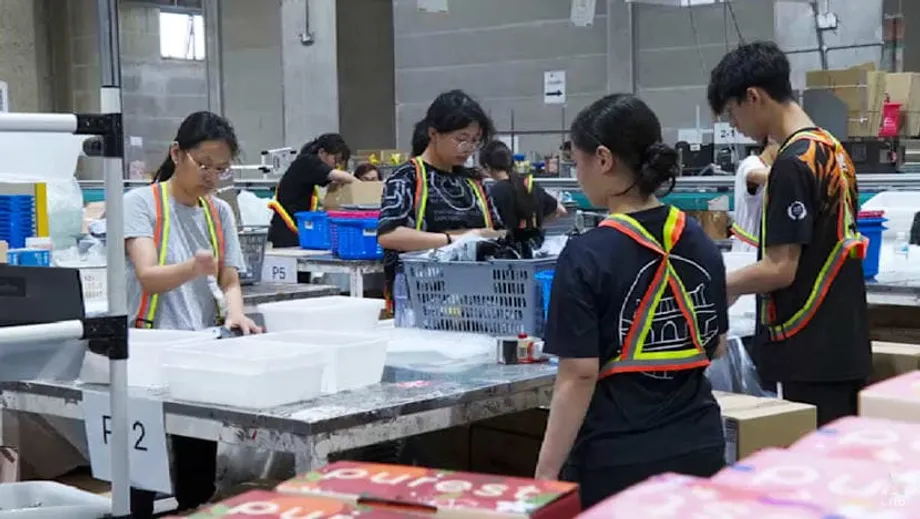
Delivery companies responded by extending shifts at sorting centres, adding temporary workers and using robotic arms to pick parcels, separate them into individual items and place them for further processing. Those steps helped operations cope with more packages during the same limited processing window.
Route planning software reordered stops according to traffic, lift availability and parcel size. Teams responsible for linehaul, the movement of goods between logistics facilities, used automated loading and unloading to fit more runs into the overnight period.
Singapore industry surveys show that a majority of local organisations now prioritise adopting artificial intelligence. Government investment programmes support that shift by funding computing resources and applied research, helping businesses develop tools for practical operational tasks.
During peak shopping weeks, forecasting systems using AI can predict where orders are likely to arrive and help companies position vans and staff in advance. That matters when demand is concentrated in particular neighbourhoods or when some routes contain more bulky deliveries than others.
Shipment monitoring tools give managers updates while goods are moving and can predict developing delays. Alerts about late flights or rainstorms allow teams to activate alternative routes. Extra staff provide capacity, while these systems help decide where that capacity is needed and when plans should change.
A partnership for bulky parcels and wider capacity
Cainiao Network, Alibaba's logistics arm, has partnered with Grocery Logistics of Singapore, or GLS, a supply chain unit of the FairPrice Group. The arrangement draws on GLS capabilities in warehousing, ecommerce fulfilment, cold chain services and returns.
Bulky goods are an important part of the partnership because they do not fit on standard parcel shelves. Appliances and other large purchases need suitable storage, handling and delivery arrangements, making additional specialised capacity useful during campaigns when those categories attract strong demand.
In the first phase, shoppers using Taobao and Tmall receive services in Singapore covering customs clearance through to delivery at their doors. Customs clearance is the stage at which goods are processed for entry into the country; the delivery target begins after that stage is completed.
Cainiao expects to increase its daily parcel handling in Singapore to around 42 tons, or about 600 bulky items. Most deliveries are intended to reach recipients within two working days after customs clearance.
The partners next plan to make their customs capabilities available to merchants outside the Alibaba ecosystem. No date was given for that expansion. The arrangement reflects a move toward shared networks that can adjust to peak months without each company having to build all of its own infrastructure.
AI shopping tools and a bigger creator economy
Lazada has introduced AI agents to help shoppers search for products, compare choices and resolve refund requests more quickly. The tools address the customer side of the shopping rush, where a surge in purchases can also produce more questions and requests for assistance.
Faster answers can reduce abandoned shopping carts and queries after a purchase, lowering pressure on call centres during busy periods. A smoother buying process therefore affects both the number of completed orders and the work needed to support customers afterward.
Shopee's use of short videos and live events combines entertainment with deals available for a limited time. Its live event that generated more than S$700,000 in orders shows how a single presentation can create a concentrated wave of purchases for sellers and their delivery partners.
Lazada has committed around 100 million dollars a year to its affiliate programme in Southeast Asia. The initiative expands commissions, rewards and tools for influencers, smaller creators and ordinary shoppers who recommend products. Affiliates earn through recommendations that lead people toward purchases.
For brands, this brings performance marketing closer to the sale itself, with promotional activity tied to purchasing results. Lazada also uses data to direct traffic likely to produce purchases toward reliable sellers with strong fulfilment ratings. The commercial opportunity depends on sellers being able to deliver what those promotions promise.
More parcels bring more waste and energy use
Singapore's target of net zero emissions by 2050 is influencing logistics investment. Carriers are introducing electric vans and charging infrastructure, while facilities are moving toward renewable energy where possible. Long sorting shifts during peak periods raise energy use, costs and emissions, giving those changes a direct operational purpose.
One major regional hub obtains roughly 60 percent of its electricity from solar panels, reducing carbon emissions by about 1,280 metric tons each year. Facilities are also installing systems that use energy more efficiently, while route planning helps reduce fuel consumption on delivery journeys.
Packaging and returns create another pressure. Every checkout can generate packing materials, transport emissions and a possible journey back to the seller. Singapore incinerates most waste before sending the remaining waste to landfill, and its current landfill faces capacity limits within the next decade.
The government's Green Plan calls for a 30 percent reduction in waste sent to landfill per person by 2030. Rapid sales cycles make packaging design and the handling of returns part of the delivery challenge, alongside speed and capacity.
Reverse logistics, the movement of returned goods and materials back through the supply chain, can recover value through refurbishment or recycling. Reusable mailers and pouches for customers who ship repeatedly can also reduce waste at scale. These practices are still at an early stage, but they provide ways to limit the environmental cost of busy shopping periods.
Singapore's surge sits within a larger Asian trade flow
Singles Day has become a measure of consumer appetite across Asia. Estimates place spending across major Chinese platforms in the hundreds of billions of dollars in 2024. China's courier networks sorted more than a billion parcels within a single day, showing the scale of the movement behind online sales.
Those purchases support activity across international finance and logistics. Investment extends to payments in multiple currencies and bonded warehouses, facilities where imported goods can be stored under customs control before they are cleared for their next destination.
Singapore's appeal as a neutral hub with established regulation places it at the centre of these flows. Global carriers and regional logistics companies operate major businesses there. J and T Express, which moves tens of millions of parcels each day across its markets, is one example of a network built around expanding ecommerce demand.
Future capacity at Changi and a second Airport Logistics Park are expected to give operators more room for peak periods. Companies also expect smarter automation to help them process more goods within each square metre. The same demand that fills delivery vans is helping shape longer term decisions about air cargo space and logistics facilities.
December preparations are already under way
Sellers are moving from 11.11 results to preparations for 12.12 and Christmas. They are revising forecasts, rebuilding safety stock, the extra inventory held against unexpected demand, and refreshing bundles. Platforms are testing promotions, advertising material and affiliate lineups.
Couriers are arranging overtime rosters and assigning vans using maps that show where demand is concentrated by neighbourhood. November's experience feeds directly into December planning because a missed delivery promise can lead to a complaint on social media and the loss of a customer.
Shoppers can ease pressure by choosing consolidated shipping, selecting delivery windows and avoiding unnecessary returns. Merchants can help operations run more smoothly with accurate product weights, clear addresses and realistic order cutoffs. Each of those details affects how a parcel is assigned, routed and delivered.
Singapore's 11.11 results show strong demand for online shopping. The immediate task is to match that demand with enough suitable storage, transport, staff and reliable delivery arrangements as the next campaigns approach.
Key Points
- Shopee recorded more than S$11 million in spending in 30 minutes, while one live event generated more than S$700,000 in orders.
- Lazada's average order amounts more than quadrupled, with sales rising as much as 24 times in the first four hours.
- Ninja Van's parcel counts doubled, and its cold chain volume more than tripled.
- FedEx Singapore typically sees a roughly 20 percent increase during the broader year end season.
- Couriers added staff, extended shifts and used robotic sorting, route planning and automated loading to handle demand.
- Cainiao and GLS are expanding Singapore services, with expected daily handling of around 42 tons, or about 600 bulky items.
- Lazada has committed around 100 million dollars annually to its affiliate programme in Southeast Asia.
- Electric vans, solar power, reusable packaging and returns programmes are part of efforts to reduce emissions and waste.
- Sellers, platforms and couriers are preparing for 12.12 and Christmas using lessons from November's surge.