Pagers, paper tickets and a sense of belonging
Handwritten notes, cassette players, pagers and paper bus tickets are becoming emotional touchstones for young South Koreans who grew up with smartphones. Television dramas set in the 1970s, 1980s and 1990s are drawing Gen Z viewers into worlds they know through history lessons and their grandparents' stories, offering comfort through the daily lives of earlier generations.
Contents
- Pagers, paper tickets and a sense of belonging
- Newtro makes an unfamiliar past feel personal
- From neighborhood stories to corporate power
- New productions revisit work, nightlife and cinema
- Streaming carries local memories across borders
- Drama wardrobes meet the vintage market
- Beauty routines take a gentler turn
- Korean food becomes part of the viewing experience
- The detailed work that rebuilds an era
- Warmth without removing the hardship
- At a Glance
JTBC's Reborn Rich and Netflix's When Life Gives You Tangerines have attracted attention in South Korea and abroad. When Life Gives You Tangerines also earned major honors at the Baeksang Arts Awards. Their appeal reaches beyond vintage clothes and carefully arranged interiors: families gather around crowded dinner tables, friends meet in narrow alleyways, and coworkers help one another through difficult times.
Young Koreans facing expensive housing, pressure in the job market and heavy expectations can find reassurance in those relationships. The decades portrayed were marked by rapid economic growth, political struggle and social change. Yet the stories often make the past feel slower, simpler and kinder by showing how people found support close to home.
A confession on a city bus or a message passed through a pager replaces the constant arrival of smartphone notifications. Characters turn to neighbors and extended families, while school, work and market days give their lives a familiar rhythm. Viewers describe the warmth and community in these dramas as something that can feel scarce even when modern life keeps everyone connected.
Stories set during the Asian financial crisis or under authoritarian restrictions still include hardship. Their healing, reflective tone comes from sacrifice, persistence and small pleasures amid that hardship. For young audiences, this makes the screen a welcoming place to think about anxieties they recognize in their own lives.
Newtro makes an unfamiliar past feel personal
South Korea's term newtro describes the adaptation of older culture for contemporary tastes. Music, fashion, interiors and slang are brought back and given a fresh form. The appeal lies in discovering and reshaping the past, including for people who never experienced it themselves.
Classic trot melodies, cafes with designs recalling the 1970s, music videos and runway looks all carry this approach. On television, it appears in carefully chosen furnishings and objects, as well as in the way stories organize family and workplace relationships. The setting looks backward while the storytelling speaks to today's audience.
Choi Ji hye, an analyst at the Consumer Trend Research Institute at Seoul National University, describes newtro as a creative reinterpretation that can connect with younger generations:
Part of its definition is reinterpreting elements from the past to create something new.
Economic uncertainty and worries about the climate also shape this interest. Young consumers seeking things that last and carry a story are exploring secondhand shopping, older musical styles, classic snacks and familiar brands. Period dramas express a related preference through friendship, family ties and neighborhood life, while leaving room for the historical struggles surrounding them.
Gen Z's everyday arrangements often happen through apps, from study groups and work shifts to plans with friends. That constant availability can become tiring. A drama in which someone waits beside a landline or looks for a friend at the corner shop offers a different pace, with more visible boundaries between waiting, meeting and being alone.
Analog routines also affect the plot. Characters cannot resolve every problem with a tap on a screen, so a missed encounter, a delayed message or a conversation in person gives a story room to develop. The slower rhythm helps explain why objects that seem outdated can feel emotionally meaningful to viewers raised online.
From neighborhood stories to corporate power
Many viewers trace the popularity of retro K dramas to the Reply trilogy, whose stories are set in 1988, 1994 and 1997. Each season builds a neighborhood around its characters and brings real events into family life, including baseball pennants and college examinations. Music, clothing and language supply the everyday texture of each period.
Parents and young adults have watched these series together, comparing what life felt like then with what it feels like now. The dramas give older viewers recognizable details and younger viewers a way to imagine the routines behind family memories.
Reborn Rich takes a different route into the past. Its mixture of time travel and corporate history centers on a chaebol family. In this setting, the family belongs to the world of large business groups, making disputes over inheritance inseparable from corporate power and ambition.
The series stretches across decades, weaving political shifts and changes in the markets into its plot. Battles over inheritance sit alongside period views of city streets, homes and offices. For audiences who did not experience the 1980s or 1990s, those settings help make the ambitions that shaped modern Seoul easier to picture.
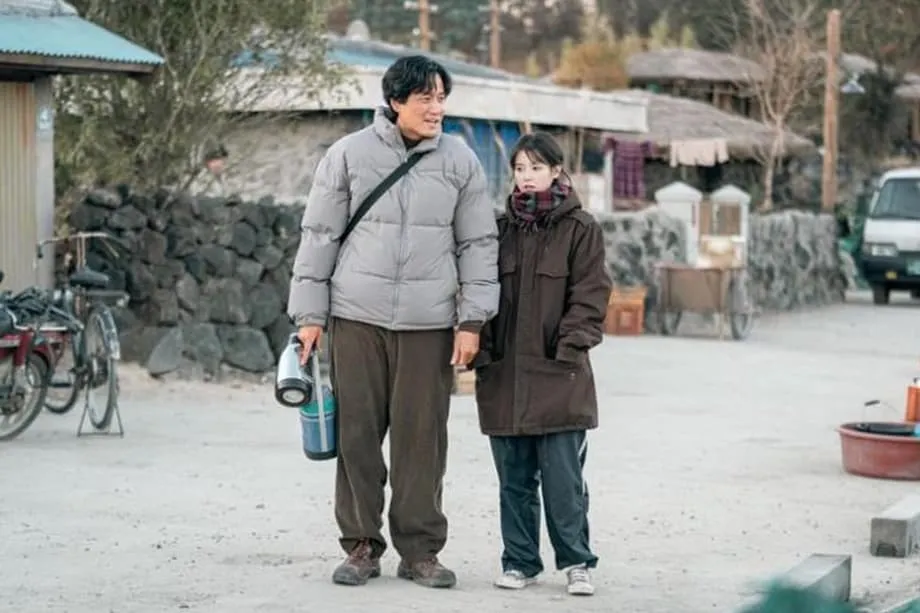
When Life Gives You Tangerines begins in island communities and follows its characters across decades. Large historical developments share space with quiet moments, while school notebooks and radio shows become emotional anchors. Its attention to regional identity gives the story a distinct sense of place.
The series found a large audience and collected major trophies at the Baeksang Arts Awards. Together, these productions show the range within retro drama: neighborhood intimacy, a powerful family's struggles and a sweeping story rooted in island life can all use the past to bring relationships into sharper focus.
New productions revisit work, nightlife and cinema
tvN's Typhoon Family reconstructs the late 1990s around the financial crisis of 1997. Its pressures appear in boardroom arguments and household budgets, connecting changes in the economy with the choices people make at work and at home.
Pagers, city phones, cassette tapes, abacuses and the era's variety shows help establish that world. The drama also includes the Orange Tribe of Gangnam, a symbol of nightlife in the 1990s, and Love Studio, a dating program that shaped popular conversation. These details give the period a social identity as well as a financial one.
A Hundred Memories returns to the early 1980s through two young women working as bus conductors on the iconic 100 line. Long shifts, friendship, first love and changing expectations shape their search for independence and connection. Rebuilt vintage buses bring back a job that has disappeared from today's streets.
Aema explores the film culture of the 1980s in Chungmuro, then the heart of Korean cinema. A leading star and a newcomer face industry rivalries during the making of Madame Aema. Clothing, makeup and sets place their story among rehearsals and marquee premieres, giving viewers a sense of the working world behind the screen.
The settings across these dramas span several distinct periods:
- The 1970s through the 1990s provide the broader backdrop for stories about growth, political struggle and neighborhood life.
- The early 1980s frame the bus conductors' lives in A Hundred Memories, while Aema explores cinema during the 1980s.
- 1988, 1994 and 1997 are the years around which the Reply trilogy builds its neighborhood stories.
- The financial crisis of 1997 shapes the late 1990s setting of Typhoon Family.
Workplaces are central to these stories. A bus route, a film production and a family business each offer a different view of how people earned a living, formed friendships and responded to changes around them.
Streaming carries local memories across borders
Streaming services have helped turn period K dramas into a viewing habit beyond South Korea. Subtitles in dozens of languages open up stories that depend on Korean dialogue and cultural detail, while tighter, more predictable release schedules make shared viewing easier across continents.
A production recreating Seoul in the 1980s can premiere in the Americas, Europe and Southeast Asia on the same day it airs in Korea. That reach gives studios a reason to invest in convincing settings and costumes: the world needs to hold a viewer's attention whether it appears on a large television in Mumbai or Madrid.
Recommendation systems also help audiences discover retro series after watching a comedy or romance. Once viewers arrive, clear story arcs, character development and cliffhangers encourage them to continue. Edits on short video platforms and recommendations in group chats bring more people toward titles that suit their tastes.
The audience extends beyond people in their late teens and twenties. Many viewers are in their thirties or older, and families often watch together. After an episode ends, social feeds carry soundtrack playlists, clothing ideas and food recommendations, keeping the drama part of daily conversation.
Recent industry surveys have pointed to steady growth in exports of Korean scripted content. International sales revenues are measured in the hundreds of millions of dollars, and investment in Korean content is expected to rise through the decade. Streaming services are commissioning more stories spanning multiple decades, while cable networks continue refining the design of period productions.
The appeal travels because the relationships are easy to recognize even when the setting is unfamiliar. Family obligations, friendship and the wish for community give international audiences a way into Korean history through ordinary life. A crowded kitchen or a difficult day at work makes a distant period feel close.
Drama wardrobes meet the vintage market
Period costumes bring straight lines, midrise denim, soft knitwear and classic sneakers into view. Fans adapt those looks to current silhouettes rather than reproducing an entire outfit from an earlier decade. Newtro styling also appears in Hongdae and Euljiro, in music videos, and in stars' choices of understated chains and muted colors.
Costume designer Susanna Song described how a family memory shaped her understanding of retro style. Recalling her mother's clothing, she said:
My mom had this boat neck top with polka dots that always stuck out to me," she said. "She was always so sophisticated and classy.
South Korea's vintage clothing market has long depended on secondhand garments imported from the United States. Hollywood films and the presence of U.S. forces after the Korean War influenced local tastes, while many Korean clothing brands did not gain wide recognition until the early 1980s.
Younger shoppers are now also looking for older domestic labels and archive pieces. Their interest connects personal style with the clothing history of earlier Korean generations. Vintage shop owner Myoung Jung woo described that connection:
"It also helps you bond with your elders," she said.
Family photographs, remembered outfits and older labels give newtro a personal dimension. The attraction is partly about appearance, yet it also creates opportunities for conversations between people who remember these fashions and people encountering them for the first time.
Beauty routines take a gentler turn
Korean skincare and color cosmetics have grown across Asia and beyond, helped by looks and routines seen in popular dramas. In Japan, imports of Korean beauty products more than doubled in 2024 compared with the previous year.
Millions of social posts across Asia discuss K drama, K pop and K beauty trends, most often among people aged 19 to 24. Viewers try actors' lip tints, glowy bases and soft blush tones, then share the results online.
The move from anti aging toward slow aging routines has also gained ground, matching the gentler aesthetics appearing on screen. Alongside vintage clothing, these choices extend the mood of a drama into everyday dressing and grooming, giving fans another way to participate in the culture surrounding a series.
Korean food becomes part of the viewing experience
India's interest in Korean cuisine has grown among Millennials and Gen Z. Delivery data show strong growth from one year to the next in orders of Korean dishes, including ramen, fried chicken and buns. Large metropolitan areas lead in order volume, while emerging cities have recorded some of the fastest increases.
People in their teens and twenties account for a substantial share of those orders. Korean flavors are appearing on menus in restaurants serving quick, casual meals and in drinks such as sodas made with yuzu. Restaurants from Delhi to Bengaluru also offer floor seating and low tables resembling dining arrangements viewers see on screen.
Creators including Pooh in Korea, Indian Unnie and bilingual hosts moving between Hindi and Korean help bring the culture closer to audiences. Reaction videos, food tastings and vlogs about everyday life in Seoul attract millions of views, connecting television interest with food and ordinary routines.
Families in India, Southeast Asia and Latin America watch period dramas together, then look for dishes from the episodes or search for soundtrack playlists. Viewing, cooking, listening and sharing become parts of the same experience. That cycle helps Korean culture continue moving across borders after a series has finished.
The detailed work that rebuilds an era
Art teams searching antique markets and storage basements look for radios, utensils, school uniforms and calendars that belong to a particular year. Production designers study old photographs and speak with people who lived through the period to check details such as bus routes, street sign lettering and office equipment.
Costume teams examine the weight and cut of fabrics so jackets hang as older garments did. Makeup artists reduce contemporary contouring and choose shades suited to the setting. These decisions help a character look like someone living in that period rather than a present day actor surrounded by old furniture.
Lighting and sound contribute to the effect. Warmer color grading suggests incandescent bulbs, while slightly softer lenses and subtle film grain recall older cameras. Street vendors and bicycle bells help sound editors recreate the city of a generation ago.
Writers build meaning into smaller actions, including calls from coin phones and neighbors passing side dishes across fences. The combined work gives viewers a sense of how a day unfolded, from getting to work to sharing a meal. Production design becomes part of the storytelling because the objects and routines shape what characters can do and how they meet.
Warmth without removing the hardship
Period K dramas include pro democracy protests, labor struggles, censorship and the financial crisis of 1997, which disrupted jobs and family businesses. Parents take second shifts, graduates endure long searches for work, and families argue about fairness when money becomes scarce.
These events enter the stories through ordinary lives. Household budgets and workplace decisions show how political and economic changes reach people who have little control over them. The comfort comes from the ways characters support one another while facing those pressures.
For Gen Z viewers, that combination is central to the appeal. The past offers handwritten messages, familiar routines and close neighborhood ties, alongside struggles that can feel recognizable today. Nostalgia becomes a way to explore how people endure change, protect those around them and imagine a better life.
At a Glance
- Young South Koreans are finding comfort in dramas set in the 1970s through the 1990s, especially their depictions of family, friendship and neighborhood support.
- Newtro adapts older music, fashion, interiors and cultural habits for contemporary audiences, including people who never experienced those periods.
- The Reply trilogy, Reborn Rich and When Life Gives You Tangerines connect intimate stories with historical settings. When Life Gives You Tangerines earned major Baeksang Arts Awards honors.
- Typhoon Family revisits the financial crisis of 1997, A Hundred Memories follows bus conductors in the early 1980s, and Aema explores the cinema world of the 1980s.
- Streaming, subtitles and active fandoms help these dramas reach international audiences and viewers across generations.
- Retro styling extends into clothing and beauty, while Korean food orders in India have grown strongly among younger consumers.
- Detailed research, props, costumes, lighting and sound reconstruct everyday life, while stories retain the hardship of protests, censorship, labor struggles and economic disruption.