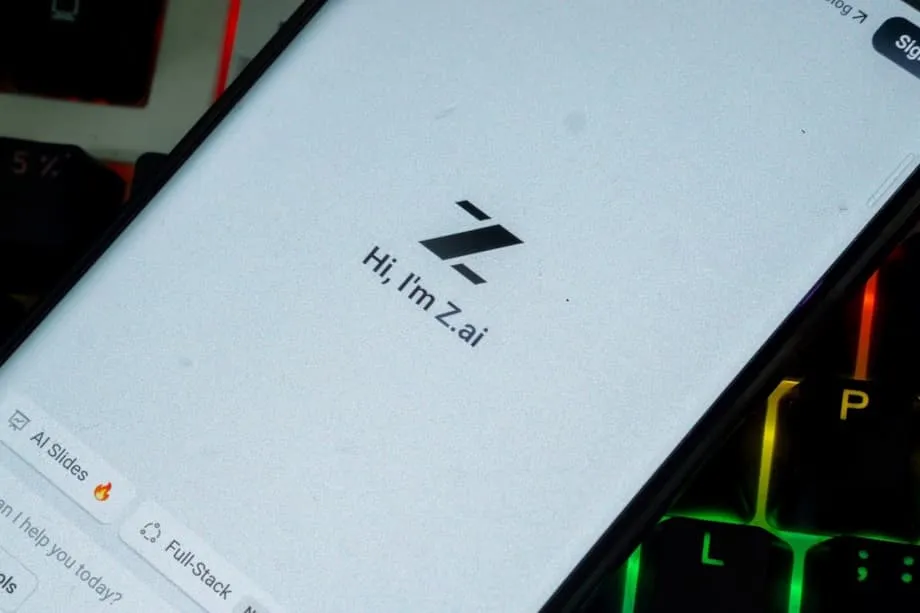
A Free Assistant That Can Carry Out Everyday Tasks
Beijing AI unicorn Z.ai, formerly known as Zhipu, has partnered with Alibaba Cloud to launch a free, general purpose AI agent for smartphones, tablets and desktop computers. Available through Android, iOS and the web, the assistant is designed to handle jobs ranging from ordering takeaway food and booking hotels to producing videos and processing documents.
Contents
- A Free Assistant That Can Carry Out Everyday Tasks
- What Makes an AI Agent Different?
- What Can Users Ask It to Do?
- Alibaba Cloud Supplies the Computing Foundation
- How the Platform Handles Security and Performance
- A Partnership in a Competitive Chinese Market
- How It Fits Alongside Other Digital Assistants
- Why Availability on iOS Matters
- Business Adoption and the Energy Question
- Key Points
As of August 24, 2025, the collaboration brings together Z.ai's artificial intelligence expertise and the computing infrastructure of Alibaba Cloud, the cloud computing arm of Alibaba Group Holding. Their goal is to make digital assistance useful across everyday services and different devices, while competing in China's increasingly crowded AI market.
Z.ai says the agent can act on instructions expressed in ordinary language. Instead of requiring a person to open several apps and complete each step manually, it can break a request into smaller jobs and use available services to carry them out.
The launch combines two developments: more capable AI software and easier access through devices people already own. Making the assistant free lowers the cost of trying it, while availability across mobile operating systems and the web broadens its potential audience.
What Makes an AI Agent Different?
AI agents are programs that can perform tasks for people or other computer systems with a degree of autonomy. A conventional digital assistant may answer a question or follow a simple instruction. An agent can create a plan, divide it into tasks and subtasks, and use apps, online services or device functions to work toward a larger goal.
A request to plan a weekend trip to Shanghai illustrates the idea. The agent could search for hotels, book accommodation, suggest restaurants and produce a personalised itinerary. The user supplies the goal, while the software coordinates the steps needed to reach it.
Natural language processing helps the agent understand instructions written or spoken in everyday language. Machine learning supports its ability to interpret requests and choose actions, while connections to services hosted in the cloud give it access to tools beyond the device itself.
Z.ai's approach aims to reduce the amount of manual work involved in completing a request. Its value rests on moving from conversation to action: an answer about hotels is useful, but finding accommodation and arranging a reservation takes the assistant further into the user's daily routine.
What Can Users Ask It to Do?
Z.ai describes a range of practical and creative functions for the new assistant. Its stated capabilities include:
- Ordering food and arranging takeaway deliveries.
- Booking hotels and making restaurant reservations.
- Generating videos and podcasts.
- Installing apps and processing documents.
- Responding to instructions expressed in natural language.
Food orders and reservations place the agent in the middle of familiar consumer activities. Document processing and app installation extend its role into managing digital work, while video and podcast generation bring content creation into the same assistant.
Android, iOS and web access are intended to give users continuity across devices. Someone using a smartphone, tablet or desktop computer can access the assistant without being confined to a single type of hardware.
The free service also brings several kinds of assistance together. A person seeking a hotel and another preparing a podcast may be asking for very different results, but both requests depend on software that can understand a goal and organise the work needed to deliver it.
Alibaba Cloud Supplies the Computing Foundation
Alibaba Cloud's Model Studio provides the technical backbone for the agent. The platform offers access to generative AI models including Qwen3, Qwen-VL for visual understanding, and the Wan series for video generation. Together, these technologies support work involving text, images, audio and video.
Generative AI creates content in response to instructions. Supporting several kinds of content gives an assistant a wider range of possible jobs than a system limited to text. Visual understanding, for example, concerns interpreting images, while video generation concerns producing moving images.
Qwen3 offers dual thinking modes that balance the depth of reasoning against processing speed. The purpose is to give simple requests a faster response while allowing more involved tasks to receive deeper processing.
Alibaba Cloud's recent release of a Qwen3 agentic AI coding model adds support for deeper inference, faster processing and complex tasks involving several steps. Inference is the process through which an AI model uses what it has learned to produce a response or decide on an action.
Model Studio also supplies tools for developing agents, refining prompts and extending functionality. Prompt engineering means shaping the instructions given to a model so it can better understand the intended task. These development tools allow Z.ai to refine the assistant, add functions and respond to user feedback as the technology advances.
How the Platform Handles Security and Performance
Alibaba Cloud places security and privacy at the centre of its infrastructure. Operations are carried out within isolated virtual private cloud networks, known as VPCs, to reduce the risk of data breaches. A VPC is a separated network environment within a cloud computing service.
Private network access is supported through Alibaba Cloud's PrivateLink technology. The arrangement is designed to protect information during storage and transmission, addressing privacy concerns that arise when an assistant processes personal requests through cloud services.
Model Studio supports both real time and batch inference. Real time processing deals with requests as they arrive, while batch processing handles groups of requests together. The platform also allows developers to configure model parameters and monitor performance.
These controls give developers ways to adjust how models operate and observe how effectively they respond. For an assistant expected to move between reservations, documents and multimedia generation, the underlying platform must support different kinds of workloads while maintaining reliable service.
A Partnership in a Competitive Chinese Market
China's technology giants and AI startups are competing to build more capable agents and secure a share of the growing digital assistant market. The Z.ai and Alibaba Cloud collaboration brings a domestic AI developer together with a major cloud provider at a time when investment in both fields is intensifying.
Z.ai gains access to Alibaba's computing services and distribution channels. Alibaba Cloud expands its AI portfolio and strengthens its position in cloud services for artificial intelligence. The partnership gives each company a way to put its existing strengths into a consumer product.
The AI agent partnership reflects a wider push by Chinese technology companies to invest in AI and cloud computing and remain competitive in the digital economy. Industry assessments describe the collaboration as a way to consolidate market share and accelerate adoption.
AInvest offered this assessment of the partnership's business significance:
This partnership is a significant step in Alibaba's strategy to enhance its AI capabilities and expand its market reach.
International tensions also shape the market. Some AI startups, including Manus AI, have relocated operations in response to geopolitical pressures, while others have concentrated on domestic partnerships. Z.ai's agreement with Alibaba Cloud places its new assistant within that second approach, combining local AI development with established cloud infrastructure.
How It Fits Alongside Other Digital Assistants
Apple's Siri, Google Assistant, Amazon Alexa and Microsoft's Copilot are major participants in the global market for digital assistance. In China, domestic products often take precedence because of regulatory requirements and support for the local language.
Z.ai's agent is designed specifically for Chinese users, with close integration into local platforms and services. Its stated ability to organise complex tasks, manage documents and generate multimedia content extends beyond the reminders, searches and basic commands associated with simpler voice assistants.
Smartphone companies are also introducing narrower AI features. OnePlus recently launched Plus Mind, an assistant that helps users organise information displayed on a screen through a swipe with three fingers. Google's Doppl app uses generative AI to let people virtually try on clothes.
Plus Mind focuses on organising information, while Doppl applies AI to a visual shopping experience. Z.ai's assistant takes a broader approach by combining consumer transactions, device tasks and content creation. Together, these products show how AI is being applied to different parts of everyday smartphone use.
For users, the concrete change is the range of activities an assistant can attempt. A tool that once mainly answered questions may now help organise information, produce media or complete parts of a booking process.
Why Availability on iOS Matters
Z.ai's release across Android and iOS gives the assistant access to users of both major mobile operating systems. Developing for several platforms presents technical and distribution challenges, making availability across phones, tablets and computers a central part of the launch.
Apple's iOS operating system is known for its security and strict app review process. Those requirements can make entry more difficult for new apps, including assistants that connect users with several services.
Apple's App Store policies have faced scrutiny, including disputes involving OpenAI and X, formerly Twitter. Apple maintains that its platform is designed to be "free and fair of bias," and several competing AI apps have achieved success on the App Store.
Z.ai's availability on iOS places another AI assistant within that environment. Alongside Android and web access, it helps the company reach people regardless of which major mobile platform they use and supports its aim of providing assistance across devices.
Business Adoption and the Energy Question
Alibaba Cloud's Model Studio is already used by businesses including AstraZeneca, Shiseido's Drunk Elephant, eSignGlobal and ZKH. Their use of the platform to improve efficiency and support innovation shows that its applications extend beyond consumer assistants.
Z.ai brings that computing foundation into tasks people recognise immediately: ordering a meal, booking a hotel or generating a podcast. The intended benefit is less time spent moving between apps and carrying out individual steps, leaving users more time for other activities.
Energy consumption is another part of the expansion of AI services. A recent Google study found that AI's environmental impact is often overstated and that improvements in efficiency have reduced energy use and the associated carbon footprint substantially.
As agents become more widely used, the energy required to operate them becomes part of the practical debate about their growth. The same cloud infrastructure that supports more complex tasks also makes computing efficiency relevant to how these services develop.
Z.ai and Alibaba Cloud's launch brings together several changes already visible in digital assistance: more autonomy, support for several kinds of media, and access across everyday devices. Its immediate proposition is a free assistant that can take on a wider set of routine and creative jobs for users in China.
Key Points
- Z.ai, formerly Zhipu, has partnered with Alibaba Cloud to launch a free AI agent for Android, iOS and the web.
- The assistant is designed for smartphones, tablets and desktop computers, with functions including food orders, reservations, document processing and media generation.
- Alibaba Cloud's Model Studio supplies AI models and development tools, including Qwen3, Qwen-VL and the Wan series.
- Isolated cloud networks and PrivateLink support the platform's approach to security and privacy.
- The partnership combines Z.ai's AI expertise with Alibaba's computing infrastructure and distribution channels amid strong competition in China.
- The launch reflects a shift from assistants that mainly answer requests toward agents that can plan and carry out tasks.