A Hotel Built Into the Heart of a Cycling Stadium
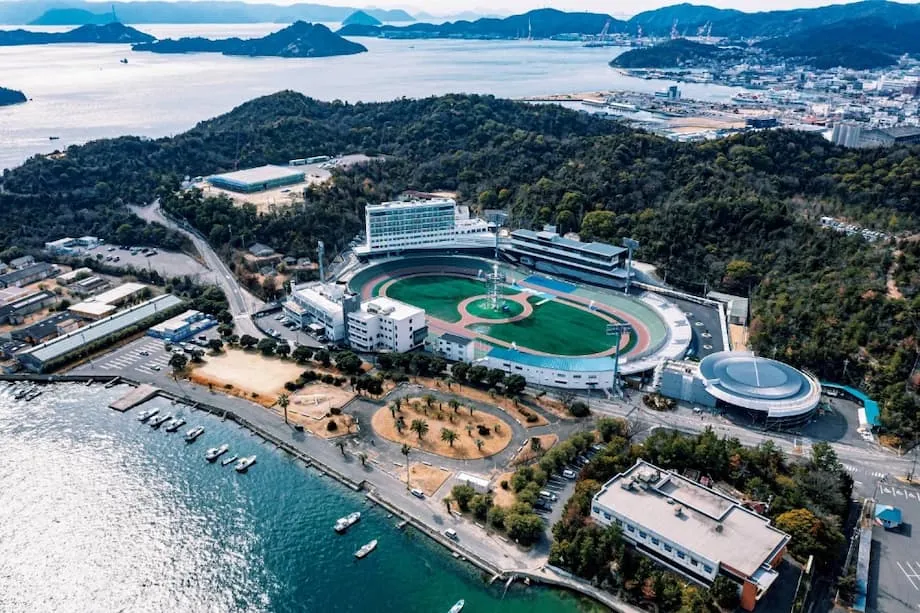
At Keirin Hotel 10 in Tamano, Okayama Prefecture, a room balcony can double as a seat overlooking a live cycling race. Opened in 2022 inside the Tamano Keirin velodrome, the hotel brings accommodation directly into a working sports venue, with views across the banked track toward the Seto Inland Sea.
Contents
- A Hotel Built Into the Heart of a Cycling Stadium
- What Makes Keirin Different?
- Rooms That Keep the Stadium in View
- Watching the Race From a Balcony
- FORQ Brings Local Food to the Trackside
- Baths and Saunas Add Another Reason to Visit
- A Gateway to the Seto Inland Sea
- Connecting a New Hotel With Local History
- At a Glance
Japan's first hotel built directly into a sports stadium puts competitive cycling at the centre of a coastal stay. Most rooms have private balconies overlooking the track, while some rooms repurpose real athlete locker rooms. Guests can watch riders compete, eat food made with local ingredients and use the hotel as a base for visiting nearby islands.
The project comes from Onko Chishin, a hospitality group known for bringing tradition and innovation together. Its approach in Tamano connects the daily business of a hotel with a sport that has deep roots in Japan and more than 70 years of local history.
Cycling enthusiasts are an obvious audience, but the experience also draws curious travelers and local residents. A restaurant open to the public, baths and saunas available to day visitors during selected periods, and access to the wider Setouchi region give the property a role beyond overnight accommodation.
The setting supplies two different rhythms: the sudden acceleration of riders on the track and the slower pace of a seaside town. For visitors, both are part of the same stay, with competitive sport outside the room and the coast and nearby islands within reach.
What Makes Keirin Different?
Keirin, meaning "racing wheels" in Japanese, began in Japan in 1948. It is a form of track cycling in which speed matters alongside strategy and psychology. Riders must judge their position, their rivals and the moment to make their final move.
A pacing motorcycle leads the riders during the opening part of the race. Once the pacer pulls away, the cyclists sprint for the finish. Races can be decided in their final seconds, with riders reaching speeds of up to 70 kilometers per hour on steeply banked tracks.
Keirin is also a major betting sport in Japan. Government regulation governs the wagering, which draws millions in bets each year. The combination of athletic skill, tactical decisions and gambling has helped build a loyal following and a network of dedicated velodromes across the country.
The history behind the Tamano hotel stretches across two key dates:
- 1948: Keirin originated in Japan.
- 2022: Keirin Hotel 10 opened inside the Tamano Keirin velodrome.
For someone encountering the sport for the first time, the hotel's location makes its basic pattern easy to follow: an organised opening behind a pacer, followed by a fast and closely contested finish. The track is part of the view rather than a separate destination requiring a trip from the hotel.
Rooms That Keep the Stadium in View
Keirin Hotel 10 makes the velodrome part of its accommodation. Most rooms have private balconies with direct views of the cycling track, allowing guests to watch races from their own space. The sea beyond adds a wider coastal outlook to the sporting scene.
Some rooms reuse actual athlete locker rooms, bringing visitors into spaces connected with the competitors. Throughout the hotel, cycling motifs reinforce the relationship between the building and the sport taking place beside it.
Materials recycled from the old stadium also appear in the interiors. Their reuse preserves a physical connection to more than 70 years of local history while giving the hotel a modern setting. The result ties the new accommodation to the venue that came before it.
Guest rooms include air conditioning, private bathrooms, refrigerators and free WiFi, with sea or mountain views. These familiar comforts sit alongside the less usual experience of staying within an active cycling stadium.
Guest reviews and travel accounts praise the comfortable accommodation and distinctive atmosphere. Welcoming staff and practical touches contribute to an approach that accommodates families as well as dedicated cycling fans.
Watching the Race From a Balcony
On race days, nine cyclists in brightly colored Lycra line up on the Tamano track, with their rear wheels held in starting blocks. The starting pistol sends them into action around a course with banking of 30 degrees.
The angle of the track, the tightly grouped riders and the final burst of speed give spectators plenty to follow. From the hotel, that action can become part of an ordinary morning or afternoon, watched from a balcony rather than from a conventional stadium seat.
Eiji Kosaka, the hotel's reception manager, described how racing continues even when the weather turns poor:
Nothing short of a major typhoon will make them cancel a race.
The proximity can surprise visitors who are more accustomed to hotels overlooking streets or gardens. A guest sharing the experience on social media described waking to cyclists training outside:
Stayed at a hotel in Japan with its own bike course. Woke up to these guys doing laps.
The appeal comes from being close to the activity. Guests remain spectators, but the sounds, movement and daily routines of the venue become part of their accommodation experience. Live racing depends on race days; no specific racing calendar is given here.
FORQ Brings Local Food to the Trackside
FORQ, the hotel's restaurant, serves both overnight guests and the public. Its menu draws on ingredients from Okayama Prefecture and the Seto Inland Sea, connecting meals to the region surrounding the velodrome.
Dishes include seafood rice bowls and shrimp omelet rice, alongside plates suited to a drink at the bar. Craft beer and Setouchi Lemon Sour are among the drinks that accompany the food.
The restaurant's open air design and windows extending from floor to ceiling provide views of the track and sea. During racing, a meal can include a direct view of the competition. At other times, the coastal setting remains part of the experience.
Breakfast includes American, buffet and Asian options, with fresh pastries, fruit and local specialties. The range gives guests different ways to begin a day that might involve watching cycling, exploring Tamano or heading toward the islands.
FORQ also brings local residents into the hotel. Because the restaurant is open to the public, the venue functions as a place to eat and gather as well as somewhere to stay, creating a shared setting for visitors and people who live nearby.
Baths and Saunas Add Another Reason to Visit
Keirin Hotel 10 has a large public bath and dry sauna facilities, adding relaxation to a stay organised around sport and sightseeing. The facilities are available to hotel guests and open to day visitors during selected periods.
Towels and mineral water are among the amenities provided, with towel rentals also noted among the practical touches for sauna users. These details allow visitors to combine time in the baths with a meal at FORQ.
The hotel's sauna experience reflects a broader interest in sauna culture in Japan, where wellness and socialising can go together. At Tamano, that interest sits alongside the energy of the track rather than replacing it.
For a guest returning from a day of exploration, or a local visitor coming for the baths and restaurant, the hotel offers a quieter counterpart to the racing. Access for day visitors is limited to selected periods, so the public facilities are not presented as continuously available.
A Gateway to the Seto Inland Sea
Tamano's location gives Keirin Hotel 10 a second identity beyond the velodrome. The town is a gateway to the Seto Inland Sea, a region known for scenic coastal views, maritime culture and islands associated with contemporary art.
Uno Port is a short walk from the hotel and provides ferry access to Naoshima and Teshima. Both islands attract visitors for contemporary art museums, outdoor installations and the quieter pace of island life.
The hotel therefore serves as a base for trips that combine several interests. A stay can bring together time at the track, meals overlooking the water and visits to art destinations reached by ferry.
Keirin Hotel 10 also offers cycling and cruising activities. Guests are encouraged to explore the surrounding region by bicycle, taking advantage of gentle terrain and picturesque views.
Coastal rides and visits to nearby shrines and temples provide ways to experience Setouchi beyond the sporting venue. These outings give travelers access to the area's natural setting and slower pace while keeping Tamano as their base.
Connecting a New Hotel With Local History
Keirin Hotel 10 brings hospitality, sport and local culture into one working site. Its reuse of stadium materials preserves parts of Tamano's sporting past, while the new accommodation gives travelers another reason to visit the city.
The relationship with the community is visible in the public restaurant and the periods when day visitors can use the baths and saunas. Local residents can spend time at the property without booking a room, while guests encounter a venue used by people beyond the traveling public.
Cycling fans from Japan and abroad are drawn by the opportunity to stay beside the track. Other visitors come for the coastal location, food, relaxation and access to the islands. These different uses broaden the hotel's place in Tamano's tourism activity.
The project presents a model for regional revitalisation built around an existing sporting site. Recycled materials support the preservation of local heritage and the reuse of resources, while the hotel's daily activities give the historic venue new functions.
Its most distinctive quality remains straightforward: the sport is still there. The hotel does not separate visitors from the velodrome's purpose. Rooms, dining and relaxation are arranged around a place where competitive cycling continues, connecting a new hospitality business with Tamano's established sporting culture.
At a Glance
- Keirin Hotel 10 opened in 2022 inside the Tamano Keirin velodrome in Okayama Prefecture, becoming Japan's first hotel built directly into a sports stadium.
- Most rooms have private balconies overlooking the track, and some repurpose athlete locker rooms.
- Keirin began in Japan in 1948 and combines tactical racing, speeds of up to 70 kilometers per hour and government regulated betting.
- FORQ serves local food to guests and the public, with views of the cycling track and Seto Inland Sea.
- Public baths and dry saunas welcome day visitors during selected periods.
- Nearby Uno Port provides ferry access to Naoshima and Teshima, while cycling and cruising activities offer other ways to explore Setouchi.
- Reused stadium materials and spaces connect the hotel with more than 70 years of local sporting history.