A national network with remote communities in its sights
The World Bank has approved a $287.24 million loan for the Philippine Digital Infrastructure Project (PDIP), which aims to improve internet connectivity for more than 20 million Filipinos. The investment will support a national fiber optic network, extend connections into underserved regions and bring internet access to public institutions, schools and hospitals, with particular attention to Eastern Mindanao.
Contents
- A national network with remote communities in its sights
- How the backbone will connect the country
- Where the network reaches schools and hospitals
- What internet access costs two residents
- How the Philippines compares with its neighbors
- Why the rules and market structure matter
- The dates behind the connectivity challenge
- Protecting connections from disasters and cyberattacks
- Digital skills and the wider development goals
- What the World Bank says the investment can change
- Key Points
The Department of Information and Communications Technology (DICT) and the National Economic and Development Authority (NEDA) are behind the flagship initiative. Its goal is a broadband network that reaches remote communities while remaining secure and able to withstand severe weather and other climate threats.
The need is substantial. World Bank data show that only 33% of Philippine households had fixed broadband access in 2022, while just 70% of the population had an active mobile broadband subscription. Both measures were below the averages for the Association of Southeast Asian Nations (ASEAN).
For families, those gaps mean more than slow downloads. Internet access can determine whether a child can use online learning materials, a patient can reach health services, or a household can obtain government support. Businesses and farmers also need reliable connections to participate in the digital economy.
The project combines three layers of infrastructure: a national backbone carrying large volumes of data, regional connections extending from that backbone, and local connections reaching the people and institutions that use the internet. Making all three work together is central to reaching communities where service is currently unavailable, unreliable or too expensive.
As of July 4, 2025, the loan approval sets out the funding and ambition for that expansion. No completion date is given.
How the backbone will connect the country
The national fiber optic backbone will serve as the main data highway between Philippine regions. Fiber optic cables carry information as pulses of light, allowing large amounts of data to move through a network.
PDIP will complete the remaining backbone segments linking two principal international landing stations: Baler in Luzon and Davao City in Mindanao. These stations are connection points between international communications links and the domestic network. The backbone will carry that connectivity across the country.
The next layer, often called the middle mile, will extend connections from the backbone into underserved areas. The regions identified are Western Visayas, Central Visayas, Eastern Visayas, Zamboanga Peninsula, Northern Mindanao, Davao Region, Soccsksargen and Caraga.
Underground fiber optic cables form part of this regional expansion. Placing cables below ground is intended to improve their ability to withstand climate and weather disruptions, helping maintain the connections that communities depend on.
Where the network reaches schools and hospitals
The final layer, known as the last mile, brings connectivity from the wider network to users. PDIP will focus on areas that currently lack coverage, including public institutions, schools and hospitals, especially in Eastern Mindanao.
Free Wi-Fi access points will be established at these facilities. For someone without a home internet connection, a connected public institution can provide a place to access education, healthcare, social protection and government services.
The infrastructure is also intended to pave the way for commercial operators to offer internet services to households. Public access points and household subscriptions serve different needs: one provides connectivity at a shared location, while the other brings a service into the home.
The World Bank expects the investments to benefit more than 20 million people, particularly those in rural and disadvantaged communities. Better connections would also give businesses and farmers more opportunities to use digital services in their work.
What internet access costs two residents
Elena, a resident of a remote barangay in Sorsogon, spends more than $1 a day to access the internet at a computer shop. A barangay is a local community or village. Her experience illustrates how people without a connection at home must pay to use shared facilities.
In Butuan City, Alek pays $32 a month for a fiber connection offering 50 megabits per second (Mbps). Mbps measures how much data a connection can transfer each second. His service is more than many households can afford and remains more expensive than internet access in neighboring countries.
The two experiences show different parts of the same problem. A remote resident may pay more for slower access than someone in a city center, while a household with a fiber service may still face a substantial monthly bill.
Across the Philippines, the divide runs between urban and rural communities and between richer and poorer households. Slow, expensive and unreliable internet limits access to education, employment opportunities, digital financial services and basic government support.
The COVID-19 pandemic made those consequences more visible as schools, businesses and public services moved online. Families without dependable access faced an extra barrier to activities that increasingly required an internet connection.
How the Philippines compares with its neighbors
World Bank and NEDA studies show that the Philippines trails Singapore, Malaysia, Thailand and Brunei in adopting digital technology. The country is one of Southeast Asia's most populous nations, yet its digital infrastructure has struggled to provide broad, affordable access.
The average mobile broadband speed cited for the Philippines is 16.76 Mbps, compared with a global average of 32.01 Mbps. Using those figures, the Philippine speed is about 52% of the global average, or a little over half.
Fixed broadband costs present another obstacle. Annual charges amount to 11% of gross national income per person, twice the ASEAN average. Gross national income per person is a measure of national income divided by the population; it provides a common yardstick for comparing prices across countries.
That measure helps explain why a service can be available yet remain difficult to afford. The 33% household access figure for fixed broadband in 2022 and the 70% figure for active mobile broadband subscriptions describe different forms of connectivity, both of which fall below regional averages.
The country's digital lag is a barrier to its ambition of becoming an upper middle income nation and achieving growth that reaches people across income groups and regions.
Why the rules and market structure matter
The Philippines' regulatory framework includes the 1931 Radio Control Law and the 1995 Public Telecommunications Act. These laws have not kept pace with technological advances, making entry difficult for new providers and expansion difficult for existing ones.
Two companies control 91% of mobile subscribers. That concentration leaves most subscribers served by just two businesses, limiting competition in a market where infrastructure investment and consumer prices are already concerns.
Limited competition has contributed to insufficient investment and higher prices. The World Bank's Affordability Driver Index (ADI) places the Philippines among the slowest countries in promoting reforms for affordable broadband.
The policy changes recommended by experts and international organizations address several parts of the market:
- Remove the congressional franchise requirement for broadband network deployment to reduce barriers to entry and investment.
- Create fairer conditions for different market participants, encouraging competition and innovation.
- Allow more efficient and flexible use of radio frequency spectrum, including regional licensing and spectrum auctions.
- Promote infrastructure sharing, including placing equipment from different providers on the same telecommunications towers, to reduce costs and accelerate deployment.
Radio frequency spectrum is the range of airwaves used to carry wireless signals. Licensing determines which operators can use particular frequencies. Regional licenses and auctions are proposed ways to organize access to that resource.
Some reforms are already in the legislative pipeline, although progress has been slow. The World Bank's loan and technical support are expected to help accelerate changes that would make the market more attractive to private investors and benefit consumers.
The dates behind the connectivity challenge
The project sits alongside regulations written decades ago, a recent measure of household access and a longer development framework. The main dates show how those different pieces fit together:
- 1931: The Radio Control Law established part of the regulatory framework that still shapes the sector.
- 1995: The Public Telecommunications Act added another central part of that framework.
- 2022: World Bank data put fixed broadband access at 33% of households and active mobile broadband subscriptions at 70% of the population.
- July 4, 2025: The World Bank's $287.24 million loan approval is the basis of this account of PDIP.
- 2026–31: The World Bank's Country Partnership Framework sets out broader goals for jobs, connectivity and private investment.
The government's task involves both physical construction and policy changes. Completing cables and public access points addresses the network's reach, while reforming market rules addresses the conditions under which providers invest and compete.
Protecting connections from disasters and cyberattacks
The Philippines is vulnerable to typhoons, floods and earthquakes that can damage infrastructure and cut communities off from communications. PDIP incorporates climate data into network design and includes measures intended to keep services functioning through severe conditions.
The plans include materials designed to withstand climate hazards, underground conduit systems and engineering solutions for extreme weather. A conduit is a protective passage for cables. These measures are meant to reduce the risk that damaged infrastructure leaves a community disconnected.
Cybersecurity forms another part of the project. Planned protections include intrusion detection and prevention systems, advanced firewalls, authentication using multiple checks and comprehensive encryption protocols.
Intrusion detection systems identify suspicious activity, while prevention systems and firewalls help block unwanted access. Authentication using multiple checks asks users to provide more than one form of confirmation. Encryption protects information by making it unreadable to anyone without the appropriate means to decode it.
Regular updates will address Wi-Fi vulnerabilities. The project also includes special provisions to protect the network against natural disasters and cyberthreats, reflecting the need for connections that are both dependable and secure.
Digital skills and the wider development goals
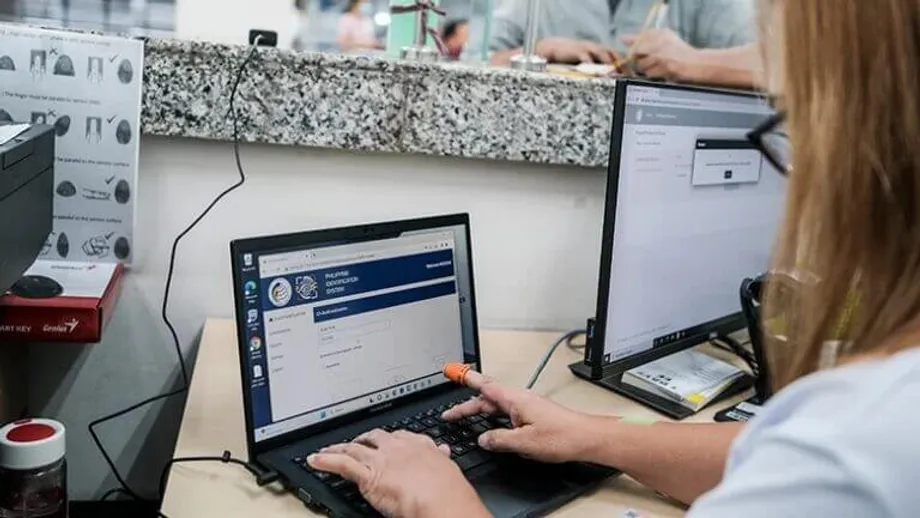
The World Bank and the Philippine government are also investing in digital skills training, digital identification systems and interoperable data platforms. Interoperable platforms can exchange and use information across systems, helping services work together.
These efforts aim to ensure that participation in the digital economy extends beyond cities and higher income households. Access to a connection, the ability to use it and access to useful digital services all affect what people can gain from the investment.
The World Bank's Country Partnership Framework for 2026–31 identifies digital transformation as a key pillar for private sector job growth, greater productivity in businesses and farms, financial inclusion, stronger health systems, education and resilient communities.
The framework aims to generate 4 million new jobs, expand internet access to 19 million Filipinos and support critical private sector projects through a $2 billion fund. The framework's connectivity goal is 19 million people, while PDIP's stated expected reach is more than 20 million; the figures belong to the broader framework and the infrastructure project respectively.
Affordability and digital literacy remain practical concerns for the government. Inclusion also requires attention to marginalized groups, including women, older people and people with disabilities, so that new services can be used by those who need them.
What the World Bank says the investment can change
Manuela Ferro, the World Bank's vice president for East Asia and Pacific, described broadband infrastructure as central to the Philippines' economic ambitions.
A robust broadband connectivity infrastructure is not just a technological necessity; it's an essential cornerstone for the Philippines to boost growth and attain its goal of becoming an upper middle-income country in the next couple of years.
Zafer Mustafaoğlu, the World Bank's country director for the Philippines, Malaysia and Brunei Darussalam, pointed to the expected gains for people in remote communities, particularly in Mindanao.
Improved internet access will help all Filipinos, especially those in remote areas of Mindanao, gain better education, healthcare, social protection, and government services. This project fosters a brighter future for lagging regions by connecting everyone and ensuring that the poorest and most vulnerable Filipinos can benefit from the power of technology.
The digital divide is deeply entrenched, and lasting change will require sustained political commitment, regulatory reform and continued investment. For households, the practical gains will depend on reliable service, affordable access and the skills needed to use online tools.
International experience points to partnerships between government and businesses, universal service funds and new business models as ways to extend connectivity to places that are difficult to reach. Universal service funds support wider access to communications services. The World Bank's global digital strategy likewise stresses partnerships, policy reform and the use of both public and private capital to achieve universal, affordable and safe internet access.
Key Points
- The World Bank has approved a $287.24 million loan for PDIP, with expected benefits for more than 20 million Filipinos.
- The project will complete backbone segments linking Baler and Davao City, extend regional networks and connect public institutions, schools and hospitals.
- Eastern Mindanao is a focus for local connections and free Wi-Fi at public facilities.
- In 2022, 33% of households had fixed broadband access, while 70% of the population had an active mobile broadband subscription.
- Two companies control 91% of mobile subscribers, and proposed reforms target entry barriers, spectrum use and infrastructure sharing.
- Network plans include protection against extreme weather, natural disasters and cyberattacks.
- The Country Partnership Framework for 2026–31 aims for 4 million new jobs, internet access for 19 million Filipinos and a $2 billion fund supporting critical private sector projects.
- Affordable service, digital skills, inclusion and continued investment will shape the benefits communities receive.