Gi-hun Faces the Cost of a Failed Rebellion
Only 60 contestants remain after the failed uprising, Seong Gi-hun is shattered by the loss of his closest ally, and a newborn baby becomes part of the deadly competition. Squid Game reaches its third and final season with a conclusion that pushes its central question to an extreme: what happens to human compassion when survival comes at someone else's expense?
Contents
- Gi-hun Faces the Cost of a Failed Rebellion
- Childhood Games Become Tests of Conscience
- A Newborn Pushes the Story to Its Limit
- Lee Jung-jae Anchors the Emotional Collapse
- The VIPs Make the Message Harder to Ignore
- Side Stories Struggle to Match the Arena
- Family Bonds Deepen the Horror
- A Finale Divides Viewers Over Closure
- A Global Legacy With an Uneven Farewell
- Key Points
As of June 28, 2025, the final season of Netflix's most watched series has brought both praise and frustration. Its performances, emotional force and elaborate production have impressed critics, while its wealthy spectators, extended side stories and relentless bleakness have divided opinion. The ending offers closure for the original story while leaving room for the fictional world to continue.
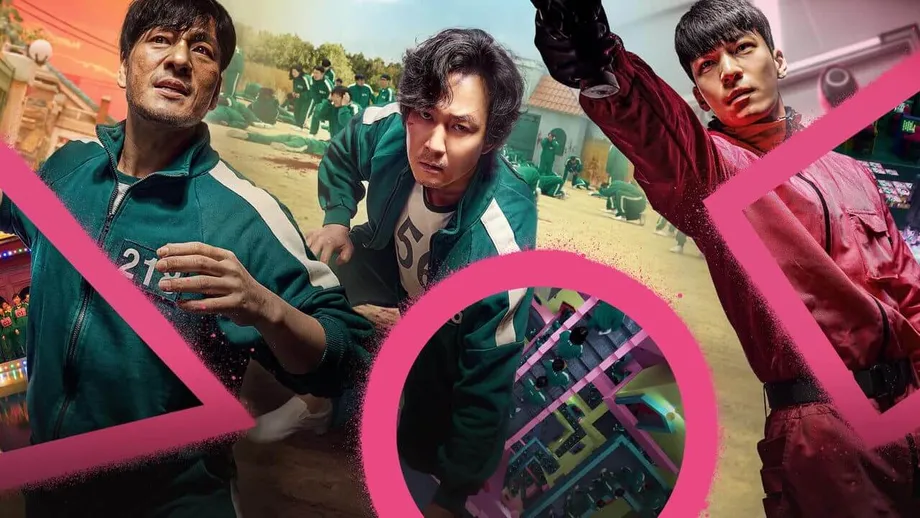
Season 3 arrives just six months after the second season and resumes almost immediately after its disastrous rebellion. Gi-hun, played by Lee Jung-jae, must confront the failure of his attempt to destroy the games from within. Most of the players who joined the revolt have been slaughtered, yet the competition continues and the prize pool keeps growing.
The Front Man, played by Lee Byung-hun, returns to his position behind the mask. A former champion and Gi-hun's adversary, he again oversees a system that turns people desperate for money into entertainment. Gi-hun's grief and the Front Man's control establish the season's central conflict: a wounded contestant still struggling against an organisation built to outlast resistance.
The story's progression has been unusually compressed since its return:
- 2021: Squid Game debuts and becomes a global phenomenon.
- Season 2: Gi-hun attempts to challenge the games from inside, ending with a failed rebellion.
- Six months later: Season 3 continues the aftermath and brings the original series to its conclusion.
Childhood Games Become Tests of Conscience
Jump Rope and Hide and Seek turn familiar childhood activities into new threats. One creates a terrifying challenge at height; the other sends contestants through a maze. Returning games also connect the final season to the earlier competitions, preserving the contrast between innocent play and organised killing.
Production designer Chae Kyoung-sun again transforms playground imagery into arenas of terror. The sets remain visually striking, and the direction and production create some of the season's most tense sequences. Their bright, recognisable forms make the violence especially disturbing because viewers can understand the childhood activity beneath each deadly variation.
The games increasingly test moral judgment alongside physical ability. Contestants must decide whom to protect, whom to trust and how much harm they will accept to stay alive. The spectacle provides the setting, but the strongest drama often comes from people struggling with choices that have no painless answer.
Some criticism centres on a sense that the challenges have become additions to an increasingly sprawling story. Assessments of the season's games and ending question whether their invention still carries the surprise of the first season. The shift toward psychological conflict gives the characters more emotional weight, while also making the games themselves feel less fresh.
A Newborn Pushes the Story to Its Limit
The baby born to Jun-hee, played by Jo Yu-ri, and Myung-gi, played by Im Si-wan, becomes one of the final season's most disturbing developments. The VIPs make the newborn a contestant, placing a child who cannot understand the competition inside its machinery of danger and reward.
Jun-hee's baby becomes a pawn in the spectators' entertainment. The decision pushes the show's dystopian logic, its picture of a society organised around cruelty and unequal power, to an extreme. Innocence offers no protection when the people making the rules value amusement above human life.
The baby's involvement brings the series' concerns about exploitation into their simplest form. Wealthy people can decide the fate of someone utterly dependent on others, while contestants already facing death must carry another moral responsibility. The horror comes from helplessness as much as violence.
Myung-gi's position makes that conflict personal. His instinct for self preservation clashes with the responsibilities of fatherhood. The season uses his uncertainty and desperation to show how the games intrude into relationships that would ordinarily depend on care, trust and protection.
Lee Jung-jae Anchors the Emotional Collapse
Lee Jung-jae portrays Gi-hun as a man almost unable to speak through grief and rage. His struggle is no longer simply against armed guards or the next challenge. He must also fight the despair left by his failed revolt and the death of someone close to him.
Lee reportedly lost 10 kilograms for the role, giving Gi-hun's emotional deterioration a physical counterpart. His performance has drawn some of the season's strongest praise, with critics describing it as among the finest work of his career. A particularly enthusiastic assessment of Lee's performance describes his portrayal in these terms:
one of the greatest television performances of all time.
Im Si-wan is another standout as Myung-gi, whose involvement in cryptocurrency and morally uncertain decisions form part of his character. Haunted expressions and desperate actions give weight to a man pulled between saving himself and accepting responsibility for his child.
Park Sung-hoon as Hyun-ju, a transgender sniper, Kang Ae-shim as the maternal Geum-ja, and Jo Yu-ri as the resilient Jun-hee contribute much of the supporting cast's emotional force. Their characters give the competition stakes beyond the prize money: affection, loyalty and the possibility of protecting another person.
The Front Man receives less development. Despite his history as a champion and his importance as Gi-hun's opponent, he spends much of the season observing rather than directly participating. His limited role leaves considerable interest in his past and has encouraged speculation about a possible story centred on him.
The VIPs Make the Message Harder to Ignore
The VIPs, the extremely wealthy spectators who gamble on contestants' lives, have an expanded presence in Season 3. Their money gives them distance from the suffering they watch. For them, the players' terror is part of a leisure activity.
Their scenes are also among the most disputed. Stilted English dialogue and exaggerated villainy can interrupt the show's otherwise convincing atmosphere. A review of Season 3 questions commentary that often repeats what the action already makes apparent, leaving the VIPs with little depth beyond their cruelty.
The decision to include the newborn in the games gives their role a concrete consequence. They can turn even a baby's vulnerability into entertainment because they control the rules and face none of the danger themselves.
Squid Game's satire, its use of exaggeration to expose social cruelty, becomes blunter here. The wealthy treat people in poverty as objects for amusement, while the contestants bear every physical and emotional cost. The message remains forceful, even when its delivery sacrifices subtlety.
Side Stories Struggle to Match the Arena
Kang No-eul, played by Park Gyu-young, follows a separate path through the violence. A guard in a pink uniform, she is trying to rescue a contestant. Her position offers a perspective from inside the organisation rather than from the players' sleeping quarters or the spectators' seats.
Detective Hwang Jun-ho, played by Wi Ha-joon, continues searching for the island. His investigation runs alongside the competition, keeping alive the possibility of intervention from outside while Gi-hun and the remaining players face the immediate consequences within.
Both stories attempt to show more of the world surrounding the games. Criticism of these parallel rescue stories centres on their limited development and their effect on pacing. Time spent away from the arena can feel less urgent when the main characters are making decisions that determine who lives.
The uneven expansion creates a tension in the final season's structure. Squid Game wants to explain more of its organisation and the efforts to challenge it, yet its strongest material remains the psychological pressure on contestants. The side plots sometimes interrupt that pressure without adding a comparably powerful story of their own.
Family Bonds Deepen the Horror
Geum-ja and her son Yong-sik are placed on opposing teams, creating one of the season's most traumatic storylines. Their relationship makes the rules especially cruel: a competition designed around survival forces family loyalty into conflict with the demand to keep playing.
Several deaths carry an emotional impact comparable to, or greater than, the marble game in Season 1. The final season repeatedly builds affection for people whose good intentions offer little protection. Compassion can shape a choice without controlling its outcome.
The characters' suffering gives the series' criticism of capitalism a human scale. Here, that criticism concerns a competition in which desperate people chase money while those with wealth hold power over them. The contestants face each other as rivals even when cooperation or care might be their strongest human response.
Discussion of the show's moral conflicts and ending focuses on this tension between kindness and a structure that rewards betrayal. The season asks whether people are naturally good or whether their behaviour is shaped by conditions that force them to compete for survival.
The result is emotionally punishing. Even the most virtuous players face impossible choices, and survival carries a cost that prize money cannot erase. The drama places grief, guilt and responsibility beside the more immediate fear of death.
A Finale Divides Viewers Over Closure
The final episodes combine spectacle with a major development involving Gi-hun and the newborn. Without revealing their precise fates, the conclusion makes their relationship central to the season's emotional resolution and to its argument about protecting another person in a brutal system.
A surprise Hollywood cameo also opens the possibility of stories beyond the original setting. The appearance gives the ending a sense that the games' world may continue after this particular story closes. No confirmed details or release dates for new scripted stories are given.
Some reactions collected in a first reviews roundup praise the finale's ability to recover the heartbreak and suspense that made the first season so powerful. Another final season assessment offers an especially enthusiastic description:
staggeringly excellent
Other responses find the conclusion less persuasive. Criticism of the season's bleakness and repetition argues that repeated suffering has weakened the impact and left too many questions unresolved. Nihilism, the sense that hope or moral effort has little value, becomes exhausting for viewers who find the story offers too little beyond despair.
The final moments linger on what the games leave behind. Victory cannot simply mean collecting the money when those who survive carry lasting trauma. For some viewers, that makes the ending honest and moving; for others, it makes the conclusion feel punishing rather than satisfying.
A Global Legacy With an Uneven Farewell
Season 3 has received a mixed but generally positive critical response. Many regard it as a return to form after a divisive second season, praising its performances, emotional intensity, direction and set design. Others see an inventive social thriller becoming a more conventional action thriller, with less of the sharpness and surprise that defined its debut.
The disagreement is rooted in the same creative choices. Stronger emotional pressure can feel devastating or repetitive. More time with the VIPs can make the class argument direct or overly obvious. A larger fictional world can suggest possibilities while drawing attention away from the people whose lives give the series its force.
The show's criticism of capitalism remains central to its appeal. Its willingness to stay with bleakness and ambiguity separates it from dramas that provide a reassuring victory. Desperation is presented as something that damages relationships and narrows choices, rather than simply creating an exciting contest.
Squid Game's influence already extends beyond its episodes. Since its 2021 debut, it has inspired Halloween costumes, reality television spinoffs and renewed global interest in South Korean entertainment. Its combination of genre suspense, social criticism and intimate character stories has made it one of the streaming era's most influential and discussed series.
Rumours of further spinoffs and international adaptations surround the ending, while the Front Man's past remains a subject of interest. The original story nevertheless reaches its conclusion here: an ambitious, visually striking farewell whose strongest performances and most painful choices coexist with uneven side plots and a disputed final turn.
Key Points
- Season 3 concludes Squid Game, arriving six months after Season 2 and continuing immediately after the failed rebellion.
- Gi-hun faces renewed games with 60 contestants remaining, while a newborn becomes part of the competition.
- Lee Jung-jae and Im Si-wan lead a cast widely praised for the season's emotional force.
- Jump Rope, Hide and Seek and returning challenges combine physical danger with moral choices.
- The VIPs, uneven side stories and repeated bleakness are major points of criticism.
- The finale resolves the original story while a Hollywood cameo suggests possibilities for further stories.
- The series leaves a global cultural legacy alongside a divided response to its farewell.