A machine checked the proof; people still have to understand it
Fields Medal winner Shing-Tung Yau says he is "not worried at all" that artificial intelligence will replace mathematicians. His confidence comes as a major claim about the 167-year-old Riemann hypothesis puts that view to a test: Anthropic mathematician Levent Alpöge says he used Claude to develop a proof, then formalized it in roughly 17 million lines of code.
Contents
- A machine checked the proof; people still have to understand it
- What did Alpöge say the proof establishes?
- What did the computer checks establish?
- How does a proof connect to prime numbers?
- Will a proof change internet encryption?
- Why is Yau optimistic about AI?
- How might researchers change the way they work?
- What does the moment mean for China's researchers?
- Why does education matter?
- What happens next?
- Key Points
The claim arrived on November 20, 2026. The following day, the Lean FRO and Mathlib Initiative said the formal proof had passed their checks. Lean is software that lets mathematicians express a proof as code, so a computer can check each logical step against stated definitions and rules. That check is powerful evidence that the formalized argument follows correctly. It is different from a readable explanation of why the result is true.
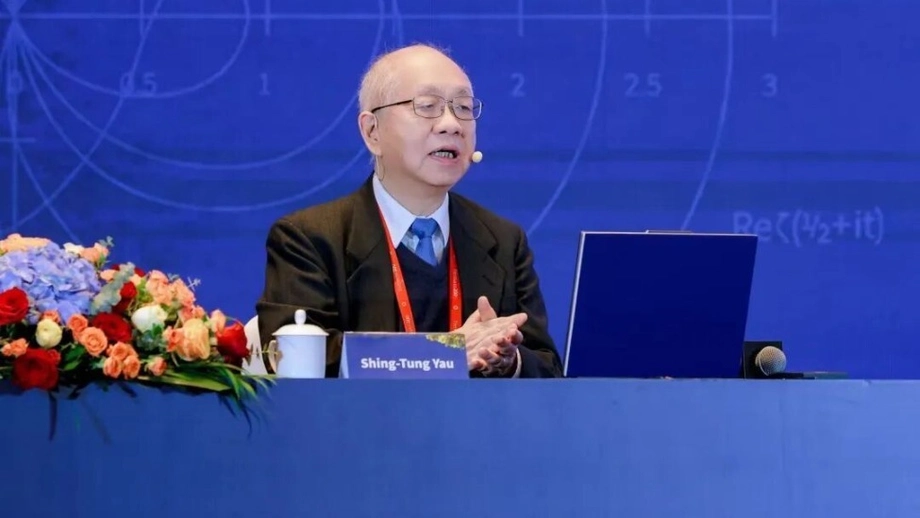
Yau, director of the Hetao Institute of Mathematics and Interdisciplinary Sciences in Shenzhen, welcomed the result in an interview with Xinhua. "If AI can help us find mathematical truth, I will absolutely use it," he said. The central question, in his view, is not whether a person or a machine gets the credit. It is whether researchers can use the result to ask deeper questions.
The episode also sharpens a practical challenge for mathematics: a proof can be checked by machines before people can follow its ideas. Alpöge released a four page explanation alongside the code. He later said that a claim that a prose version ran to more than 250,000 pages was a joke. The full mathematical route remains difficult for researchers to absorb.
What did Alpöge say the proof establishes?
Alpöge's announcement covers the classical Riemann hypothesis and a broader version for Dirichlet L functions, known as the generalized Riemann hypothesis. The classical conjecture, proposed by Bernhard Riemann in 1859, concerns the locations of special zeros of the zeta function. Its claim about those zeros gives mathematicians a precise way to describe how regularly prime numbers are distributed.
Prime numbers are numbers greater than one that can be divided evenly only by themselves and one. They appear irregularly along the number line. The Riemann hypothesis, if true, would place a tight limit on how far actual prime counts can stray from the best expected estimates. That connection makes the problem central to number theory, the branch of mathematics that studies integers and their properties.
The announced result does not cover every related conjecture. The formal proof claims the classical hypothesis and the generalized version for Dirichlet L functions, not the extended or grand Riemann hypotheses. Those are further variants.
The scale of the formalization is striking. It was developed from October 6 to November 16, according to the account of the proof's development, and released in Lean. Alpöge described Claude helping carry ideas from simpler "toy" cases into the harder argument across tens of scenarios. He also acknowledged that the code contains redundant steps and unnecessary lemmas, making it difficult to read.
What did the computer checks establish?
The Lean FRO and Mathlib Initiative announced on November 21 that they had confidence in the correctness of Alpöge's formal proof. Their process included checking that the theorem uses an established definition of the Riemann hypothesis, that the code compiles, that it does not quietly redefine the hypothesis, and that the resulting proof passes checking software, including formally verified third party tools. The Lean verification account describes the formal proof and its scope.
These checks address whether the submitted code proves the stated mathematical claim within Lean's rules. They do not immediately show mathematicians how the proof's key ideas fit together or which parts may lead to new discoveries. A computer can check a long chain of steps without turning that chain into a short, intuitive explanation for a person.
Yau has described machine verification as highly accurate while saying that full human confirmation requires mathematicians to digest and use the relevant results over time. He expects researchers could understand the proof within five years. Oxford mathematician James Maynard has also expressed strong confidence in its correctness, while stressing that understanding why a theorem works matters as much as knowing that it does.
That distinction matters because an understandable proof can give researchers tools they can reuse. A result that is verified but not yet explained may settle a question while leaving its broader lessons unclear. Mathematicians are now working through the code and its strategy to see which techniques can be made clearer or applied elsewhere.
How does a proof connect to prime numbers?
The proof's reported strategy draws on modern number theory and arithmetic geometry, fields that study number patterns using tools from algebra and geometry. One described ingredient is related to a method developed by Sergei Stepanov for counting points on curves over finite fields. Alpöge's argument adapts ideas of that kind to the setting of the integers, using theta lifts and Arakelov theory.
Those terms refer to advanced tools for moving information between mathematical objects and measuring how their properties relate. In broad terms, the proof uses a chain of such transfers to obtain bounds connected to the distribution of primes. The final argument is linked to a familiar equivalent form of the hypothesis: a strong estimate for the error in counting prime powers.
The technical route helps explain why a compact account is hard to produce. The code contains a large body of mathematics, and researchers must identify which steps carry the main insight rather than simply confirm that every step is allowed. That work may take years even after formal checking is complete.
Will a proof change internet encryption?
The result is not expected to break RSA, the encryption system used in many digital settings. RSA relies on the difficulty of factoring a very large number into its prime factors. The Riemann hypothesis concerns the distribution of primes, which is related to some ways of testing whether a number is prime, but it does not provide a method for factoring the large numbers used as encryption keys.
A proof of the generalized hypothesis would make one deterministic primality test, proposed by computer scientist Gary Miller, work with certainty under its assumptions. In practice, randomized tests such as Miller-Rabin are already fast and reliable for finding primes, and researchers expect them to remain in common use. The mathematical result may have consequences in other areas of number theory, but it does not hand attackers a shortcut through RSA.
For ordinary users, the immediate story is therefore about how mathematical knowledge is produced and checked, not a sudden change to online security. The consequences for research are still being explored as mathematicians work out what the proof's methods can do beyond establishing the conjecture.
Why is Yau optimistic about AI?
Yau argues that powerful tools can extend what researchers are able to do. He compares AI with instruments that changed other sciences: microscopes let biologists examine structures too small to see unaided, while telescopes let astronomers study distant objects. In the same way, he says, AI can help researchers test ideas, handle calculations and search for patterns.
He encourages young mathematicians to use AI even when they do not immediately understand how it has reached a result. They can study the answer afterward, he says, and use that process to ask a more difficult question. The aim is not simply to get a machine to complete assigned exercises. It is to turn a new result into a starting point for further work.
Yau also sees a difference between solving a question and deciding which question is worth asking. He says machines currently do better at solving problems than at identifying the important ones. Human curiosity, judgement and imagination still guide the choice of directions, while AI can help people move more quickly once a direction has been found.
He has rejected the idea that mathematics faces a crisis because some tasks can be done by machines. "Mathematics has no crisis; mathematics will only get better," he said in a separate interview. In his view, mathematicians who build careers around solving problems set by others may feel more pressure than those who create new questions and methods.
How might researchers change the way they work?
Mathematical research has traditionally moved through a proof step by step, with the argument considered complete when its chain of reasoning is established. AI may speed up a different sequence: find a result first, then work out how to understand and explain it. Yau says researchers should welcome that possibility when it helps them reach mathematical truth.
He argues that scientific knowledge has always grown through exchanges across fields and generations. A mathematician can draw on ideas from physics or engineering, then use them to build new mathematics. AI could make it easier to combine insights from different researchers and different branches of science.
Another Fields Medalist, Shing-Tung Yau, has warned in other discussions that AI can handle patterns and calculations but that people must judge the validity of research before publication. This caution sits alongside his support for using the technology: adopting a tool does not remove the need for careful mathematical work.
Researchers have also raised questions about access. Powerful AI systems are often controlled by a small number of companies. Yau has argued that research tools should be more openly available so scientists are not limited by decisions made by a few private organisations. Access to computing power, he says, will affect which researchers can take part in the next stage of AI assisted mathematics.
What does the moment mean for China's researchers?
Yau describes the current period as a "golden age" for China, but says the opportunity is brief because AI research is advancing so quickly. He argues that artificial intelligence matters to business, industrial development and basic research, and that China should invest rather than wait for the technology to mature elsewhere.
He has said that building competitive AI models for research could require investment on the scale of tens of billions of yuan, along with advanced computers and strong research teams. His point is that mathematical talent alone may not be enough if researchers lack the computing resources needed to test ideas at the frontier.
Yau compares the chance to move quickly with China's earlier scientific efforts, including the work that led to its first atomic bomb test in 1964. The comparison is about national focus and investment in basic research. He says AI's unusually rapid pace means decisions that once could wait years may now need to be made much sooner.
For young researchers, Yau says, a technological shift can create openings as well as pressure. He wants Chinese mathematicians to build original theories and eventually lead international research, rather than only follow work begun elsewhere. In his assessment, better access to AI and strong education are both needed to turn that hope into results.
Why does education matter?
Yau says talent is built through education, especially by protecting students' curiosity and helping them understand what they love. He argues that learning a subject deeply is more valuable than repeatedly practising problems without grasping the ideas behind them. Original research depends on the ability to ask new questions, not just to complete familiar exercises quickly.
He also wants AI education to start before university. High school students, he says, can begin learning how to use these tools. Early exposure could help them understand both what AI can do and where a human researcher still needs to guide, check and explain its work.
Yau welcomed the reported Fields Medal awards to Chinese mathematicians Wang Hong and Deng Yu as a starting point, not an endpoint. He hopes more researchers trained in China will develop original work and help set the direction of mathematics internationally.
What happens next?
The timeline shows how quickly the claim moved from development to machine checking, while the human work of understanding it remains open:
October 6 to November 16, 2026: Alpöge and Claude worked on the proof and its formalization.
November 20: Alpöge announced the proof claim as a Riemann centenary conference opened in Shenzhen.
November 21: Lean FRO and the Mathlib Initiative announced that the formal proof had passed their checks.
After the announcement: Researchers began examining the proof's ideas and considering how to explain or simplify them.
No date has been set for a complete human readable account. Yau's estimate is that mathematicians may understand the proof within five years. The immediate work is to study its structure, explain its techniques and see whether other proofs can make the same result easier to understand.
Key Points
Yau says AI will help mathematicians, not replace the human role in asking important questions.
Anthropic mathematician Levent Alpöge announced a Lean formal proof of the Riemann hypothesis and its generalized version for Dirichlet L functions.
Lean FRO and Mathlib said the formal proof passed their checks on November 21, 2026.
Mathematicians still need to understand the proof's ideas and explain how its methods may be used elsewhere.
The result is not expected to break RSA encryption.
Yau says China needs investment in AI, computing and education to seize the opportunity for its researchers.