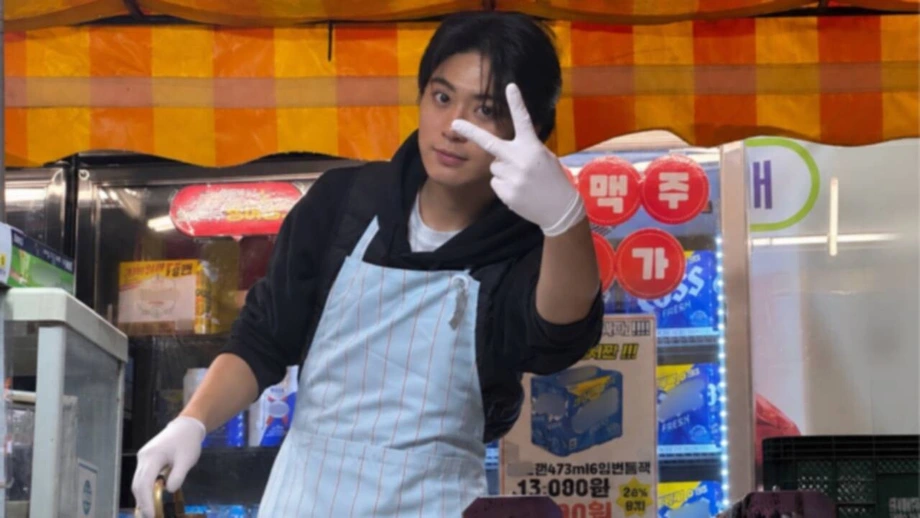
Lines Form Outside A Stall With No Sign
At 9 p.m. on November 23, 2026, SBS aired episode 1056 of Master of Living, and the story drawing the most attention was a stall selling pastries shaped like fish with no proper sign. The stall sits in front of a convenience store in Cheolsan-dong, Gwangmyeong, Gyeonggi Province. Customers wait about two hours for bungeoppang, a Korean street snack made by pouring batter into a mold shaped like a fish and filling it with sweet red bean paste. One line shown online had people waiting for more than an hour, even before the television cameras arrived.
Contents
- Lines Form Outside A Stall With No Sign
- The Student Behind The Cart
- How A Young Vendor Learned The Craft
- Why He Chose Work He Could See
- A Working Day Ends After Midnight
- How The Stall Went Viral
- Gold Buying Master Finds Value In Discarded Things
- A Namdaemun Dumpling Kept Without Advertising
- Games Starting At 100 Won And An Arcade Owner Aged 82
- What The Four Masters Show Together
- Key Points
The vendor is Lee Jae-jin, whom the episode identifies as a vendor aged 25. One preview rendered the same name as Lee Jae-jun. His looks echo actor and singer Cha Eun-woo, so people call him Bungeounu, a combination of bungeoppang and Eun-woo that means Cha Eun-woo who sells pastries shaped like fish. The stall has drawn attention since videos began spreading on social media in October, but the queue lasts because the pastry has a crisp, nutty outside and red bean paste running from the head to the tail.
The Student Behind The Cart
Lee's background gave the segment its surprise. He is a student in a theater and film department, and he told the program he is 25 and studied theater and film at Dongguk University. He had taken leave from university before starting the stall, choosing work that could bring money and experience quickly while he waited for chances in acting.
His father, a lawyer, wanted him to follow a more stable path. His mother worried about a street business that meant long hours in heat and cold. Lee, the vendor aged 25, recalled what his mother said when he chose the stall over a conventional career.
Why are you doing something this hard when you have a perfectly good major?
Lee said he understood the concern. He did not reject work in acting forever. He wanted to prove that he could build something with his own hands, and he has kept the stall going for two years.
How A Young Vendor Learned The Craft
Lee did not begin as a skilled baker. The program said he went to a shop near Hyochang Park in Yongsan-gu, Seoul, known as one of Seoul's top three bungeoppang places. The owner had 30 years of experience and ran a bungeoppang truck in the area. Lee asked the owner to teach him the method, went back several times and built enough trust that the owner shared the technique.
That training shows in the stall's product. The batter is cooked until the outside is crisp and nutty, while the inside stays moist. Lee fills the mold generously so the red bean paste reaches both the head and tail, giving buyers filling in nearly every bite. After the viral rush, he closed for a day on November 18 and resumed on November 19 with pastries filled with red bean paste and custard cream.
Why He Chose Work He Could See
Lee, the vendor and theater and film student, said he wanted a challenge that did not depend on waiting for a casting call. He explained that the stall gave him a task he could repeat, measure and improve each day.
I wanted to challenge myself while waiting for an opportunity.
Lee, the vendor who left university studies for the stall, also explained the risk he saw in acting and the reason he took leave before selling bungeoppang.
If I acted and it didn't work out, the risk would be big. I thought it would be better to try things that could produce results right away, so I started selling bungeoppang after taking leave.
Lee has also sold tofu in a large supermarket in a loud voice, a job he sees as useful training for speaking in front of people. Lee, the stall owner, spoke about the value of physical work.
Experience is the most important thing. I am curious how much more valuable this will feel when I do something else later.
A Working Day Ends After Midnight
The stall runs from 4 p.m. to closing time at 10 p.m., but Lee's work does not end there. He said he gets home around 1 a.m. and finishes washing at about 2 a.m. His back hurts most, and he has thought about wearing a support belt because the cart is low for a tall person and he has to bend his neck for hours.
Lee, the vendor, described the end of a workday as hard but rewarding.
Even if I go in now, it is 1 a.m., and after washing it is 2 a.m. My back hurts the most. I am thinking about wearing a support belt. I am tall, and the cart is a bit low, so I have to keep bending my neck.
A customer interviewed in the segment described hearing that Lee avoids drinking water during work because a bathroom break would leave the line unattended.
When I talked to him, I found out he does not drink water while he is working here. He said he holds back even when he wants a drink because he would have to go to the bathroom. I was so surprised. It made me feel sorry for him. So I told him, 'Don't do that, drink some water and go to the bathroom.'
Lee, the vendor, answered that he felt the same way about stepping away while customers waited.
With so many customers lined up, it feels impolite for me to say I am going to the bathroom and leave my spot for a while, so I feel sorry and do not drink much water.
He said the stall gives him pride because he earns money and finishes the day with a clear result. Lee also said he used to spend more freely, but selling pastries taught him how hard it is to earn money.
How The Stall Went Viral
Lee's rise happened in stages, from social media attention to television interest. The line is now part of the story, because customers have posted about waiting more than an hour and about the basic two hour wait at the stall.
- Since October: Photos and videos of Lee baking spread across social media, and comments focused on his resemblance to Cha Eun-woo.
- November 18: The stall closed for a day.
- November 19: Lee returned to work with red bean and custard cream fillings.
- November 23: Episode 1056 of Master of Living aired at 9 p.m., placing Lee beside three other everyday masters.
Online attention also brought a possible television opening beyond the food segment. After talk spread that Lee might join a trot audition program, he said in a social media comment that he had received an offer and joked that baking pastries left him no time to sing. Trot is a Korean popular music style. No program name, appearance date or firm decision was given, and the episode did not say when Lee will stop selling pastries.
Gold Buying Master Finds Value In Discarded Things
The same episode turned to Yoon Gwi-seon, a gold buying expert on Jongno Jewelry and Luxury Items Street in Seoul. Known as Ring O Unnie, she works in an area central to jewelry trade, where customers line up before opening in what is called an open run, meaning they arrive early to secure a place. Her skill is finding hidden pure gold in items others might treat as scrap, including broken appliances, old mobile phone batteries, air conditioners and refrigerators.
Yoon can tell whether a piece is 24K gold or merely plated. A 24K item is essentially pure gold, while plated metal has only a thin layer on the surface. The objects that reach her counter carry practical and family stories: a silver spoon brought to help pay for chemotherapy, a bracelet passed down from a mother-in-law and a bright necklace bought from a merchant in Dubai. The segment presents her work as a mix of sharp judgment and careful attention to what customers are entrusting to her.
A Namdaemun Dumpling Kept Without Advertising
Namdaemun Market has its own master, the dim sum matriarch at Hwangsang Restaurant. For more than 50 years, the restaurant has made authentic Bonghwanggyo without blog advertisements or trial visitor campaigns. Customers still find the restaurant in a market alley and order the dumpling that has become its signature.
Bonghwanggyo is labor intensive. The cook fills a red dumpling wrapper with pork and uses asparagus and crab stick to form the eyes of a phoenix. The shape is delicate, and the filling has to stay balanced so the dumpling looks right and tastes right. The matriarch has continued making it for more than half a century because it carries the taste she wants to protect, even though few places still take the time to prepare it.
Games Starting At 100 Won And An Arcade Owner Aged 82
Lee Jong-nam, 82, has run an arcade in Gangdong-gu, Seoul, for 30 years. Games start at 100 Korean won, a small amount that gives the arcade an identity rooted in earlier decades. New retro arcades have become popular, but this one has kept the look of an older neighborhood game room, with machines that recall the days when children stacked coins beside a video game and waited for a turn.
Lee keeps the place alive through repair and teaching. He fixes machines that stop working, makes dalgona, a caramel candy, and shows students how to play games. His customers include adults remembering their childhood and children seeing the machines for the first time, so the arcade works as a place where two generations meet over the same buttons and coins.
What The Four Masters Show Together
Episode 1056 linked four different kinds of work. Lee Jae-jin is two years into a viral bungeoppang business. Yoon Gwi-seon uses trained eyes to find value in objects that look worthless. The Namdaemun dim sum matriarch has guarded one difficult recipe for more than 50 years. Lee Jong-nam has kept an arcade running for 30 years by fixing machines and passing game tips to students.
What connects them is daily practice in front of customers. The broadcast followed the earlier Namdaemun Scarf Uncle story by finding people whose ordinary work has become a public attraction. Lee's case has changed most quickly: his stall now has long lines, a television segment and a possible entertainment offer. He said he plans to continue for the time being because the work gives him experience and a sense of achievement. Master of Living airs every Monday at 9 p.m. on SBS.
Key Points
- SBS aired Master of Living episode 1056 at 9 p.m. on November 23, 2026.
- Lee Jae-jin, 25, sells bungeoppang in Cheolsan-dong, Gwangmyeong, and is known as Bungeounu because of his resemblance to Cha Eun-woo.
- The stall has no proper sign, yet customers wait about two hours, and one line had people waiting more than an hour.
- Lee studied theater and film at Dongguk University, took leave, and chose the stall despite his lawyer father's objections and his mother's worries.
- The episode also featured Yoon Gwi-seon in Jongno, a Namdaemun dim sum matriarch and arcade owner Lee Jong-nam, 82, in Gangdong-gu.