Four messages put a technology partnership in the spotlight
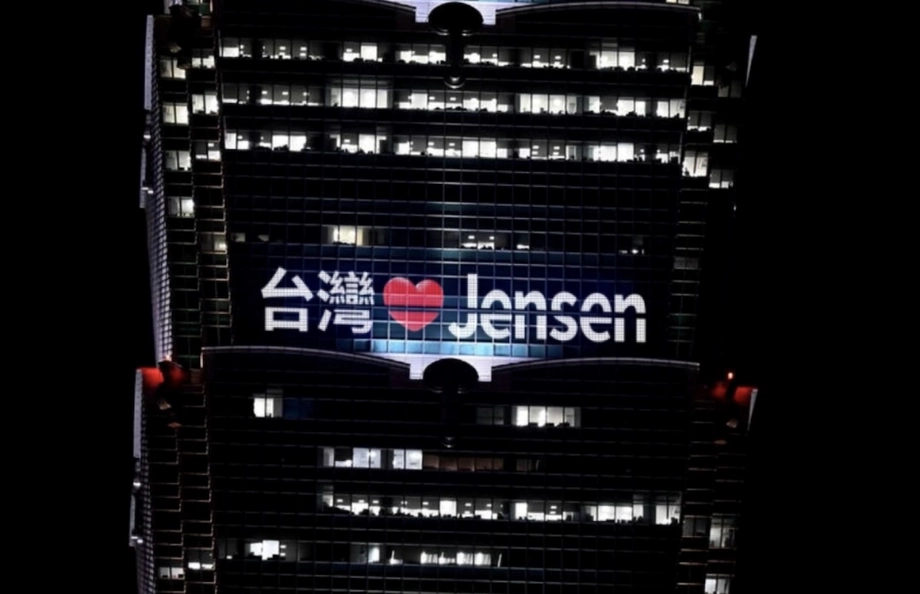
Taiwan technology industry representatives reportedly arranged a Taipei 101 lighting display for 6 p.m. on November 16, 2026, with four messages expressing support for Nvidia founder Jensen Huang. The display brought together references to artificial intelligence, shared prosperity, family and friendship on one of Taiwan's most recognisable buildings.
Contents
- Four messages put a technology partnership in the spotlight
- Who organised the display?
- A pledge of NT$1 million, but no published bill
- What the four messages were meant to say
- How the initiative developed
- Why Taiwan's suppliers feature so prominently
- Business ties have become personal relationships
- Key Points
The messages included "Thrive Together," Huang's first name alongside a heart symbol, and Chinese wording about Taiwan building an AI future together. Descriptions of the display said white lettering and a pink heart appeared on the building while its spire glowed red.
The circumstances require caution: the event and accompanying claims about Huang leaving Nvidia's leadership have not been independently verified, and no official Nvidia announcement or corporate filing confirming a leadership change is available for this article. Serious allegations about his private life and security matters are therefore omitted.
The initiative was described as a privately funded expression of support from people in Taiwan's technology associations. Participants reportedly worked with Taipei 101 chairwoman Janet Chia to arrange the messages, drawing on relationships built through years of cooperation between Nvidia and Taiwanese manufacturers.
The central theme was personal loyalty. Instead of advertising a new chip or celebrating a sales milestone, the organisers chose words about belonging and growing together. Their approach connects Huang's public popularity in Taiwan with the practical relationships behind the computers and equipment used to develop artificial intelligence.
Who organised the display?
Participants were described as including members or directors associated with the Taipei Computer Association, electronics and components industry groups, and the Taiwan chapter of the Monte Jade Science and Technology Association. People working in information technology, computers and electronic components reportedly contributed funding.
The descriptions identify association members and industry figures rather than a published list of sponsoring companies. TSMC, Hon Hai, Quanta and Wistron appear in accounts of Huang's wider business relationships with Taiwan, while the lighting initiative is attributed to participating industry representatives.
Organisers reportedly completed the immediate arrangements within 24 hours, contacting Chia to secure the building's exterior display. That rapid coordination followed an earlier suggestion on Threads that supporters use Taipei 101 to send Huang a public message.
The distinction between those two stages helps explain how the project developed: a social media proposal attracted interest, then people with industry contacts and access to funding arranged the display. The public idea and the final commercial booking were different parts of the same effort.
A pledge of NT$1 million, but no published bill
Cheng Yu-hao, director of a clinic in New Taipei City's Xinzhuang district, reportedly offered to contribute NT$1 million in his personal capacity if someone would organise the project and coordinate with Taipei 101. His offer gave the online proposal a specific potential source of financial support.
The final cost, the amount collected and whether Cheng's proposed contribution was paid were not disclosed. His pledge and the eventual bill are therefore separate figures: one was an offer of support, while the other would depend on the booking agreed with the building.
Taipei 101 described its exterior lighting as an established commercial service charged by the day. Businesses approach the building to discuss a booking, and the wording is agreed between the customer and the operator. Detailed application arrangements and prices were not made public.
The event was reportedly planned for two consecutive evenings. Starting on November 16, that schedule would extend to November 17. With daily billing, a second evening would require another day of the service, although no rate was disclosed.
What the four messages were meant to say
The most detailed descriptions give the first message as "Taiwan AI: Creating the Future Together," translated from Chinese. The initial description used a shorter version about Taiwan creating the future together, without the explicit reference to AI. Both versions connect support for Huang with continued cooperation.
"Thrive Together" carried that idea in English. The remaining messages paired Taiwan with Jensen, and family with friendship, using heart symbols. The wording moved from an industrial ambition to a personal expression of affection.
The four messages were reported as "台灣AI共創未來", "Thrive Together", "台灣♡Jensen" and "家人♡友誼".
The choice of language matters because the organisers were addressing two audiences. Huang was the named recipient, while the building made the message visible to residents, visitors and people viewing photographs online. English and Chinese wording allowed the same display to speak to local and international audiences.
The reported purpose also went beyond a general thank you. Some participants wanted to encourage Huang to return to Nvidia's leadership. No timetable for a corporate decision or response from Nvidia's board was given. The concrete action described was the purchase of display space and the selection of supportive messages.
How the initiative developed
The accounts place the lighting campaign within several days of discussion about Huang's future. They also connect it with earlier visits during which his relationships with Taiwan's technology industry became familiar to a wider public.
- November 4, 2022: Huang attended the WirForce gaming event in Taipei and interacted with performers afterward, an encounter that later circulated online.
- 2023: His COMPUTEX visit and appearances at Taipei night markets drew attention beyond the technology industry.
- 2024: At National Taiwan University, he presented a supply chain map featuring Taiwanese companies and thanked Taiwan.
- The week before November 16, 2026: A proposal to arrange supportive lighting reportedly appeared on Threads.
- November 16, 2026, at 6 p.m.: The Taipei 101 display reportedly began, following a concentrated period of coordination.
- November 17, 2026: A second evening was included in the reported plan.
Chia reportedly previewed the lighting on Facebook before the scheduled start. Later descriptions placed the messages above Taipei's Xinyi district, where people gathered to photograph the building. Those accounts describe a project that had progressed from an online suggestion to a public display.
Why Taiwan's suppliers feature so prominently
Nvidia's relationship with Taiwan reaches across several stages of computer production. TSMC manufactures advanced chips, while companies including Hon Hai, Quanta and Wistron build servers and related equipment. Electronic components suppliers provide other parts needed to assemble complete systems.
An AI chip is one part of that chain. To become useful in a data centre, it must be incorporated into machines with memory, networking, power and cooling. Cooperation between chip designers, manufacturers and equipment builders turns a design into computing capacity that customers can use.
Huang's visits to Taiwan have brought those relationships into public view. His meetings with suppliers, appearances at industry events and public recognition of Taiwanese engineers connect a familiar individual with work that often happens inside factories and business negotiations.
Pegatron chairman T.H. Tung expressed the industry's appreciation in comments crediting Huang with helping AI bring business and international attention to Taiwan. A translation of his statement captures the strength of that sentiment:
Taiwan owes Jensen Huang a big medal!
Tung also linked the AI industry's growth with Taiwan's export performance over the preceding three years. No export figures accompanied those remarks, so a numerical estimate of Huang's contribution cannot be calculated from them.
Business ties have become personal relationships
Huang's popularity also rests on repeated contact outside formal meetings. His visits to night markets, willingness to pose for photographs and interactions with local businesses have made him recognisable to people who do not follow semiconductor manufacturing.
Hair stylist Wang Yung-tai, who reportedly cut Huang's hair for nearly a decade, described him as an old friend. His account of drinking a bottle of red wine after hearing claims of Huang's departure illustrates the personal attachment some people feel toward a regular customer who became a global technology figure.
Technology writer Chen Liang-jung described another kind of relationship building: Huang visiting Taiwan to seek more manufacturing capacity, eating hotpot with TSMC executives and signing whisky bottles for employees. The commercial objective was more production, pursued through sustained personal contact.
Capacity means how much a factory can produce within a given period. When production schedules are full, supplying more chips involves decisions about equipment, staffing and which orders receive space. Regular communication between customers and suppliers is part of managing those demands.
The Taipei 101 messages translated these long business relationships into a simple public gesture. For participants, the language of family and friendship expressed gratitude for years of cooperation. For the companies involved in manufacturing, the practical relationship continues to centre on designing, producing and delivering equipment.
Key Points
- Taipei 101 reportedly displayed four messages supporting Jensen Huang from 6 p.m. on November 16, 2026.
- Technology industry representatives arranged and funded the initiative in coordination with chairwoman Janet Chia.
- A clinic director offered NT$1 million, but the final cost and contributions were not disclosed.
- The display was reportedly planned for two evenings, with Taipei 101 charging for commercial lighting by the day.
- The messages highlighted AI cooperation, shared prosperity, family and friendship.
- The event and claims of a Nvidia leadership change lack independent verification here.