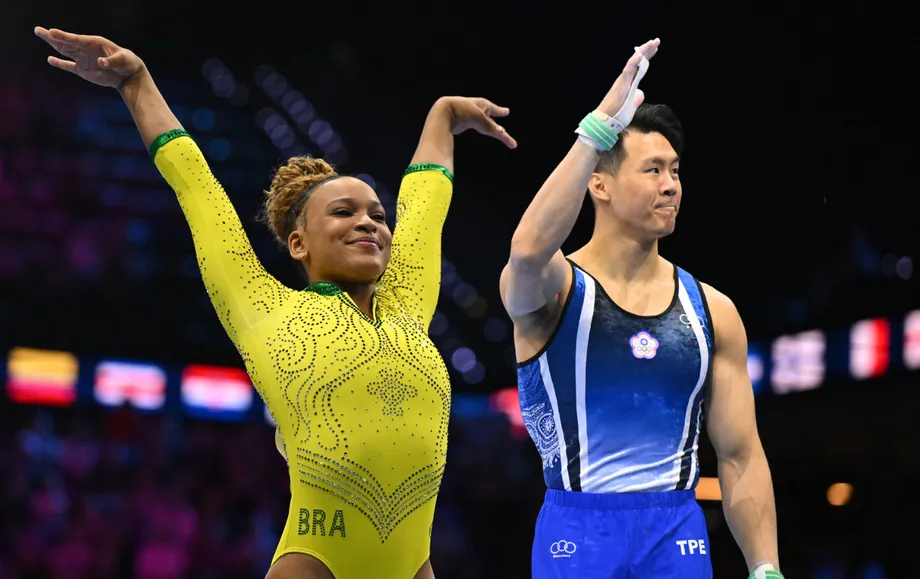
A 14.966 Routine Makes History in Rotterdam
Tang Chia-hung won Taiwan's first gold medal at the World Artistic Gymnastics Championships with a score of 14.966 in the men's horizontal bar final in Rotterdam, the Netherlands. His routine combined the highest difficulty score among the eight finalists, 6.600, with an execution score of 8.366, enough to win despite two hops forward on landing.
Contents
- A 14.966 Routine Makes History in Rotterdam
- How the Winning Score Came Together
- A Familiar Routine, With One Costly Finish
- Turning an Asian Games Fall Into a New Approach
- Why the All-Around Helped Him Stay Calm
- A Short Recovery Between Two Major Competitions
- The Support Tang Called an Invisible Coach
- From a First Gold to a Target Above 16
- Key Points
The victory at the 54th championships brought a rapid turnaround for Tang, who had fallen from the bar and finished fifth at the Aichi-Nagoya Asian Games about a month earlier. Between the two competitions, he worked with coach Huang Po-jui and a psychologist to develop a more manageable approach to pressure: treat the final like practice and keep the occasion from becoming overwhelming.
Taiwan had previously won two silver medals and one bronze at the championships. Tang's gold added a new achievement to that history, following Chang Feng-chih's vault silver in 1993 and Lee Chih-kai's pommel horse bronze in 2018 and silver in 2019.
For Tang, the result also carried a personal reward after weeks of travel, training and competition. He became emotional during the medal ceremony as the delegation's flag was raised and its anthem played. His next stated goals are to pursue qualification for the 2028 Los Angeles Olympics and eventually push his horizontal bar score beyond 16 points.
How the Winning Score Came Together
Tang qualified for the final in second place with 14.566 points. That routine earned 6.000 for difficulty and 8.566 for execution. In the final, he increased his difficulty by 0.600 points, while his execution score fell by 0.200. The result was a net improvement of 0.400 points.
Gymnastics scoring rewards both the challenge of a routine and how cleanly the gymnast performs it. The difficulty score reflects the skills and combinations completed. The execution score reflects their quality, with deductions for errors such as imperfect body positions or movement on landing. Tang's two final scores added up to his winning 14.966.
The numbers explain how Tang could win without a perfectly still landing. His harder routine gave him more scoring potential, and he performed well enough to retain much of that advantage. Huang said the work on the bar was almost perfect, although the dismount cost him points.
A Familiar Routine, With One Costly Finish
Huang said Tang used the same routine in Rotterdam that he had attempted in the Asian Games final. The gymnast already knew it well and continued practising it after qualifying for the world final. The team maintained its normal training schedule instead of making special changes.
Tang's main error came as he left the bar. According to Huang, he pushed away too early, sending his flight forward and forcing him to hop twice after landing. That explanation identifies a precise part of the routine to improve: the timing of the release into the dismount.
Huang also described his own nerves and difficulty sleeping before the final. Strong competitors and the scale of the championships made the result uncertain until the routines were finished. His message to Tang was to stay calm and complete the skills he had prepared.
Tang was still thinking about the dismount while waiting for the final standings. The announcement of gold shifted his attention from the mistake to the achievement, which he said helped make up, a little, for his Asian Games disappointment.
Turning an Asian Games Fall Into a New Approach
Tang had entered the Aichi-Nagoya Asian Games with expectations of a horizontal bar gold medal. His fall in the final left him fifth, outside the medals, and prompted him to question how well he handled the pressure of major competitions.
Tang, Taiwan's new horizontal bar world champion, described that concern after the Asian Games:
I seem to have a problem coping with pressure at major competitions.
Conversations with Huang and a psychologist followed. Together, they reviewed his experience and worked out a standard operating procedure, or SOP, for managing his mindset. Here, the term means a repeatable mental approach he can return to before competing.
Tang explained how he applied that approach in Rotterdam:
I just told myself to treat the final as practice, not to make too much of a ritual of it, and to go out feeling relaxed and at ease. That made it easier to control my mindset and gave me more composure to go out and try.
The change focused on how Tang experienced the competition. He still attempted a demanding routine, but tried to make the moment feel familiar rather than exceptional. After winning, he said the approach appeared effective and gave him more confidence about pursuing Olympic qualification at the following world championships.
Why the All-Around Helped Him Stay Calm
Tang also drew on his participation in the all-around competition at the championships. In men's artistic gymnastics, the all-around brings together performances across six apparatus. Horizontal bar is one part of that larger contest.
For a specialist entering an apparatus final, a single routine can feel like the entire purpose of a competition. Tang deliberately placed his horizontal bar performance within the broader experience of competing across several events.
Tang described the instruction he gave himself before the final:
I also told myself to treat it as one event in the all-around and not to think about too many extra things.
His two mental cues worked together: make the final feel like practice, and make horizontal bar feel like one familiar task among several. Both directed his attention toward performing the routine he knew.
A Short Recovery Between Two Major Competitions
Taiwan's gymnasts spent less than a week at home after the Asian Games before leaving for the Netherlands on October 2, 2026. They trained at a local club for a week before moving to Rotterdam for the championships. By the time of the victory, the trip had lasted more than three weeks.
Tang said the continuous preparation and pressure left him physically and mentally tired. His first week of training in the Netherlands did not feel good, even as he was trying to recover his confidence after the Asian Games fall.
The main steps in his turnaround were:
- At the Aichi-Nagoya Asian Games, Tang fell in the horizontal bar final and finished fifth.
- After returning to Taiwan for less than a week, the team departed for the Netherlands on October 2.
- During preparations, Tang reviewed his approach to pressure with Huang and a psychologist.
- In world championship qualifying, he scored 14.566 and advanced in second place.
- In the final, he raised his difficulty to 6.600 and won gold with 14.966.
Huang said the gymnasts had remained under considerable mental strain from the Asian Games through the world championships. A long break after returning to Taiwan was the immediate plan, giving the team time to recover before another training cycle.
The Support Tang Called an Invisible Coach
Tang's wife, Tseng Jo-yu, arrived in Rotterdam the day before the final and attended the competition. He said her presence helped him recover from the fatigue that had built up during training abroad.
Tang explained that the benefit came through ordinary time together rather than any elaborate preparation:
During the training camp, I was actually quite tired physically and mentally, and I didn't feel I was in such good condition. After my wife arrived, just eating a meal and chatting with her made me feel recharged in body and mind, as if I had come back to life.
Tang described Tseng as an "invisible coach" because she understands his condition. When he becomes too excited or pushes too hard in competition, she reminds him to slow down. When he feels low, she encourages him.
The couple had been married for two years. Tang said she listens when he has plenty to say after a competition and quietly keeps him company when he is too tired to talk. In Rotterdam, she also held up a support sign that appeared on the broadcast, a gesture he appreciated because she usually prefers to keep a low profile.
From a First Gold to a Target Above 16
Tang's next ambitions extend beyond defending his new status. He said he wants to score more than 16 points, compared with the 14.966 that won in Rotterdam. Reaching 16.000 alone would require an improvement of 1.034 points through some combination of greater difficulty and cleaner execution.
Tang expects stronger competition at the 2027 world championships because Olympic qualification will be at stake. He said he would continue to regard himself as a challenger despite the gold medal. His focus is now on building a performance strong enough for that next contest.
Huang said the team might train in the United States or enter more cup competitions in the following year. Training in the United States would help the gymnasts become familiar with the environment before the 2028 Los Angeles Olympics. Dates and a confirmed programme for those plans were not given.
Tang also credited the people around him, including his coach, the wider team and athletic support staff. His victory brought together a demanding routine, a revised way of handling pressure and support through a tiring competition schedule. Taiwan now has its first gymnastics world champion, while Tang has a specific technical target and another qualification campaign to prepare for.
Key Points
- Tang Chia-hung won Taiwan's first World Artistic Gymnastics Championships gold medal in the men's horizontal bar final in Rotterdam.
- His winning 14.966 comprised 6.600 for difficulty and 8.366 for execution.
- He improved his total by 0.400 points from qualifying despite two hops on landing in the final.
- The victory followed a fall and fifth place at the Aichi-Nagoya Asian Games about a month earlier.
- Tang worked with his coach and a psychologist on a repeatable approach to competition pressure.
- His next goals include Olympic qualification at the 2027 world championships and a horizontal bar score above 16 points.