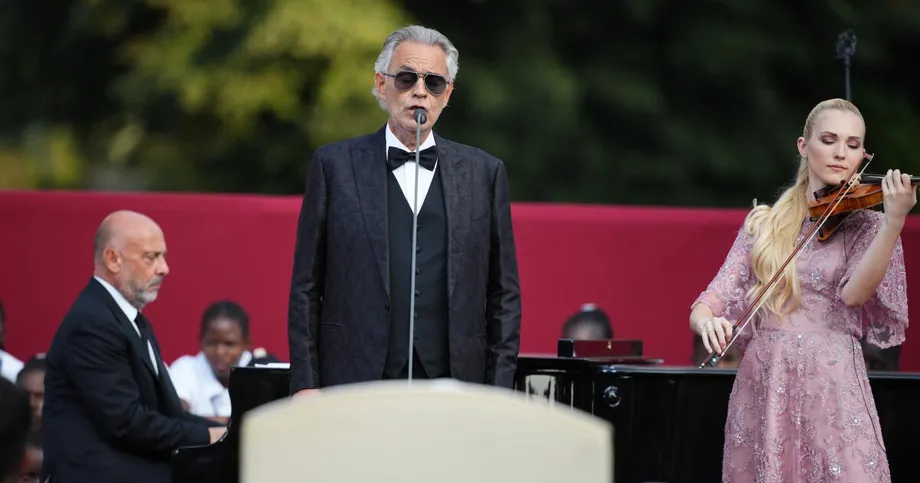
Police withdraw backing for October 31 performance
Andrea Bocelli's planned October 31, 2026, concert at the Borobudur temple complex in Magelang, Central Java, faces a permit setback after local police withdrew their recommendation for the event. Indonesia's influential Muslim clerical council is also demanding the cancellation of his November 3 performance in Jakarta, extending the dispute to both Indonesian stops on his Romanza 30th Anniversary World Tour.
Contents
Deputy Magelang police chief Bim Rekoaji confirmed the withdrawal during an October 13 meeting with groups opposing the concert at the Borobudur tourism unit office. He said an application for permission had been submitted, but the police recommendation had been withdrawn. The police action was also dated October 14 in accounts of the withdrawal, a day after the meeting at which Bim confirmed it.
The Indonesian Ulema Council, known as MUI, objects to what it describes as Bocelli's past support for Israel. Its objections centre on his participation in a 2010 fundraising event in Los Angeles for the Israeli military and a 2022 concert in Tel Aviv. The council says hosting him would conflict with Indonesia's support for Palestinians.
Bim did not explain the detailed reasons for withdrawing the recommendation. Neither concert had been publicly confirmed as cancelled in the statements described, and no deadline for a final decision was announced. Bocelli and the organisers had not publicly responded to the cancellation campaign.
The immediate consequence is uncertainty for a performance planned at one of Indonesia's most prominent heritage destinations. The dispute now involves local police, the management of the Borobudur tourism area, national tourism officials and a religious council seeking action against both concerts.
What the police decision means for Borobudur
Magelang police withdrew their recommendation supporting permission for the Borobudur event. A recommendation is an official expression of support within the permission process. Its removal leaves the organisers facing an administrative obstacle as well as public opposition.
AY Suhartanto, Commercial Group Head at PT Taman Wisata Borobudur, said the tourism area's management would coordinate with its central management and discuss the police statement. The next step therefore rests on discussions involving the venue management and concert organisers.
Several community and Islamic groups have opposed the performance. Their meeting with Bim brought that opposition directly before the police and tourism area management, while MUI pursued the issue at national government level.
The police action described concerns the Borobudur concert. MUI's demand is broader, covering both Borobudur and Jakarta. Readers following the dispute therefore need to distinguish the local permit development from the council's request for cancellation of the two scheduled performances.
Why MUI wants both concerts cancelled
MUI first announced its opposition on October 10. The council, Indonesia's highest and most influential body of Islamic scholars, argues that the concerts should be judged against the country's humanitarian commitments and longstanding support for Palestinian independence.
Sudarnoto Abdul Hakim, MUI's head of foreign relations, called for the performances to be cancelled. He said the government should oppose engagement with supporters of Zionism and framed the demand as a matter of solidarity with Palestinians. In making that appeal, he said:
Do not give a stage to anyone who co-finances the killers of Gaza and Palestine.
A subsequent account also quotes Sudarnoto's October 10 demand in its original Indonesian: "Kali ini kembali saya ingin menegaskan bahwa rencana konser Andrea Bocelli harus dibatalkan demi menjaga prinsip keberpihakan kita pada kemanusiaan." In English: "This time, I want to reiterate that the planned Andrea Bocelli concert must be cancelled to uphold our commitment to humanity."
His accusation reflects MUI's position in the dispute. The council links Bocelli's past appearances to its opposition to Israeli military actions and says the potential economic benefits of hosting the singer should not outweigh Indonesia's humanitarian principles and foreign policy stance.
In a subsequent official MUI statement, deputy secretary-general for arts and culture Erick Yusuf reaffirmed that position: "Dari sebelum-sebelumnya, setiap ada orang atau lembaga yang berpihak kepada kezaliman, penjajahan, dan genosida, tentu MUI jelas-jelas menolak mereka yang pro terhadap hal tersebut." In English: "From the outset, whenever a person or institution sides with oppression, colonialism and genocide, MUI clearly rejects those who support such things." The statement cites the 2010 Los Angeles fundraiser and the 2022 Tel Aviv concert and grounds the opposition in MUI Fatwa No. 83 of 2023 on support for the Palestinian struggle.
The past appearances behind the objections
The 2010 Los Angeles fundraiser and the 2022 Tel Aviv concert are the two events MUI specifically cites. The council describes the earlier event as a fundraiser for the Israel Defense Forces, Israel's military, and views both appearances as evidence of Bocelli's support for Israel.
MUI's written statement explains why it considers those activities relevant to performances scheduled in Indonesia. The council said:
Giving a platform to a figure who has funded or supported military actions linked to humanitarian abuses in Gaza runs contrary to the values of the Indonesian nation and MUI's religious guidance.
Bocelli's connections with Israel also include personal gestures toward people released from Hamas captivity. He hosted former hostage Segev Kaflon at his home in Miami and sent a handwritten letter to released hostage Yaffa Adar. Adar had said that singing Bocelli's music in her head helped sustain her spirits during captivity.
Those contacts form part of the wider public discussion of the singer's relationship with Israel. MUI's stated case for cancellation, however, focuses on the military fundraiser and the Tel Aviv performance. The council is asking Indonesian authorities to make a decision about hosting the concerts on that basis.
Tourism Ministry signals alignment with MUI
MUI met with Tourism Ministry officials on Wednesday, October 14, 2026, bringing the campaign against the concerts into a national government discussion. Tourism Ministry Secretary Bayu Aji said the meeting sought agreement with the council and reaffirmed Indonesia's support for Palestine.
MUI's own account dates the meeting to October 13, 2026, rather than October 14. Erick Yusuf said it was intended to clarify the facts and exchange information with ministries and organisers, with the findings then taken to MUI's leadership meeting.
Aji described the government's position and its intended response to MUI's leadership:
The government's stance is clear: we support Palestine, and there are directives from the MUI leaders that we will try to communicate further.
He also stated how the ministry would approach the council's position:
But if the MUI has already made a statement, we will certainly be aligned with the MUI's decision.
In MUI's account, Aji also said the ministry's leadership had not yet issued an official statement because it was still studying the situation. He said officials hoped to communicate with Bocelli's management and obtain a statement supporting Palestinian independence. He clarified that concert permits were outside the Tourism Ministry's remit and said tourism considerations had to be weighed alongside religious and community concerns.
The ministry's comments add national political weight to the cancellation campaign. At Borobudur, the venue management is discussing the police withdrawal with its central management. At government level, tourism officials have expressed support for MUI's position on both performances.
Indonesia is the world's most populous country with a Muslim majority. Public sympathy for Palestinians is widespread, the government has long supported an independent Palestinian state, and Indonesia has no diplomatic relations with Israel. Those commitments explain why a dispute over a singer's past appearances has reached officials responsible for tourism.
Two dates on the Romanza anniversary tour
Bocelli's Indonesian performances are scheduled three days apart: October 31 at Borobudur and November 3 in Jakarta. Both belong to his Romanza 30th Anniversary World Tour, which celebrates the album that brought the Italian tenor international prominence.
MUI's official statement also lists the Jakarta concert for November 3, 2026, and the Borobudur performance for October 31, 2026.
Romanza includes Con Te Partirò, one of Bocelli's signature songs. A tenor is a singer with a relatively high male vocal range. The tour's musical focus is a celebration of his recording career, while the Indonesian dispute centres on the political meaning MUI attaches to hosting him.
Borobudur's status adds prominence to the first concert. The temple is recognised by UNESCO and is one of Indonesia's best known historical sites. The planned performance places an international artist at a major cultural destination, bringing the tourism area's management directly into the decision over whether the event can proceed.
The Jakarta performance faces the same demand for cancellation from MUI, although the specific police recommendation withdrawal concerns Magelang. The two events share a tour and a political controversy, but the administrative development announced at Borobudur belongs to that venue's permission process.
How the dispute developed
The opposition moved from a public demand to discussions with local police and national tourism officials within several days. The key dates show how quickly the pressure on the organisers expanded:
- 2010: Bocelli participated in a Los Angeles fundraising event that MUI identifies as supporting the Israeli military.
- 2022: Bocelli performed in Tel Aviv, another appearance cited by MUI.
- October 10, 2026: MUI first announced its opposition to the Indonesian concerts.
- October 13: Bim Rekoaji confirmed the withdrawal of the police recommendation during a meeting with opponents at Borobudur.
- October 14: MUI met Tourism Ministry officials, and Bayu Aji said the government would seek alignment with the council. MUI's own account dates the meeting to October 13.
- October 31: The Borobudur concert is scheduled.
- November 3: The Jakarta concert is scheduled.
The dispute brings together three different forms of pressure: MUI's public demand, the ministry's stated alignment and the withdrawal of local police backing. For organisers and audiences, the central issue is now whether the scheduled performances will proceed after those interventions.
Key Points
- Magelang police withdrew their recommendation for Bocelli's October 31 concert at Borobudur.
- MUI seeks cancellation of both the Borobudur show and the November 3 Jakarta performance.
- The council cites a 2010 military fundraiser in Los Angeles and a 2022 Tel Aviv concert.
- Tourism Ministry Secretary Bayu Aji said the government would align with MUI's decision; according to MUI, he also sought a statement supporting Palestinian independence and said concert permits were outside his ministry's remit.
- Borobudur tourism management plans further coordination with its central management.
- No final cancellation announcement or public response from Bocelli was described.