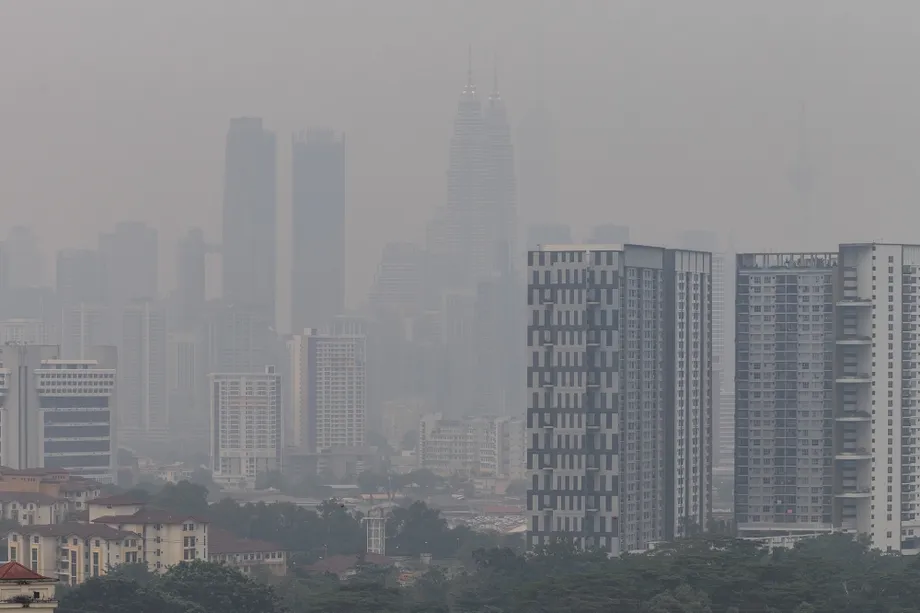
A daily loss that reaches far beyond medical bills
Malaysia could lose between RM20 million and RM50 million a day during prolonged haze, equivalent to RM600 million to RM1.5 billion over 30 days, according to Sunway University economics professor Dr Yeah Kim Leng. The estimate covers disruption to economic activity, rising healthcare costs and reduced worker productivity, with tourism, aviation and agriculture among the most exposed sectors.
Contents
- A daily loss that reaches far beyond medical bills
- What hospital records reveal
- How health costs grew between haze episodes
- Johor research shows a local burden
- Tourism, transport and crops face different losses
- Closures and cancelled flights make disruption tangible
- A timeline of recurring damage
- Malaysia seeks a stronger regional response
- Prevention and protection remain separate tasks
- Key Points
The health burden has a substantial historical record. A review published in the Malaysian Journal of Public Health Medicine found that the incremental cost of illness during haze rose from RM21 million in 1997 to RM410 million in 2013. Separate research using four hospitals in Kuala Lumpur and Selangor associated haze with a 31% increase in inpatient cases.
Those figures measure different parts of the damage. Hospital treatment, lost earnings, delayed deliveries, disrupted flights and reduced harvests cannot simply be added together without checking whether their costs overlap. The monthly estimate is a warning about what sustained exposure could cost, rather than a completed national accounting of the current episode.
Yeah described his daily estimate as conservative. His monthly range is consistent with multiplying the daily figures by 30, meaning the duration of the haze is central to the potential bill. A shorter episode would not automatically produce the same monthly loss.
The economic concern also extends beyond the days when smoke is visible. Yeah said palm oil production could experience effects after a delay of six to 12 months, while public health specialist Dr Mohd Hafiz Bin Jaafar warned that the costs associated with heart and blood vessel damage have not been fully counted.
What hospital records reveal
The academic study Transboundary smoke haze pollution examined daily inpatient records for 14 illnesses at four hospitals in Kuala Lumpur and neighbouring Selangor during 2005, 2006, 2008 and 2009. It recorded an average of 19 haze days a year, using an Air Pollution Index (API) threshold of at least 76.
Haze was associated with an additional 2.4 inpatient cases per 10,000 people each year, representing a 31% increase from normal days. The estimated average annual economic loss associated with those additional admissions was RM273,000.
That amount should not be read as Malaysia's entire annual haze health bill. It came from a defined hospital sample, selected illnesses and four study years. It excludes much of the broader disruption captured in national economic estimates.
The distinction between inpatient and outpatient care matters. Inpatients are admitted to hospital, while outpatients receive treatment without admission. Counting hospital admissions alone misses people visiting clinics, treating symptoms at home or continuing to work despite feeling unwell.
How health costs grew between haze episodes
Norfazillah Ab Manan, Mohd Rizal Abdul Manaf and Rozita Hod examined research published between 1999 and 2016 in their health economic review, published on April 13, 2018. The review appeared in volume 18 of the Malaysian Journal of Public Health Medicine, pages 38 to 45, and is also listed on the ASEAN Haze Portal.
It reported hospital admission costs of RM1.8 million in 2005 and RM118.9 million in 2013. Its broader incremental cost of illness figures, RM21 million in 1997 and RM410 million in 2013, represent an increase of about 19.5 times. These historical estimates are not adjusted here for inflation or differences in episode severity and measurement.
Hafiz, an associate professor and public health medicine specialist at Universiti Sains Islam Malaysia, said his study of Selangor found that additional hospital and clinic visits during haze months cost about RM14.6 million from 2012 to 2015.
He explained why respiratory treatment alone does not capture the full burden:
That's only the medical bill for respiratory illness. Haze also hurts the heart and blood vessels, which we haven't fully counted.
The review also connected haze with medical leave and lost income opportunities. Its findings support a distinction between the money spent treating illness and the earnings or production lost while people recover.
Johor research shows a local burden
Researchers at Universiti Teknologi Malaysia examined Pasir Gudang and Larkin in Economic losses from haze, a study using health clinic and air quality data from 2014 to 2016. It focused on conjunctivitis, upper respiratory tract infections and asthma.
The estimated average annual losses associated with outpatient health effects were RM83,233 in Pasir Gudang and RM107,486 in Larkin. Together, those estimates total RM190,719 a year, with Larkin's figure about 29% higher than Pasir Gudang's.
The study found higher health risks during haze periods across the age groups examined. Estimated pollutant doses were higher for children than adults. A dose estimate relates the pollution breathed in to factors such as breathing rate, body weight and exposure time, rather than relying on the air pollution reading alone.
For Pasir Gudang in 2015, the paper reported an average API of 66.2 with a standard deviation of 104.9, alongside a morbidity figure of 13,245.3 with a standard deviation of 1,419.9. The large variation in API readings means the average should not be mistaken for a description of conditions throughout the episode.
The authors also identified other pollution sources, including cigarette smoke, indoor pollutants, vehicles, local burning and industrial emissions. That cautions against attributing every recorded illness to smoke arriving from Indonesia. The research used outpatient clinic data and identified hospital admissions as an area for further work.
Tourism, transport and crops face different losses
Yeah said air pollution could reduce tourist arrivals by up to 8%, with gross domestic product losses reaching RM1.5 billion. These are estimates of possible damage, not a confirmed count of cancelled trips or measured losses during the current episode. The tourism figure also should not automatically be added to the monthly economy estimate, since the categories may overlap.
Aviation faces operational disruption when visibility deteriorates, while tourism businesses also face reduced demand. Delayed freight can interrupt deliveries, construction can slow or stop, and smaller retailers can lose trade as people reduce their activities.
In agriculture, Yeah cited lower vegetable production reported by Johor farmers and fruit yields that had halved. He also warned of a delay of six to 12 months before effects on palm oil production become apparent. No crop specific national loss estimate accompanied those observations.
Reduced sunlight was also reported to have affected solar electricity output. No generation figure or monetary estimate was given, so that effect cannot be assigned a reliable share of the projected national loss.
Closures and cancelled flights make disruption tangible
Reports describing an October episode placed moderate to dense haze over Peninsular Malaysia, Singapore, central and southern Sumatra, parts of Borneo and the southern Philippines. They attributed the regional assessment to ASEAN Specialised Meteorological Centre monitoring relayed on October 12.
Johor school closures were reported to have been extended through October 16, with API readings reaching 170 to 180. Schools in four education districts covering Kuala Lumpur and Selangor were also reported closed on October 12. Under the API categories described in the academic studies, readings from 101 to 200 are unhealthy.
Firefly reportedly cancelled six daily return services between Singapore's Seletar Airport and Subang through October 12. Passengers were offered refunds or transfers to Malaysia Airlines services between Kuala Lumpur International Airport and Changi, subject to seat availability. Lion Air warned of possible delays and cancellations, while visibility around Batam reportedly fell to two to three kilometres.
The reports describe an episode in 2026, including an estimated 800,000 hectares burned in Indonesia and 175,000 associated respiratory illness cases. Those numbers are reported figures, not measurements established by the Malaysian academic studies, and the October deadlines do not establish whether those closures or cancellations remain in force.
School closures add another route through which haze affects work. Alongside sick leave, they can disrupt household routines and reduce parents' working time. Hafiz also identified employees who attend work but cannot perform normally as a hidden cost.
A timeline of recurring damage
The historical record shows repeated episodes, although the monetary estimates cover different places and categories. Yeah put Malaysia's 1997 loss at about RM800 million; Hafiz gave a separate estimate of roughly RM1 billion and said it was probably an underestimate. Neither estimate should be presented as an agreed total.
- 1997: Academic research describes widespread haze lasting almost six months. The later health review records RM21 million in incremental illness costs.
- 2005 and 2006: Severe August episodes are documented in the inpatient study. The health review gives RM1.8 million in hospital admission costs for 2005.
- 2013: Yeah cited RM1.57 billion in healthcare and lost income. The Johor paper separately cites a study estimating RM1.5 billion in losses from June haze in Peninsular Malaysia.
- 2015: Hafiz cited a World Bank estimate of US$16 billion for Indonesia's fires, almost 2% of its GDP.
- 2019: Yeah cited US$5.2 billion in regional haze losses across affected areas, rather than Malaysia alone.
- 2026: Reports describe renewed haze, school closures and flight disruption, with several operational dates given for October.
The Johor paper gives the June 2013 estimate as 0.48% of 2013 GDP. That percentage is a claim in the cited research, not a calculation independently established here. Differences in geography, currency, period and cost categories prevent a straightforward comparison of all these totals.
Malaysia seeks a stronger regional response
Foreign Minister Datuk Seri Mohamad Hasan said Malaysia would raise transboundary haze at an ASEAN foreign ministers' meeting ahead of the bloc's 49th Summit in Manila. He said existing regional natural disaster mechanisms did not classify haze as a natural disaster.
Mohamad explained the issue he intended to bring to his counterparts:
We already have an Asean mechanism for natural disasters, but haze is not included or classified as a natural disaster.
He said his Indonesian counterpart, identified in the account as Arrmanatha Nasir, had explained that poor visibility was preventing aerial firefighting. According to Mohamad, Indonesia had three to four aeroplanes, 34 helicopters and 60,000 people deployed on the ground.
The operational constraints went beyond aircraft availability. Fires were deep inland, water supplies were limited and peat continued to smoulder. Peat is accumulated organic material that can burn below the surface, making visible flames an incomplete guide to whether a fire has been extinguished. Mohamad also said suitable cumulonimbus clouds were absent, preventing cloud seeding at that time.
His account described the summit as taking place the following month but did not give an absolute meeting date. A decision to change haze classification, a funding commitment or an agreed regional response timetable was not announced.
Prevention and protection remain separate tasks
Hafiz called for earlier warnings, clear public health advice and protection for children, older people and people with asthma or heart disease. The inpatient study's greatest estimated increase in admissions was among children, followed by young adults, senior citizens and infants, providing a specific research basis for concern about younger patients.
Reports of Singapore's preparations said Sustainability and Environment Minister Grace Fu confirmed on October 10 that N95 mask stocks were ready. Planned measures included distributing masks to eligible residents and opening community shelters with air conditioning and air purifiers if the 24 hour Pollutant Standards Index exceeded 200. That is Singapore's index and threshold, distinct from Malaysia's API readings.
Hafiz also proposed Malaysian funding, technical support and monitoring to help prevent fires in Indonesia, alongside a summit to secure regional commitments. These were recommendations, not announced spending programmes.
He framed prevention as an economic choice as well as a public health measure:
Prevention is cheaper than paying for the same crisis every few years. The cost is too high to ignore.
The central uncertainty is the final scale of damage. The daily loss estimate, historical health studies and reported disruptions show several ways haze imposes costs, but they do not establish a complete current national total. Duration, fire control and the extent of business disruption will determine how close losses come to the projected monthly range.
Key Points
- Yeah Kim Leng estimates prolonged haze could cost Malaysia RM20 million to RM50 million daily, or RM600 million to RM1.5 billion over 30 days.
- A four hospital study associated haze with a 31% increase in inpatient cases.
- A 2018 review recorded incremental illness costs rising from RM21 million in 1997 to RM410 million in 2013.
- Johor research estimated combined annual outpatient health losses of RM190,719 for Pasir Gudang and Larkin.
- Tourism, aviation, agriculture, construction and retail face disruption, with possible delayed effects on palm oil production.
- Malaysia has proposed discussing stronger ASEAN disaster mechanisms, but no classification change or dated decision timetable was announced.