Kuala Lumpur gains a larger base for Tencent
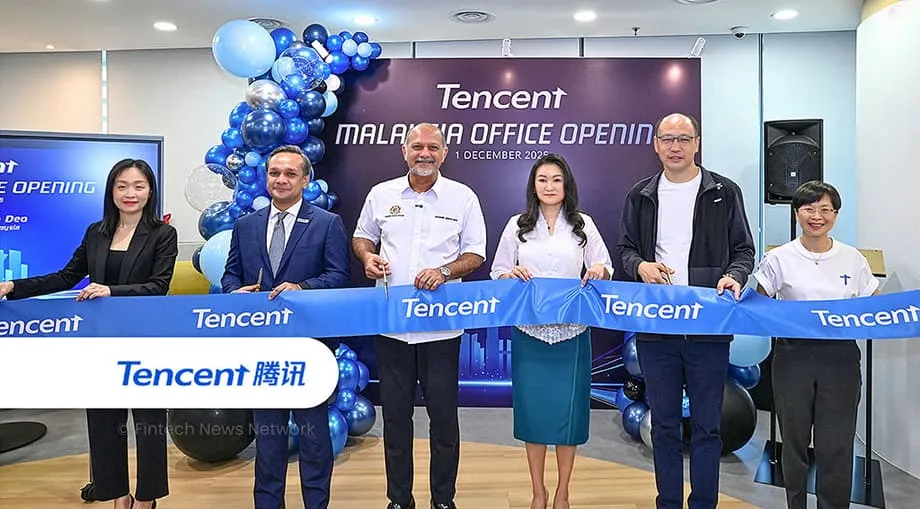
Tencent has opened a larger office at Menara 1 Sentrum in Kuala Lumpur, with capacity for up to 500 employees, as it expands its work in artificial intelligence, cloud computing and digital services. The company aims to build a local team of around 500 by the end of 2026, creating one of its largest presences in Southeast Asia.
Contents
- Kuala Lumpur gains a larger base for Tencent
- What the teams will build and support
- Cloud and AI move into everyday business
- PalmAI brings biometric verification into the plans
- Chinese visitors can pay through DuitNow QR
- Mini programs connect travel, shopping and support
- Games, esports and Malaysian stories
- Training routes extend beyond the new office
- Government backing and the milestones ahead
- Security and trust will shape implementation
- A regional role with local opportunities
- Key Points
The expansion brings Tencent's Global Tech, Digital Innovation and Customer Experience teams together in one location. Their work supports international operations and products used by millions of people, giving the Malaysian office a role that reaches beyond the domestic market.
Tencent first entered Malaysia in 2013. Its activities now span games, entertainment, payments, AI and cloud services. The company doubled its Malaysian workforce in 2025 and expects strong double digit growth through 2026. Its staffing target would bring the team to roughly the capacity of the new office.
Company leaders point to Malaysia's mature internet infrastructure, stable and supportive policies, and growing pool of skilled professionals as reasons for expanding. The investment also reflects a wider trend among technology companies to place regional operations where talent, infrastructure and connectivity can support international work.
For Malaysia, the immediate opportunity is employment in technical, operational and creative fields. For Tencent, the larger hub provides space to bring product development, digital experimentation and support closer together, so information from users can reach the people responsible for improving services more quickly.
What the teams will build and support
More than 90 percent of Tencent's employees in Malaysia work in development operations, data analysis, content compliance and customer experience. Development operations help teams build and run digital products, while content compliance involves checking whether material meets relevant rules and requirements.
Tencent's Global Tech team builds and operates the core technologies behind its social, content and gaming services. The Digital Innovation unit develops prototypes using the company's cloud platform and AI models. Its Customer Experience group supports users and partners across time zones, bringing local knowledge into product fixes and feature updates.
Putting these teams together is intended to speed up delivery and improve the flow of feedback from global users. Engineers and designers can draw on information from support teams, while specialists working on new tools can better understand the problems those tools need to solve.
That arrangement is particularly useful for cloud services, which receive frequent updates. It also brings together skills needed for complex projects, including content review using AI, moderation of voice and text, and customer support in several languages.
Tencent is recruiting software and data engineers, site reliability experts, AI and machine learning specialists, solution architects, user experience specialists, content reviewers and service professionals for enterprise clients. Site reliability experts help keep services running dependably, while solution architects plan how different technologies fit together.
Company leaders describe the goal as a balanced team able to build, deploy and support solutions from Malaysia. Local specialists would have more opportunities to contribute to products intended for international markets, rather than working only on services used within the country.
Cloud and AI move into everyday business
Tencent Cloud is engaging banks, insurers, retailers, logistics firms, healthcare providers and travel companies that want to automate manual processes and introduce new digital services. Cloud computing lets organisations use computing resources through a service platform, supporting tools and applications without having to run every part themselves.
Enterprise interest in AI covers content generation, analysis of contact centre activity, workflow automation and security. Tencent executives say Malaysia combines business demand with a supportive policy environment, making it a possible launchpad for solutions used elsewhere in the region.
The company is introducing digital avatars, AI agents and 3D modelling tools to help with content production and customer service. Digital avatars provide a virtual representation for interactions, while AI agents can carry out tasks within a service or workflow.
Banks are testing AI for faster know your customer checks, known as KYC, using facial recognition, fraud detection and document processing. KYC is the process of checking a customer's identity. Retailers are exploring better product recommendations and inventory planning, while hospitals and clinics are looking at assistants that help with triage and finding information. Triage means assessing a patient's needs to help decide the order of care.
Game developers and content studios can use 3D AI modelling to speed up early prototypes and the creation of assets, such as objects used in a game. Across these sectors, Tencent's expansion links its local hiring plans to demand for tools that help businesses handle information and deliver services.
PalmAI brings biometric verification into the plans
Tencent Cloud signed a memorandum of understanding with Opensys Technologies and Boost at the office opening to pilot PalmAI, a system that verifies a person using their palm. The agreement sets out a planned trial involving the technology and local partners.
Palm biometrics use the distinctive patterns of veins or lines in a person's palm, captured by a camera or sensor. The method is contactless and fast, and it works even when a user's hands are wet or dirty.
For payments, a biometric check can be linked to a wallet or bank account to confirm a transaction. For security, the same approach can control access to facilities, kiosks or devices. These uses connect identity verification with an action, such as making a payment or entering a restricted area.
Biometric systems also require decisions about privacy, storage and consent. Malaysia's Personal Data Protection Act governs how organisations collect and use sensitive data. Tencent says data security and regulatory compliance are top priorities and that its teams work with local authorities on requirements.
Good practice for pilots such as PalmAI includes strong encryption, keeping data only as long as needed, and obtaining clear user consent, especially in retail and financial settings. Encryption protects information by making it unreadable without the appropriate means to unlock it. These safeguards matter because the system handles information tied to a person's identity.
Chinese visitors can pay through DuitNow QR
Payments across borders form another part of Tencent's Malaysian strategy. In 2024, Weixin Pay, the version of WeChat Pay used by consumers in China, connected to Malaysia's DuitNow QR through PayNet.
Chinese visitors can now scan the same DuitNow code used by Malaysian customers and pay through their Weixin wallets. A merchant can serve those visitors through a familiar local payment system, while travellers use a wallet they already know.
PayNet recorded a threefold increase in transactions made by Chinese visitors during China's Golden Week after the integration. That means the transaction count was three times the comparison level, showing how easier payment access can translate into more activity at local merchants.
Tencent's Global Checkout can also bring local payment options, including DuitNow, into a merchant's storefront serving customers across borders. This supports businesses that want to accept familiar payment methods from customers in different markets.
Company representatives have discussed plans for selected Malaysian electronic wallets to be accepted by Chinese merchants. Such an arrangement would extend the connection in the other direction, making payments easier for Malaysians visiting China. No launch date for that proposed arrangement was given.
Mini programs connect travel, shopping and support
The KLIA Express rail service has launched a Weixin Mini Program that allows Chinese users to check schedules, buy tickets and receive updates inside the app they already use each day. The service brings several parts of a travel transaction into one place.
Mini programs are lightweight applications that run inside WeChat. They load instantly, work with its built in wallet and do not require users to download a separate application. Tencent began pilots in Singapore and Macau, with Malaysia next on the list for expansion.
For Malaysian merchants and brands, mini programs offer a direct channel to Chinese consumers. Businesses can use them for messaging, promotions, customer care and loyalty activities, keeping contact with a customer within the same digital environment.
Tourism partners can combine maps, bookings and customer support in a mini program. Alongside payment integration and the KLIA Express service, these tools could help businesses serve visitors ahead of Visit Malaysia 2026, from planning a journey to buying something after arrival.
Games, esports and Malaysian stories
Tencent's gaming division and publishing label Level Infinite are active in Malaysia's growing games and esports sector. The company has supported local tournaments and training while helping professionalise competition around popular titles.
Kuala Lumpur hosted the Honour of Kings Nation Clash in 2025, bringing international teams and fans to the capital. Events of that kind connect competitive gaming with travel, live audiences and the wider entertainment business.
Tencent is also working with sports bodies on esports development and healthy gaming. It has expressed support as Malaysia prepares to host the SEA Games in 2027, placing its gaming activities alongside the country's preparations for a major sporting event.
Games support a broader content ecosystem that includes streaming, creators and brand partnerships. Tencent's video service, WeTV, is investing in local productions and programmes that develop Malaysian creators, with the aim of helping homegrown stories and talent reach audiences across Asia.
Training routes extend beyond the new office
Tencent is working with universities and government agencies on talent programmes linked to AI, cloud computing, gaming and creative fields. Technical and vocational education tracks are part of the effort to widen access for graduates and people seeking new skills during their careers.
Through Level Infinite and Tencent Games, the company has partnered with institutions including Claz'room College to provide mentorship and internships. Students gain exposure to production workflows and skills used in the industry, from art and animation to networking and security.
These partnerships complement university collaborations on AI and cloud training. Together, they provide routes into skilled employment in software, data and creative work, while helping Tencent develop the range of expertise its Malaysian operations require.
The training plans also connect the company's entertainment businesses with its technology expansion. A student entering game production and a graduate entering cloud engineering may work in different disciplines, but both form part of the talent pipeline supporting the larger hub.
Government backing and the milestones ahead
Malaysia's Digital Minister, Gobind Singh Deo, welcomed Tencent's investment as evidence of momentum in the digital economy. At the opening, he connected the expansion with employment and the ability of Malaysian workers to meet the needs of international technology companies.
Tencent's expansion in Malaysia demonstrates the growth of the digital economy and the ability of the local workforce to meet the demands of leading internet companies.
The government's priorities include upgrading data infrastructure, strengthening AI governance and cybersecurity, modernising digital identity and payments, and growing creative content industries. These goals align with Malaysia Madani and the current national plan to build an economy driven by innovation.
Officials describe 2030 as a target year for Malaysia to become a nation enabled by AI. That ambition depends on jobs that contribute substantial value, a strong supply of skilled workers and closer cooperation between government and businesses. Tencent's hub is positioned to contribute through hiring, training partnerships and support for tourism and digital commerce.
The company's expansion sits within a sequence of milestones stretching from its arrival in Malaysia to the country's longer term digital ambitions:
- 2013: Tencent entered Malaysia.
- 2024: Weixin Pay connected to DuitNow QR through PayNet.
- 2025: Tencent doubled its local workforce, and Kuala Lumpur hosted the Honour of Kings Nation Clash.
- 2026: Tencent expects strong double digit workforce growth and aims for around 500 Kuala Lumpur employees by the end of the year, alongside preparations for Visit Malaysia 2026.
- 2027: Malaysia is preparing to host the SEA Games.
- 2030: Officials target Malaysia becoming a nation enabled by AI.
Security and trust will shape implementation
Malaysian enterprises considering cloud workloads look for controls that meet the Personal Data Protection Act, including clear audit trails, encryption and options for data residency. An audit trail records activity so it can be checked later, while data residency concerns where information is stored.
Tencent says it works closely with local authorities on requirements. For customer experience operations, training data used across languages and content review tools also need to reflect local laws and cultural context.
PalmAI pilots call for additional protection. Good practice includes storing biometric templates separately from transaction data, restricting access rights and logging each authentication event. A biometric template is the stored representation used to compare a person's palm with the record associated with their identity.
Working with established local firms such as Opensys Technologies and Boost can help align the technology with Malaysian banking and retail standards while addressing user trust. The quality of those arrangements will be part of turning a promising demonstration into a service people and businesses can use with confidence.
A regional role with local opportunities
Tencent's Kuala Lumpur office sits alongside its hubs in Singapore and Indonesia. Each location serves different needs, from enterprise cloud services to product operations. Malaysia's combination of talent, costs, connectivity and multilingual capabilities makes it a practical base for global teams.
The expanded hub offers Malaysian engineers and creators a route to work on products used internationally. It also creates skilled employment and potential business for local partners, including managed service providers, studios and event operators. Many of the roles involve specialist responsibilities described as difficult to automate, while their work can be delivered across borders.
For travellers and consumers, the plans bring together easier payments, transport services, shopping and entertainment. Malaysia's growing airline links and strong tourism sector provide a setting for testing services that combine payments, content, gaming and travel within one journey.
As of December 3, 2025, the central commitment is a larger operating base with room to grow. Tencent's target of around 500 employees by the end of 2026 connects that physical expansion with a broader programme of cloud services, AI trials, payment links and talent development.
Key Points
- Tencent opened a larger office at Menara 1 Sentrum in Kuala Lumpur with capacity for up to 500 employees.
- Its Malaysian workforce doubled in 2025, with strong double digit growth expected through 2026 and a target of around 500 staff by the end of that year.
- The hub brings together Global Tech, Digital Innovation and Customer Experience teams supporting international operations.
- Tencent Cloud signed an agreement with Opensys Technologies and Boost to pilot PalmAI for biometric verification.
- Weixin Pay connected to DuitNow QR in 2024, and PayNet recorded a threefold increase in Chinese visitor transactions during Golden Week after the integration.
- KLIA Express has launched a Weixin Mini Program, while Tencent plans wider mini program activity in Malaysia.
- Gaming, WeTV productions and education partnerships support Malaysian competition, creators and technical talent.
- Digital Minister Gobind Singh Deo welcomed the expansion as Malaysia works towards its 2030 AI ambition.
- Privacy, consent, data protection and compliance remain central to cloud services and biometric pilots.